Information
City: SplitCountry: Croatia
Continent: Europe
Split, Croatia, Europe
Split functions as the administrative center of the Split-Dalmatia County and the primary maritime and cultural hub of the Dalmatian coast. Situated on a peninsula between the Kaštela Bay and the Brač Channel, it serves as a specialized node for shipbuilding, maritime logistics, and high-capacity Mediterranean tourism. It is defined by its origin as a 4th-century Roman imperial palace, its status as a UNESCO World Heritage site, and its role as the "Gateway to the Islands."
Historical Timeline
Split originated as the Diocletian’s Palace, constructed in 305 AD for the retirement of the Roman Emperor. The primary era of development occurred when residents of the nearby Roman city of Salona fled to the palace following 7th-century Slavic invasions. The primary event shaping its modern identity was its post-WWII industrialization and the massive expansion of the "Split 3" urban project. Historically, it was a vital center of the Republic of Venice and the Kingdom of Yugoslavia.
Demographics & Population
The population is approximately 160,000 in the city proper and over 340,000 in the metropolitan area (2026 estimate). The demographic profile is characterized by a workforce specialized in maritime engineering, tourism, and services, supported by the University of Split, which is consistently ranked as the top research institution in Croatia.
Urban Layout & Key Districts
The city is organized around the historic palace core, expanding into 19th-century and modern residential zones.
Diocletian’s Palace: The specialized historic core; a "living museum" where approximately 3,000 people still reside within the Roman walls.
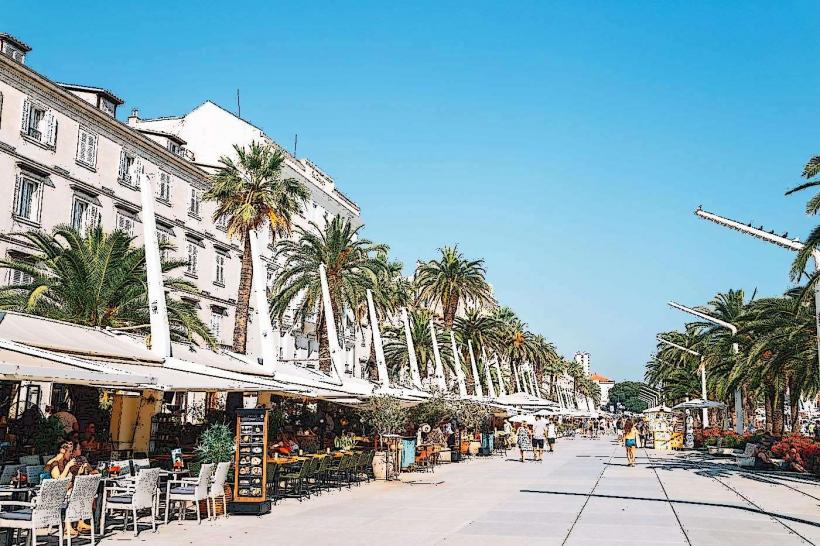
Riva: The specialized central waterfront promenade; the social axis of the city.
Varoš: A specialized historic fishermen's district characterized by narrow stone alleys and traditional Dalmatian architecture.
Split 3: A specialized late-modernist residential district, globally recognized for its pedestrian-oriented urban planning and architectural innovation.
Top City Landmarks
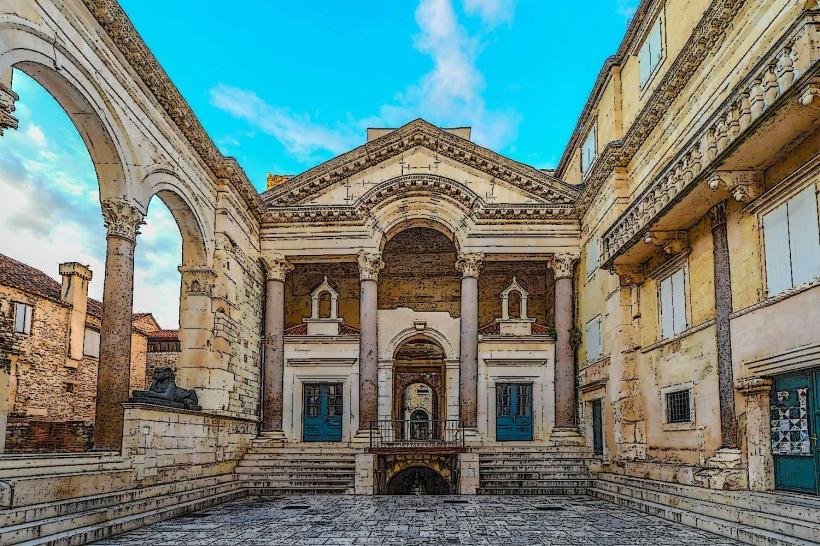
Peristyle: The specialized central square of the Palace, featuring original Roman granite columns and an Egyptian sphinx.
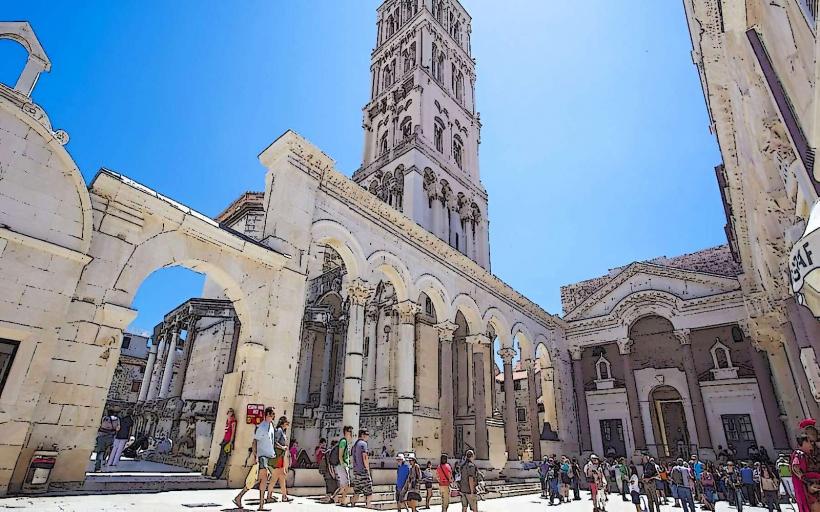
Cathedral of St. Domnius: A specialized 4th-century structure, originally Diocletian's mausoleum; it is the oldest Catholic cathedral in the world still using its original structure.
Jupiter’s Temple: A specialized Roman temple transformed into a Christian baptistery, featuring one of the most intact coffered ceilings from the Roman era.
The Cellars (Substructures): A specialized massive underground complex that mirrors the layout of the imperial apartments above.
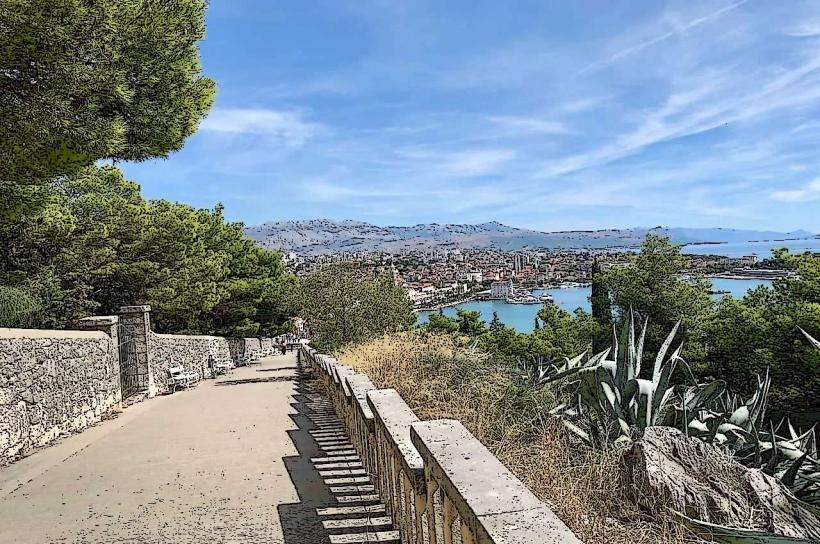
Marjan Hill: A specialized "green lungs" peninsula featuring pine forests, medieval chapels, and panoramic viewpoints.
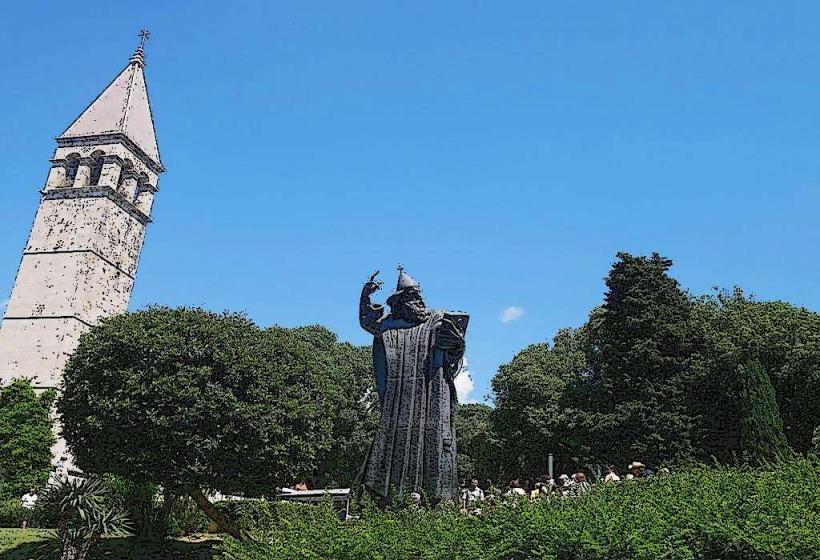
Gregory of Nin Statue: A specialized monumental bronze sculpture by Ivan Meštrović; touching its big toe is locally believed to bring good luck.
Transportation Network
Split is the primary transit junction for the Adriatic coast.
Port of Split: The third-largest specialized passenger port in the Mediterranean; in 2026, it serves as the central hub for ferries to Hvar, Brač, Vis, and international lines to Ancona (Italy).
Split Airport (SPU): A major international gateway located 24 km west in Kaštela, featuring a specialized award-winning terminal.
Railway Hub: The Split Railway Station is the southernmost point of the Croatian national rail network, connecting to Zagreb via the Lika line.
Public Transit (Promet Split): A specialized bus network. In 2026, the fleet is integrated with a digital real-time tracking system and includes a high percentage of low-emission vehicles.
Safety & "Red Zones"
The general safety level is high. Split is statistically secure for residents and visitors. There are no "red zones." Standard urban awareness is sufficient in high-density areas like the Riva and the Palace during peak tourist seasons.
Digital & Financial Infrastructure
The city is a leader in IT and Green Tech (notably the PICS incubator). Internet speeds average 400–1000 Mbps. 5G is universal. In 2026, the city utilizes a specialized "Smart Split" platform for optimizing maritime traffic and municipal energy use.
Climate & Air Quality
Split has a Mediterranean climate with high sunshine hours. Average temperatures range from 8°C in January to 30°C in July. Air quality is exceptionally high due to coastal winds and the lack of heavy inland industry.
Culture & Social Norms
Social norms are characterized by "pomalo" (take it easy) and a deep-seated passion for Hajduk Split football club. Tipping (10%) is standard. The primary cultural event is Ultra Europe (July) and the Split Summer Festival.
Local Cost Index (2026 Estimates)
1 Espresso: €2.20 – €3.50 (Palace/Riva pricing)
1 Pint of Local Beer: €4.50 – €7.00
1 Standard Lunch: €18.00 – €35.00
Ferry Ticket (to Brač): €6.50 – €9.00
Nearby Day Trips
Trogir: 30 mins away; a specialized UNESCO-listed medieval island city.
Salona: 10 mins away; the specialized archaeological ruins of the former Roman capital of Dalmatia.
Klis Fortress: 20 mins away; a specialized medieval fortress built on a mountain pass, offering control over the access to Split.
Facts & Legends
Split is the site where the Roman Empire's last legitimate emperor (Julius Nepos) resided after being deposed. Legend states that the city's name comes from "Aspalathos," a local shrub. A verified fact is that the Diocletian’s Palace substructures were preserved because they were used as a waste dump for centuries, effectively sealing and protecting the Roman masonry. Historically, Split is the birthplace of Marko Marulić, the "Father of Croatian Literature."