Information
Landmark: Gregory of Nin StatueCity: Split
Country: Croatia
Continent: Europe
Gregory of Nin Statue, Split, Croatia, Europe
The Gregory of Nin Statue is a massive bronze monument located just outside the Golden Gate of Diocletian's Palace in Split, Croatia. It commemorates the 10th-century bishop who advocated for the use of the Slavic language in religious services, directly challenging the authority of the Pope.
Visual Characteristics
Standing approximately 8.5 meters tall, the statue is cast in dark bronze with a weathered patina. It depicts Gregory in a dramatic, elongated pose, wearing heavy clerical robes and holding a large book. His right hand is raised with a pointed index finger, and his left foot features a prominently polished, gold-colored big toe resulting from constant physical contact by visitors.
Location & Access Logistics
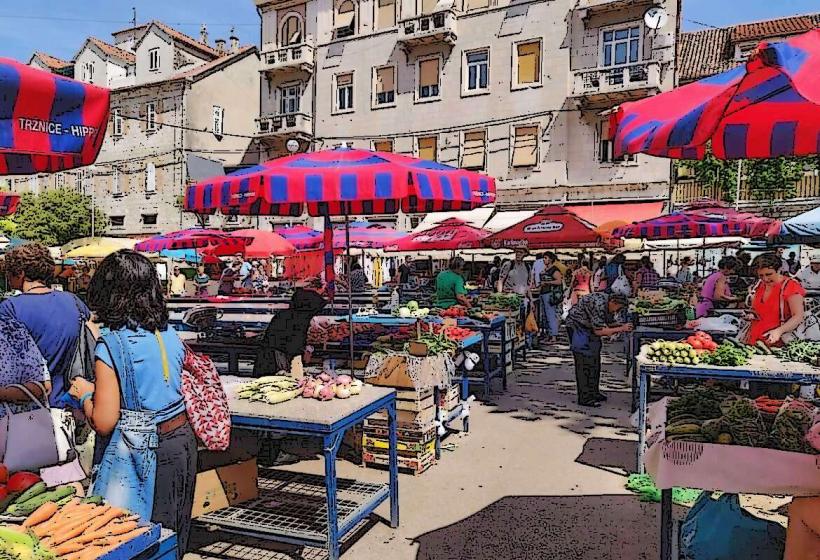
The statue is situated in the park north of the Diocletian's Palace complex, accessible via Ulica kralja Tomislava. It is a 10-minute walk (0.8km) from the Split Ferry Port and main bus station. Public transit via local Promet Split bus lines 2, 3, 5, 8, 11, and 18 stops at the nearby "Tržnica" or "Prima" stations. There is no dedicated parking at the site; the closest public parking is at the Stari Plac or the Riva waterfront.
Historical & Ecological Origin
The monument was created in 1929 by the renowned Croatian sculptor Ivan Meštrović. It was originally placed in the Peristyle of Diocletian's Palace but was moved by Italian occupying forces during World War II. It was reassembled in its current location in 1954. The statue honors Gregory’s role at the 925 AD Synod of Split, where he sought to introduce the Old Church Slavonic language into liturgy.
Key Highlights & Activities
The primary activity involves rubbing the statue’s big toe, which is a local tradition believed to bring good luck. The site serves as a major waypoint for walking tours of the Old Town. Photography is best achieved from the base of the statue looking upward to capture the contrast between the bronze and the Roman walls of the palace.
Infrastructure & Amenities
The area is an open public park with stone benches and natural shade from surrounding trees. There are no public restrooms directly at the statue; the nearest facilities are located inside the palace or at the nearby Green Market (Pazar). 5G cell signal is strong. Numerous food vendors and cafes are located 50 meters away within the palace walls.
Best Time to Visit
The site is accessible 24 hours a day. For photography, early morning (07:00–09:00) provides the best lighting on the face of the statue and minimizes the presence of large tour groups. Summer months (June to August) are the busiest; October offers cooler temperatures and clearer lines of sight.
Facts & Legends
Local lore dictates that anyone who rubs the statue's big toe and makes a wish will have that wish granted and will eventually return to Split. During World War II, the statue was cut into pieces and hidden by locals to prevent it from being melted down for scrap metal by the occupying military forces.
Nearby Landmarks
Golden Gate (Porta Aurea) – 0.05km South
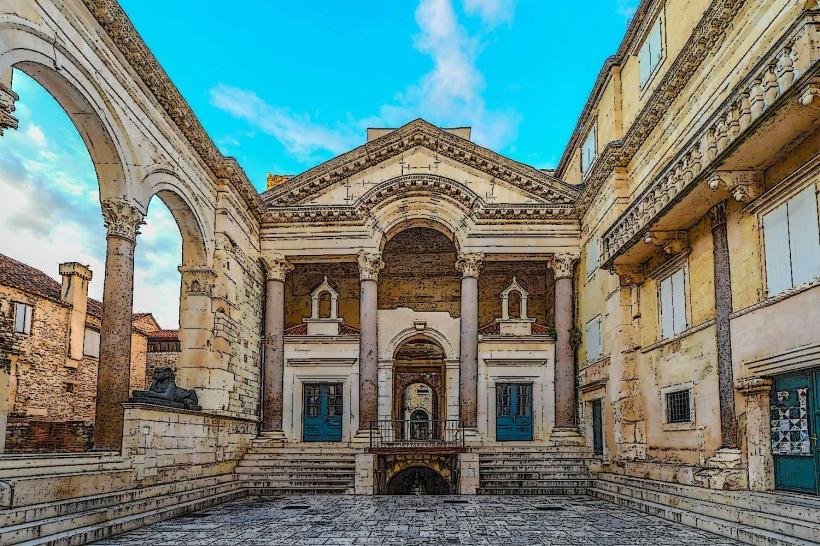
Diocletian's Palace – 0.1km South
Split City Museum – 0.2km South
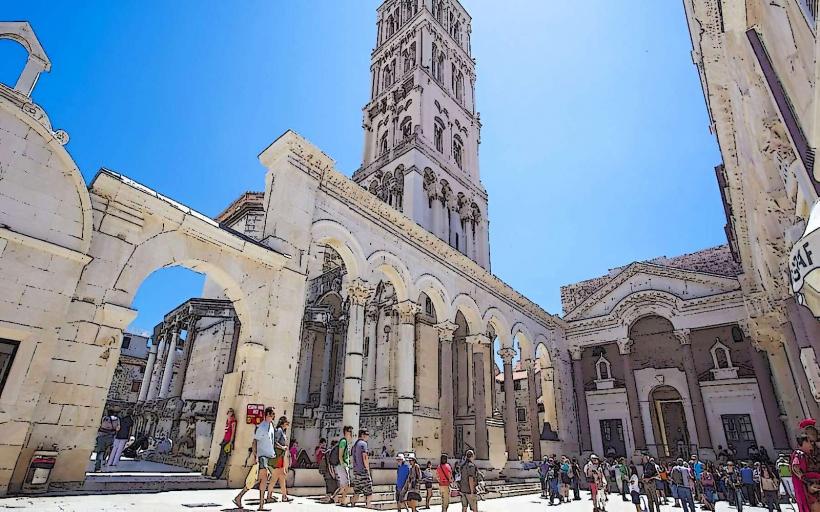
Cathedral of St. Domnius – 0.3km South
Strossmayer Park (Đardin) – 0.02km West