Information
City: TrnavaCountry: Slovakia
Continent: Europe
Trnava, Slovakia, Europe
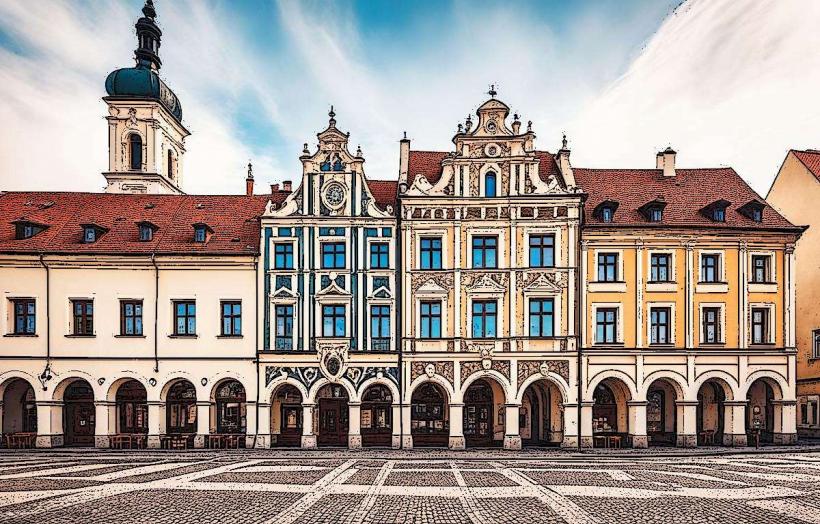
Trnava functions as the administrative and religious capital of the Trnava Region and serves as a specialized hub for automotive manufacturing, nuclear energy services, and higher education. Situated in the Danubian Lowland, it is defined by its massive 13th-century brick fortifications and its dense concentration of historical churches, earning it the title "Little Rome" (Slovenský Rím).
Historical Timeline
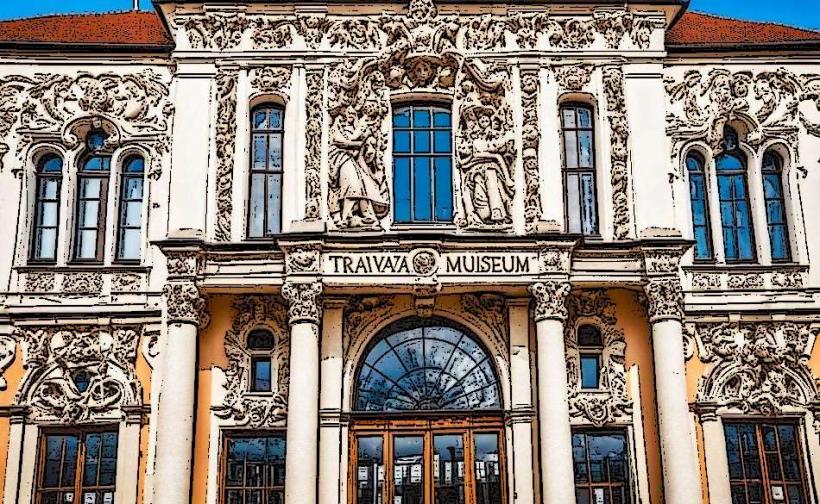
Trnava originated as a market town at the intersection of trade routes. The primary era of governance began in 1238, when it became the first town in present-day Slovakia to receive free royal town privileges from Hungarian King Béla IV. The primary event shaping its modern identity was its status as the religious and cultural center of the Kingdom of Hungary for 300 years (1543–1822) while Esztergom was under Ottoman occupation. Historically, it was the site of the first university in the region (Trnava University, founded 1635).
Demographics & Population
The population is approximately 63,000 (2026 estimate). The demographic profile is characterized by a high ratio of students (approx. 15,000) from two major universities and a specialized technical workforce employed by the Stellantis automotive plant.
Urban Layout & Key Districts
The city is organized within a circular medieval core surrounded by modern industrial and residential zones.
Historic Center: A specialized zone enclosed by medieval walls, containing the Gothic and Baroque ecclesiastical heart.
Hlboká: A specialized northern district housing major administrative buildings and the Trnava University campus.
Linčianska: A southern residential district characterized by 20th-century urban development.
Industrial Zone East: A specialized economic cluster housing the Stellantis (formerly PSA) plant and logistics centers.
Top City Landmarks
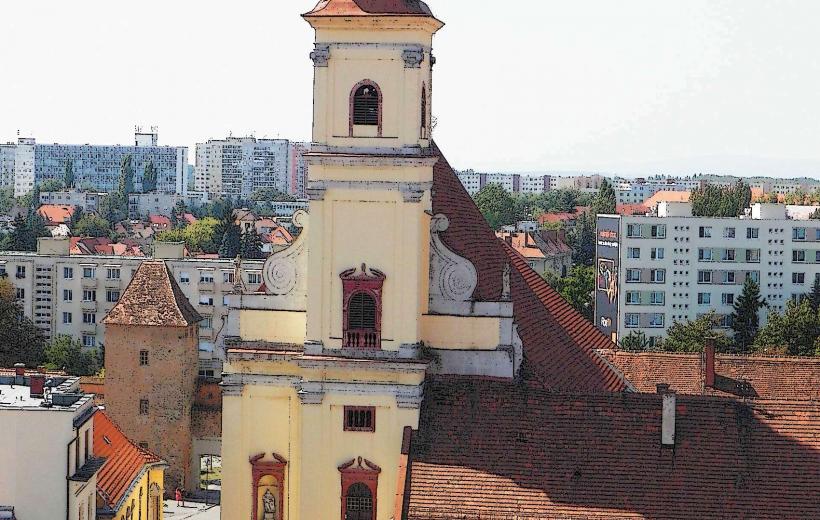
St. Nicholas Basilica: A specialized late-Gothic landmark featuring a distinct twin-tower facade and a Baroque chapel housing a "weeping" icon of the Virgin Mary.
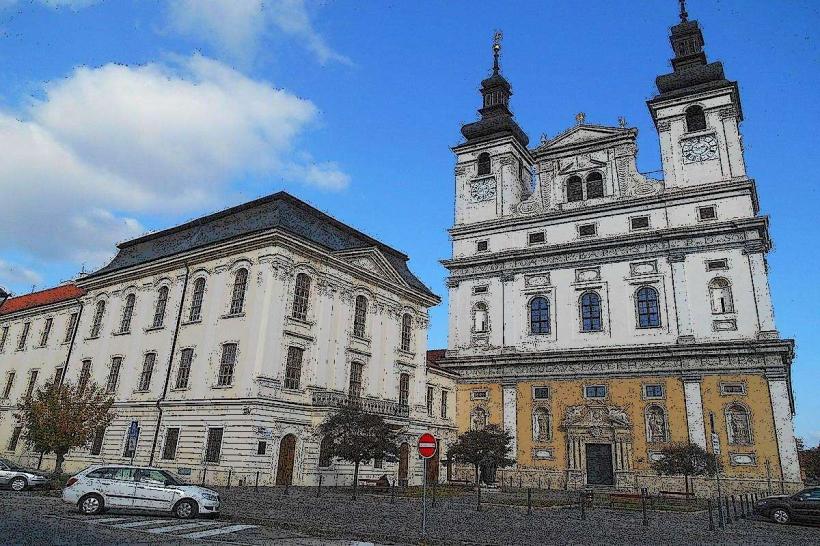
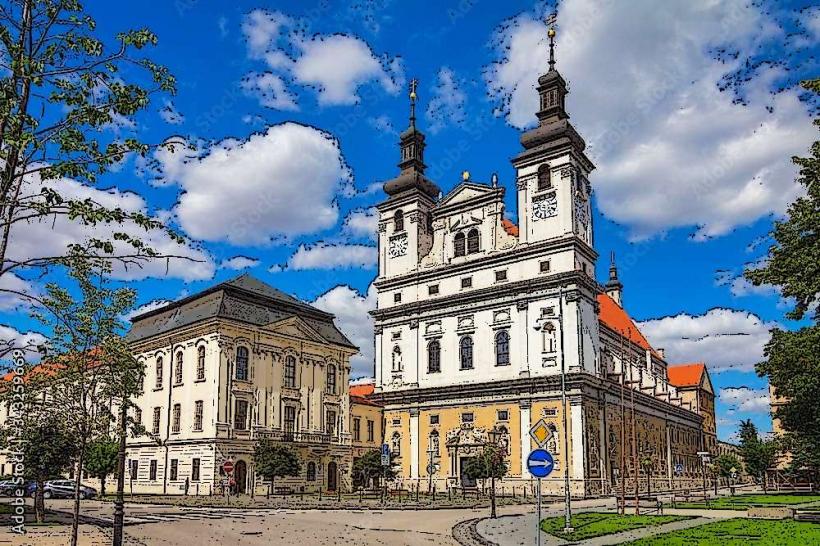
Cathedral of St. John the Baptist: A specialized Baroque masterpiece; the first purely Baroque building in Slovakia, featuring a massive wooden altar (20m high).
City Walls: One of the best-preserved specialized medieval brick fortification systems in Central Europe, spanning over 2 km.
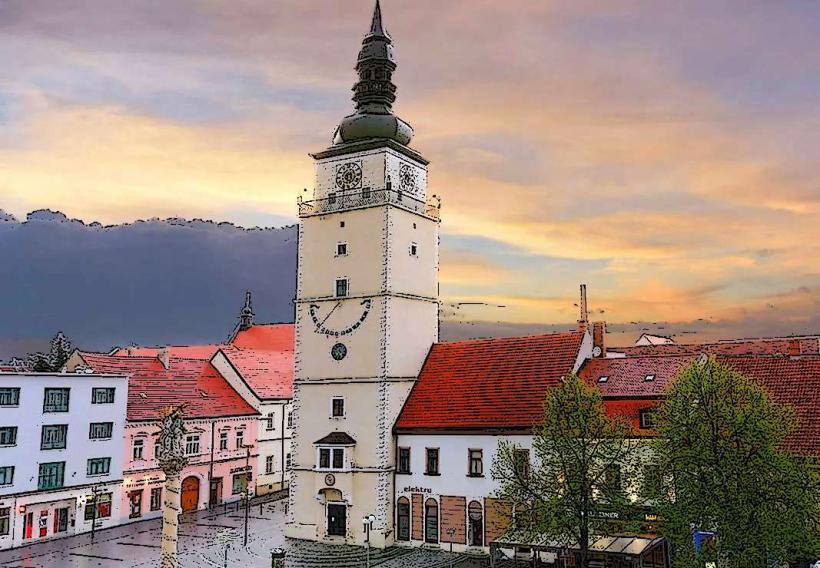
City Tower: A specialized 57-meter Renaissance tower in the main square featuring a unique mechanical clock mechanism from 1729.
Synagogues (Status Quo Ante and Orthodox): Two specialized Jewish heritage sites; the Status Quo Ante Synagogue currently functions as a contemporary art gallery.
Bernolák Gate: A specialized 13th-century gateway that serves as the primary entrance to the historic core from the west.
Transportation Network
Trnava is a primary transit node in the western Slovak corridor.
D1 Motorway & R1 Expressway: The primary road links providing high-speed access to Bratislava (approx. 35 mins) and Nitra.
Trnava Railway Station: A major junction on the primary Bratislava–Žilina line. As of 2026, it supports high-speed InterCity services to the capital.
Public Transit: A specialized network of 16 bus lines. In 2026, the fleet is being transitioned to fully electric propulsion in the city center.
Cycling: Trnava is a national leader in specialized urban cycling infrastructure, featuring extensive "bicycle highways" separated from motor traffic.
Safety & "Red Zones"
The general safety level is very high. Trnava is statistically one of the safest cities in Slovakia. There are no "red zones." The historic center is pedestrianized and well-monitored. Standard caution is advised near the railway station late at night.
Digital & Financial Infrastructure
Trnava is a leader in Automotive Electronics and Nuclear Engineering (supporting the nearby Jaslovské Bohunice plant). Internet speeds average 400–1000 Mbps. 5G is universal. In 2026, the city operates a specialized digital twin for traffic and energy optimization.
Climate & Air Quality
Trnava has a temperate continental climate. It is located in one of the warmest and flattest regions of Slovakia. Average temperatures range from -1°C in January to 27°C in July. Air quality is high, though it can be influenced by regional agricultural activity.
Culture & Social Norms
Social norms are characterized by a blend of conservative religious tradition and a vibrant modern student culture. Tipping (10%) is standard. The primary cultural event is the Trnava Fair (September) and the Lumen Christian music festival.
Local Cost Index
1 Espresso: €2.20
1 Pint of Local Beer: €2.40–€3.90
1 Standard Lunch: €8.50–€14.00
Nearby Day Trips
Smolenice Castle: 20 mins away; a specialized romantic-style castle located in the Little Carpathians.
Driny Cave: 25 mins away; the only specialized dripstone cave in the Little Carpathians open to the public.
Jaslovské Bohunice: 15 mins away; site of a specialized nuclear power plant and a museum of nuclear energy history.
Facts & Legends
Trnava is the site where the first university in the Kingdom of Hungary was re-established in 1635. Legend states that the icon in the St. Nicholas Basilica wept tears of blood in 1708 to warn the citizens of a coming plague. A verified fact is that the city’s brick fortifications were built using approximately 4.5 million bricks. Historically, Trnava was the site of the signing of the Treaty of Trnava in 1615 between the Holy Roman Empire and Transylvania.