Information
City: VagharshapatCountry: Armenia
Continent: Asia
Vagharshapat, Armenia, Asia
Vagharshapat, commonly known as Etchmiadzin, serves as the spiritual center of Armenia and the seat of the Supreme Patriarch and Catholicos of All Armenians. It is situated in the Ararat plain, approximately 18 kilometers west of Yerevan.
Historical Timeline
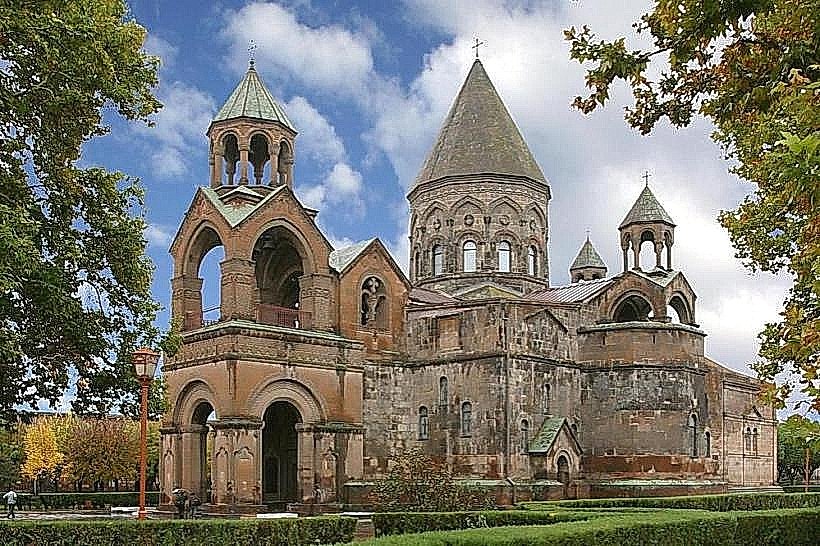
The city was founded as Vardkesavan in the 2nd century BCE and became the capital of the Arsacid Kingdom of Armenia as Vagharshapat in the 2nd century CE. It transitioned from a royal capital to the global center of the Armenian Apostolic Church following the adoption of Christianity in 301 CE. The most significant architectural reconstruction occurred in the 17th century and later in the mid-20th century, which established the monastic precinct's modern layout. The primary event shaping the current urban form was the 4th-century construction of the Mother See of Holy Etchmiadzin over a pagan temple site.
Demographics & Population
The population within city limits is approximately 46,500. The primary demographic is Armenian (99.4%), with trace populations of Yezidis and Russians. The median age is 35.5 years.
Urban Layout & Key Districts
The city is organized in a radial pattern centered on the Mother See of Holy Etchmiadzin. The most important districts for visitors are the Religious Core (Center), containing the cathedral and monastic gardens; the Cultural District (North), housing museums and schools; and the Shoghakat-Hripsime corridor (East), which aligns with the city's historic pilgrimage route.
Top City Landmarks
Etchmiadzin Cathedral (The oldest cathedral in the world)
Saint Hripsime Church
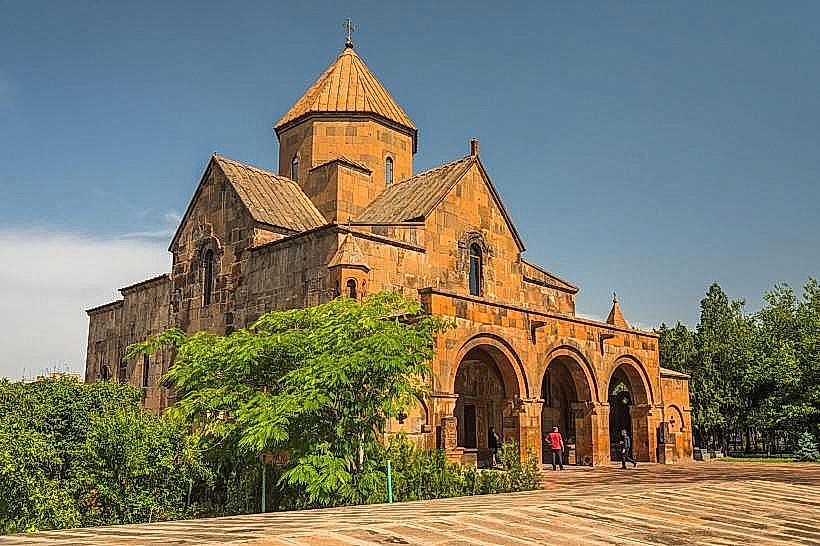
Shoghakat Church
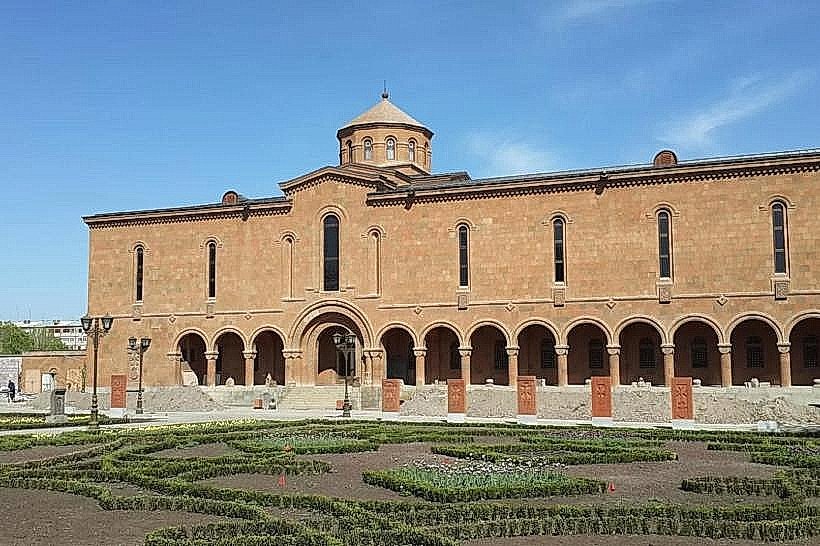
Treasury Museum of Etchmiadzin
Transportation Network
Movement within the city is facilitated by "Marshrutkas" (minibuses) and private taxis. There is no metro or tram system. The city is connected to Yerevan by high-frequency minibuses departing from the central square. Ride-sharing is highly reliable via the GG and Yandex Go apps. Taxis are abundant and utilize flat rates for inter-church transport. Traffic density is moderate, peaking during religious holidays and Sunday liturgies.
Safety & "Red Zones"
The general safety level is very high. There are no designated "red zones." Visitors should exercise standard caution during large religious festivals due to overcrowding. Common scams are non-existent, though unsolicited "tour guides" may occasionally approach visitors at the cathedral entrance.
Digital & Financial Infrastructure
Average internet speed is 60–100 Mbps via Ucom or Team Telecom. Main mobile carriers are Viva-MTS, Team, and Ucom. Card acceptance is high in the city center, hotels, and church-run gift shops; cash (Armenian Dram) is required for local markets. ATMs are ubiquitous near the central bus station and Komitas Square.
Climate & Air Quality
Temperatures range from -5°C in January to 34°C in July. The city experiences an arid, continental climate with high heat in the summer months. Air quality is generally good, though the Ararat plain is subject to localized dust during dry spells.
Culture & Social Norms
Tipping of 10% is standard. Handshakes are the standard greeting. Dress code is conservative; modest clothing (covered shoulders and knees) is strictly enforced for entering all religious sites, and women are often encouraged to wear headscarves inside the cathedral. Public smoking is common but restricted on church grounds.
Accommodation Zones
Stay in the City Center (near the Mother See) for walking access to the main cathedral and museums.
Stay in the Eastern District (near Saint Hripsime) for a quieter environment and easier access to the Yerevan-bound highway.
Local Cost Index
1 Espresso: 700 AMD ($1.75)
1 Standard Lunch: 4,000 AMD ($10.00)
1 Intercity Minibus to Yerevan: 300 AMD ($0.75)
Nearby Day Trips
Zvartnots Cathedral Ruins (5 km east)
Sardarapat Memorial Complex (25 km west)
Yerevan (18 km east)
Metsamor Archaeological Site (15 km southwest)
Facts & Legends
The name "Etchmiadzin" translates to "The Descent of the Only Begotten," based on a legend where Gregory the Illuminator saw a vision of Jesus Christ descending from heaven and striking the earth with a golden hammer to indicate where the cathedral should be built. A historical oddity is that the cathedral's foundation incorporates a "fire altar" from the pre-Christian era, which remains visible in the basement as a symbol of the transition between faiths.