Information
Landmark: Saint Gayane ChurchCity: Vagharshapat
Country: Armenia
Continent: Asia
Saint Gayane Church, Vagharshapat, Armenia, Asia
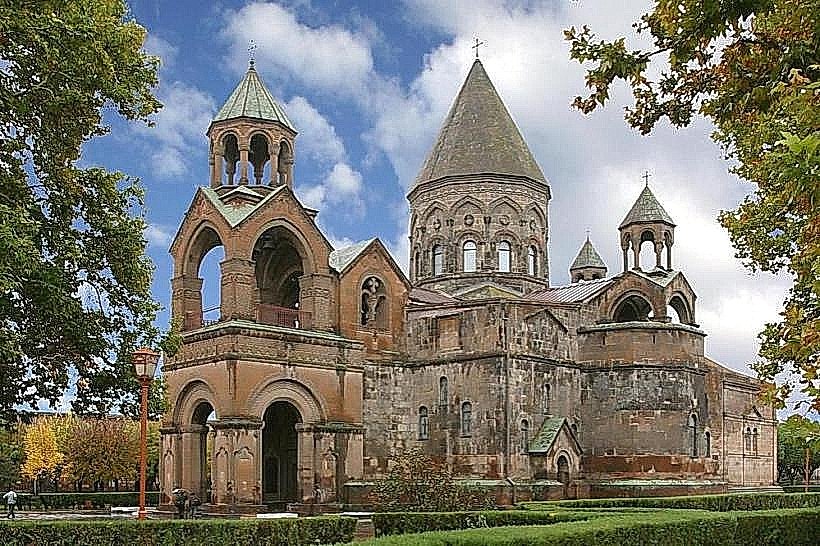
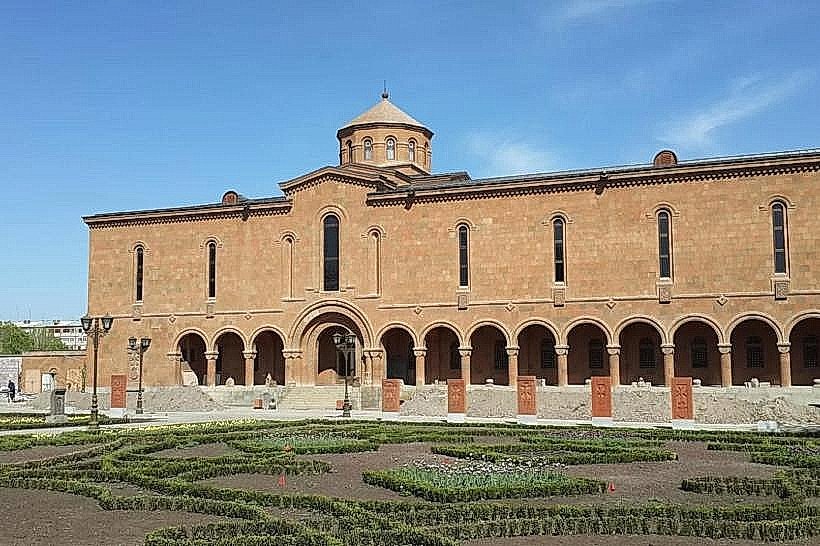
Saint Gayane Church is an Armenian Apostolic church located in Vagharshapat, Armenia.
Visual Characteristics
The church is constructed primarily from dark, rough-hewn basalt stone. Its exterior walls are unadorned, featuring simple, arched windows. The central dome rises from a drum, capped by a conical roof. The overall dimensions are approximately 15 meters in length and 10 meters in width, with a height of around 12 meters to the apex of the dome.
Location & Access Logistics
Saint Gayane Church is situated 1.5 kilometers south of the city center of Vagharshapat. Access is via Mashtots Avenue, which directly connects to the church grounds. Ample parking is available on-site. Public transport options include local bus routes that stop within a 500-meter walk of the church.
Historical & Ecological Origin
The current structure dates to 630 AD, built by Catholicos Ezra I. It is believed to stand on the site of an earlier church built by Saint Gregory the Illuminator in the 4th century. The church was consecrated in honor of Saint Gayane, one of the first Christian virgins martyred in Armenia.
Key Highlights & Activities
Visitors can observe the church's 7th-century architecture. Interior frescoes, though faded, depict religious scenes. The churchyard offers a space for quiet contemplation. Photography inside the church is permitted without flash.
Infrastructure & Amenities
Restrooms are available on the church grounds. Limited shade is provided by mature trees in the courtyard. Cell phone signal (4G) is generally reliable. No food vendors are located directly on-site; options are available in Vagharshapat city center.
Best Time to Visit
For optimal lighting conditions for photography, visit between 10:00 AM and 2:00 PM. The months of April through October offer the most stable weather patterns, with average temperatures ranging from 15°C to 25°C.
Facts & Legends
A notable feature is the tomb of Saint Gayane, located within the church. Legend states that the church was built on the spot where Saint Gayane was beheaded.
Nearby Landmarks
- Saint Hripsime Church (0.3km North)
- Etchmiadzin Cathedral (1.2km North)
- Zvartnots Cathedral Ruins (4.5km West)
- Mother See of Holy Etchmiadzin (1.1km North)