Information
City: YogyakartaCountry: Indonesia
Continent: Asia
Yogyakarta, Indonesia, Asia
Yogyakarta (often called Jogja) is the capital of the Special Region of Yogyakarta in south-central Java. It is the only Indonesian province still governed by a pre-colonial monarchy, serving as the cultural and intellectual heart of Java.
Historical Timeline
Founded in 1755 following the Treaty of Giyanti, which divided the Mataram Sultanate, Yogyakarta became the seat of Sultan Hamengkubuwono I. The city served as the temporary capital of the Indonesian Republic during the National Revolution (1946–1949). Due to its pivotal role in the independence movement, the Sultanate was granted the status of a "Special Region," allowing the Sultan to serve as hereditary governor.
Demographics & Population
The city population is approximately 430,000, with over 4 million in the metropolitan area. It is predominantly Javanese. Known as the "City of Students" (Kota Pelajar), it hosts over 100 institutions of higher education, including Gadjah Mada University, creating a massive transient student population from across the archipelago.
Urban Layout & Key Districts
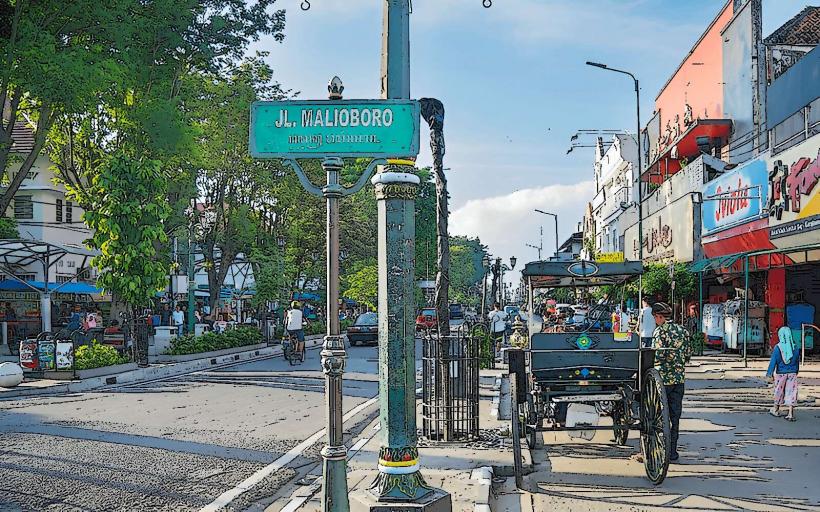
Jalan Malioboro: The city’s primary commercial artery, a 2 km stretch of shops, street food, and markets.
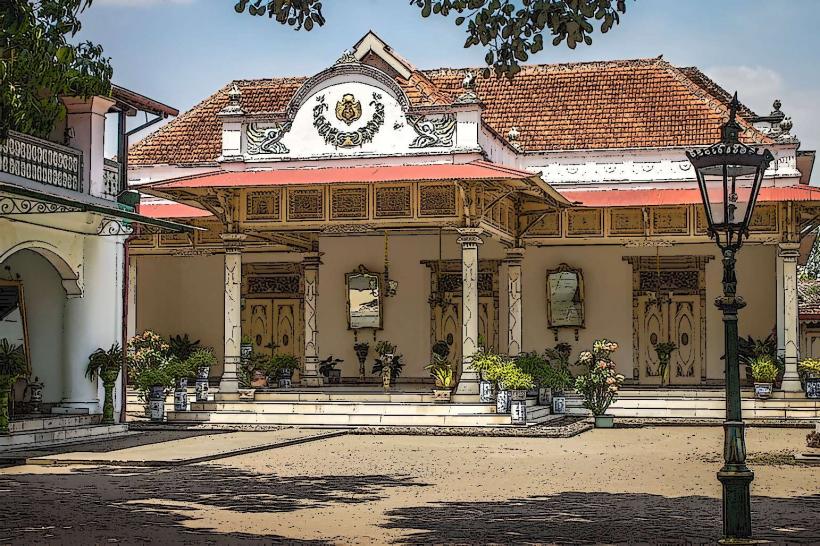
The Kraton: The walled palace complex of the Sultan, forming the spiritual and physical center of the city.
Prawirotaman: The historic "traveler’s district," known for boutique hotels, galleries, and cafes.
Kotagede: The silver-working district, featuring narrow alleys and remains of the first Mataram capital.
Top Landmarks
The Kraton (Sultan’s Palace): A living museum of Javanese architecture and royal heritage.
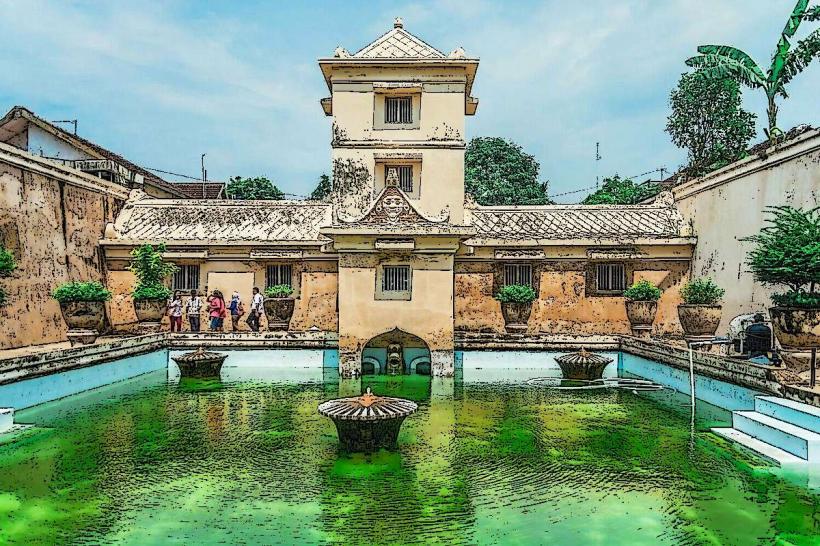
Taman Sari: The "Water Castle," a former royal garden and bathing complex featuring underground tunnels.
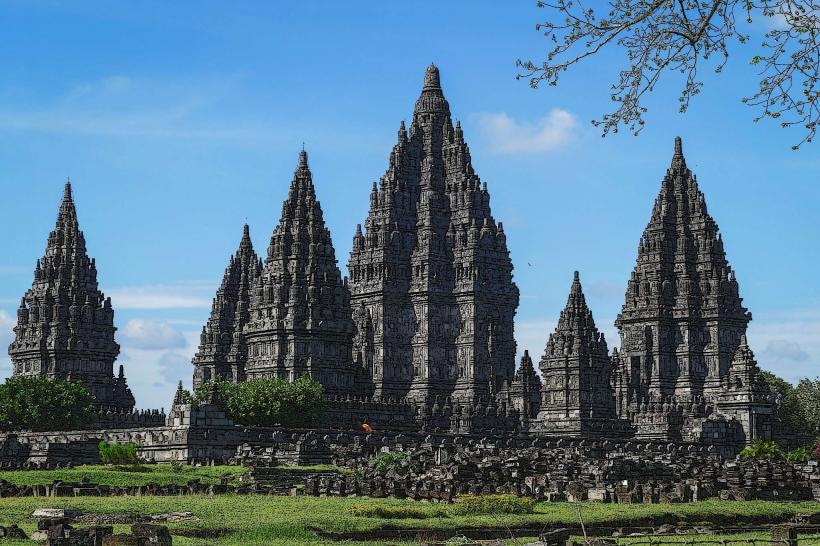
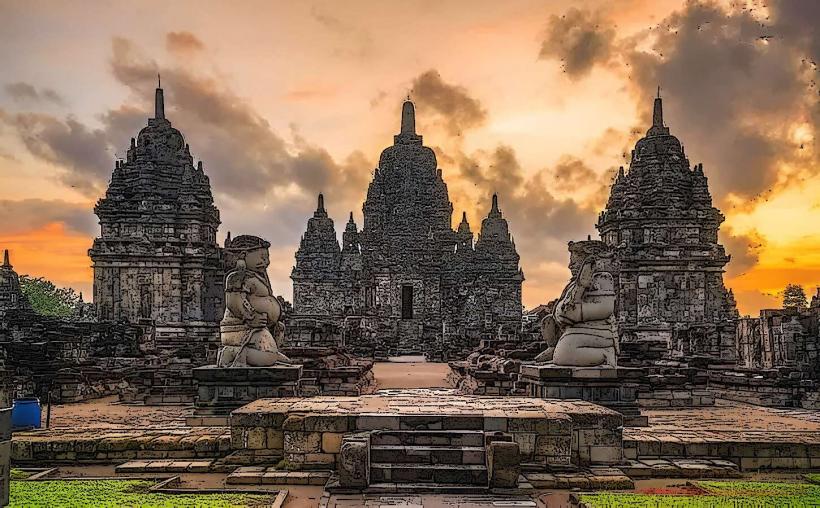
Prambanan: A 9th-century UNESCO Hindu temple complex dedicated to the Trimurti, located 17 km east.
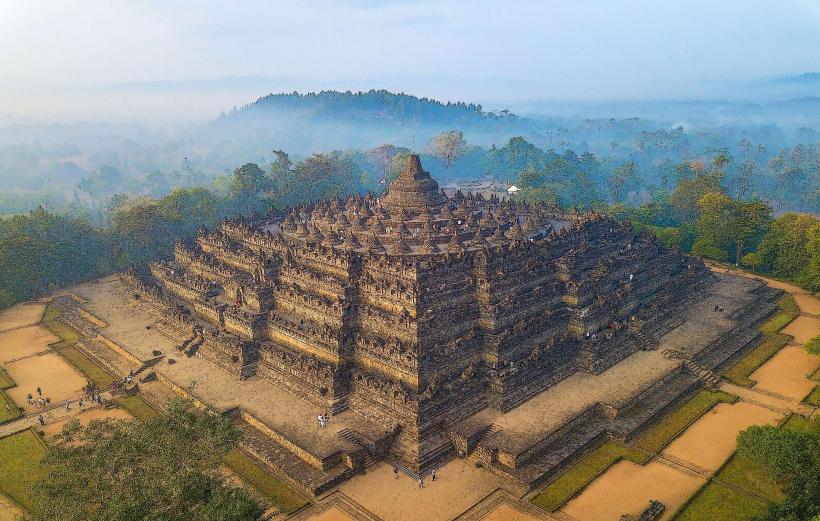
Borobudur: The world’s largest Buddhist temple (UNESCO), located 40 km northwest in neighboring Magelang.
Tugu Jogja: The iconic white and gold monument at the city's central intersection.
Transportation Network
Rail: Stasiun Tugu (central) and Lempuyangan serve lines to Jakarta, Surabaya, and Bandung.
Air: Yogyakarta International Airport (YIA) in Kulon Progo is the main gateway (approx. 1 hour from the city).
Public Transit: The Trans Jogja bus system operates on dedicated loops.
Local Transit: Gojek and Grab are highly efficient. Traditional Becak (cycle rickshaws) and Andong (horse carriages) are common in the tourist center.
Safety & "Red Zones"
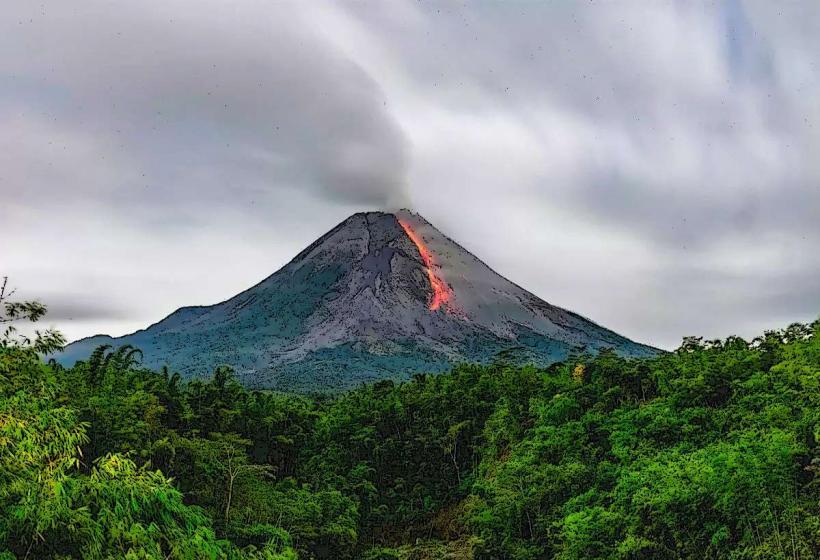
Volcanic Activity: Mount Merapi is one of the world's most active volcanoes; summit areas are frequently closed, and ashfall can disrupt travel.
Traffic: Malioboro and the university districts experience heavy congestion.
Natural Hazards: The region is seismically active; be aware of earthquake protocols.
Digital & Financial Infrastructure
4G/5G coverage is excellent. The currency is the Indonesian Rupiah (IDR). ATMs are ubiquitous. Cash is preferred at Malioboro stalls and small warungs, while QRIS (digital payment) is widely accepted in shops.
Climate & Air Quality
Tropical wet and dry climate. The dry season (April–October) is peak. Air quality is moderate, often affected by volcanic haze or agricultural burning in the surrounding plains.
Culture & Social Norms
Refined Manners: Javanese culture in Jogja emphasizes Unggah-ungguh (politeness and hierarchy).
Batik: Yogyakarta is the global center for hand-painted (Tulis) and stamped (Cap) batik.
Cuisine: Famous for Gudeg (a sweet jackfruit stew) and Bakpia (bean-filled pastries).
Local Cost Index (IDR)
1 Espresso: 25,000–45,000 IDR
1 Standard Lunch (Gudeg stall): 20,000–40,000 IDR
1 Short Becak Ride: 20,000–50,000 IDR
Nearby Day Trips
Mount Merapi: Jeep tours to the "Alien Stone" and bunker ruins at the base.
Parangtritis Beach: A volcanic sand beach south of the city, central to the legend of the Queen of the South Sea.
Gunung Kidul: A coastal region featuring karst caves and white sand beaches.
Facts & Legends
Legend says the city is built on a direct axis connecting Mount Merapi, the Tugu monument, the Kraton, and Parangtritis Beach-representing a balance between the fire of the volcano and the water of the ocean. A geographic fact: Borobudur was hidden for centuries under volcanic ash and jungle growth before being "rediscovered" in 1814. Historically, Yogyakarta remains the only Indonesian city where the pre-colonial social structure remains legally integrated into the modern republic's government.