Information
Landmark: Abbey of MontecassinoCity: Naples
Country: Italy
Continent: Europe
Abbey of Montecassino, Naples, Italy, Europe
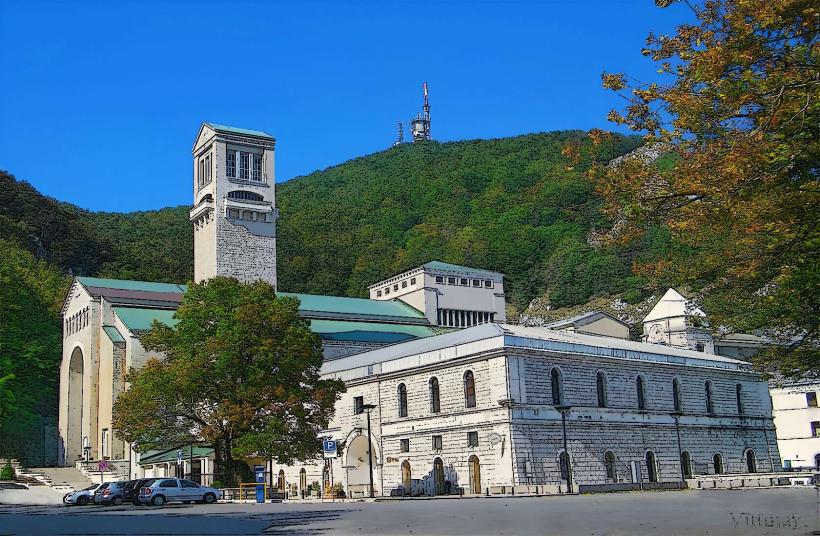
The Abbey of Montecassino is a territorial monastery and basilica located on a rocky hill at an elevation of 516 meters in the town of Cassino, Italy. It serves as the primary seat of the Benedictine Order and is a significant pilgrimage site situated approximately 130 kilometers southeast of Rome and 95 kilometers north of Naples.
Visual Characteristics
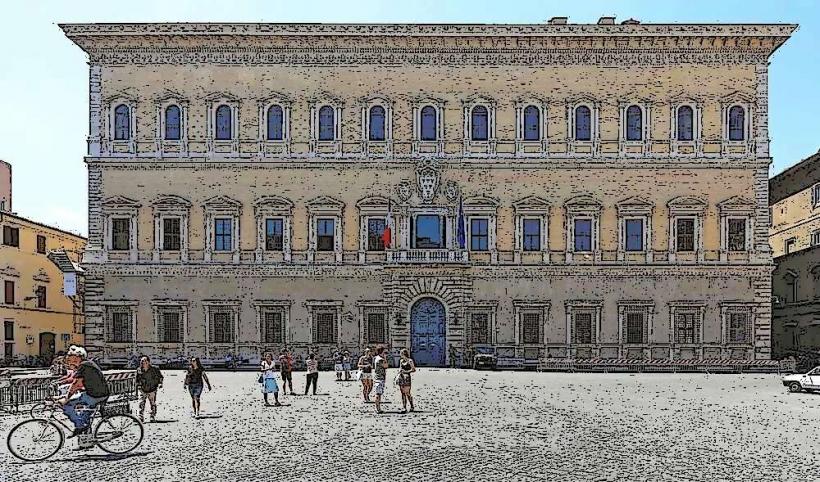
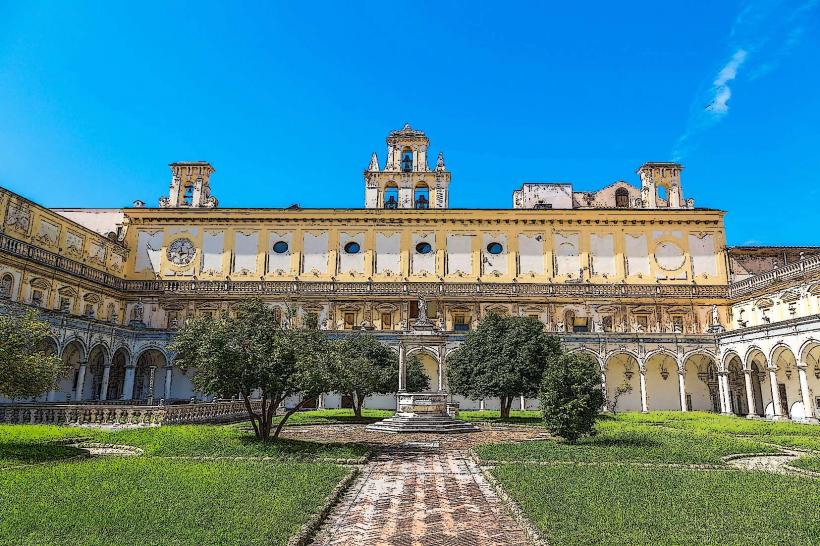
The complex is a monumental masonry structure rebuilt in a Neapolitan Baroque style with white travertine and stone. Its facade features high, thick walls with rows of arched windows, and the interior is decorated with polychrome marble, frescoes, and gold-leaf mosaics. The abbey is organized around three central cloisters-the Entrance Cloister, the Cloister of the Benefactors, and the Bramante Cloister-all characterized by Doric and Ionic stone arcades.
Location & Access Logistics
The abbey is accessed via a 9-kilometer winding road with multiple hairpin turns from the Cassino town center. Travelers from Naples can take the A1 Autostrada (Cassino exit) or the regional train to Cassino Station, where a local shuttle bus or taxis provide transfers to the summit. A large on-site parking lot is available for a fee, which accommodates both private cars and motorhomes.
Historical & Ecological Origin
Founded in 529 AD by St. Benedict of Norcia on the site of an ancient temple dedicated to Apollo, the abbey is the birthplace of Western monasticism. The current structure is a faithful 20th-century reconstruction; the monastery was almost entirely destroyed on February 15, 1944, during the Battle of Monte Cassino by Allied bombing. It was rebuilt "where it was, as it was" over the following decade and reconsecrated in 1964.
Key Highlights & Activities
Visitors can tour the Montecassino Abbey Museum, which houses medieval manuscripts, liturgical objects, and archaeological finds. The Basilica contains the tomb of Saint Benedict and his sister Saint Scholastica, located beneath the high altar. Other activities include exploring the underground crypt decorated with 20th-century Beuron School mosaics and walking through the Bramante Cloister to see the 16th-century statues that survived the WWII bombardment.
Infrastructure & Amenities
Public restrooms are located near the museum entrance. There is a gift shop selling herbal remedies, liqueurs, and books produced by the monks. While 4G and 5G cellular signals are generally strong on the plateau, the thick stone walls of the interior buildings can obstruct reception. No full-service restaurants are located inside the monastic walls, but vending machines and water fountains are available.
Best Time to Visit
The best lighting for exterior photography of the valley and the abbey’s white stone facade is in the early morning or late afternoon. The site is open daily from 08:45 to 19:00 (March to October) and until 16:45 in winter. To see the interior of the Basilica without interruption, avoid Sunday mornings when multiple Masses are held.
Facts & Legends
According to local tradition, the bronze statue of Saint Benedict in the Bramante Cloister was the only major sculpture to remain standing amidst the rubble after the 1944 bombing. A verified historical oddity is the "Constantinople Doors," 11th-century bronze doors commissioned by Abbot Desiderius that contain an engraved list of the abbey's vast historical properties and possessions.
Nearby Landmarks
Polish War Cemetery: 0.5km West
Cassino War Cemetery (Commonwealth): 4.5km South
Rocca Janula (Medieval Castle): 1.2km Southeast
Cassino Archaeological Museum (Roman Theater): 3.5km South
Historiale di Cassino (Multimedia Museum): 4.0km South