Information
Landmark: Artus CourtCity: Gdansk
Country: Poland
Continent: Europe
Artus Court, Gdansk, Poland, Europe
Artus Court (Polish: Dwór Artusa) is one of the most significant historical buildings in Gdańsk, Poland. Located on Long Market (Długi Targ) in the heart of the Old Town, this building is an architectural masterpiece and a symbol of the city’s rich history. Artus Court has served various functions over the centuries, primarily as a meeting place for wealthy merchants, a social club, and an important cultural and political center during the city’s prosperity as part of the Hanseatic League.
History and Significance
Medieval Origins: The construction of Artus Court began in the late 14th century (around 1350) and was completed in the 15th century. The building was originally designed as a gathering place for Gdańsk’s wealthiest and most influential citizens, including merchants and artisans. These men, who were often members of powerful trade guilds, would meet here to discuss business, politics, and city affairs. Artus Court was, in essence, a civic center and the heart of the city’s social life.
Hanseatic League: Gdańsk, as a member of the Hanseatic League, was a major trade center, and Artus Court played a central role in the social and political life of the merchant elite. The court’s name is believed to be derived from King Arthur and the Knights of the Round Table, emphasizing the court’s role as a gathering place for prominent figures, similar to a medieval version of a royal court.
Architectural Evolution: The building was originally constructed in the Gothic style, but it was later expanded and renovated in the Renaissance style in the 16th century, reflecting the growing wealth and importance of Gdańsk. Over time, Artus Court became one of the most magnificent buildings in the city, known for its beautiful architecture and as a symbol of Gdańsk's prosperity.
World War II and Restoration: During World War II, Artus Court was severely damaged, as much of Gdańsk was destroyed during the bombing of the city in 1945. After the war, the building was carefully restored, preserving its historical and architectural significance. Today, it stands as a symbol of the city's resilience and dedication to preserving its cultural heritage.
Architecture and Design
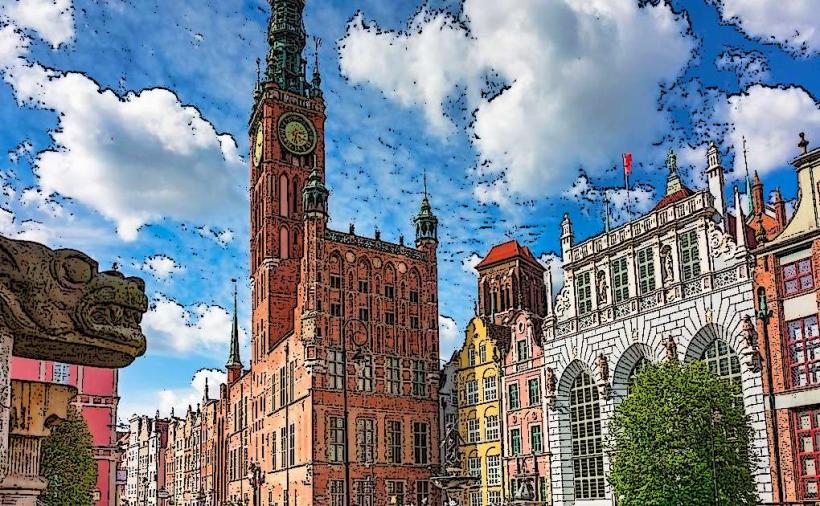
Facade and Exterior: Artus Court’s exterior is a stunning example of Renaissance and Gothic architectural styles, characterized by ornate carvings, decorative details, and tall windows. The facade is richly decorated with motifs from mythology, biblical stories, and historical events, reflecting the cultural tastes of the period. The building’s roofline features a series of gables, adding to its imposing and decorative appearance.
Main Entrance: The main entrance to Artus Court is a grand, arched portal framed by elaborate stonework. The door is flanked by columns, and above it, there is a balcony with an ornate railing. The entrance is meant to impress visitors, signaling the importance of the court as a center of civic and social life.
Interior Design: Inside, Artus Court is equally impressive, with a spacious hall decorated with beautiful woodwork, paintings, and sculptures. The main hall features a vaulted ceiling with wooden beams painted in intricate patterns. The walls are adorned with portraits of famous citizens, scenes from Gdańsk’s history, and mythological figures. The court is also home to painted ceilings, elaborate fireplaces, and a large wooden staircase.
The Great Hall: The Great Hall (or Main Hall) of Artus Court is the most important room in the building. It was the space where the city’s wealthiest citizens would gather for meetings, feasts, and celebrations. The hall is vast and has an air of grandeur, with its high ceilings, rich tapestries, and beautiful chandeliers. In this hall, decisions about the city's trade, economy, and politics were often made, and it served as the center for many important social gatherings.
Decorative Elements: Artus Court is renowned for its decorative elements, many of which reflect Renaissance, Gothic, and Baroque influences. The ceilings are richly painted with mythological and religious themes, and the walls are adorned with wooden panels and carvings depicting scenes from medieval chivalric stories, including King Arthur and his knights. The tapestries that decorate the hall tell stories of heroic deeds and legends. The fireplaces are intricately carved with symbols of power and wealth, showcasing the craftsmanship of the time.
Museum and Cultural Role
Museum of Gdańsk: Today, Artus Court houses part of the Museum of Gdańsk (Polish: Muzeum Gdańska). The museum displays a variety of exhibits dedicated to the city’s history, including medieval and Renaissance artifacts, furniture, and paintings that illustrate the life of the city’s elites and the importance of Artus Court as a center of power.
Cultural Events: Artus Court continues to play a cultural role in Gdańsk today. The building hosts exhibitions, concerts, and cultural events, including classical music performances, art shows, and lectures. The Great Hall is sometimes used for gala events and public ceremonies, maintaining the building’s historical role as a social and civic center.
Tourist Attraction: As one of the most iconic buildings in Gdańsk, Artus Court is a popular tourist attraction. Visitors can explore the museum, view the stunning architecture, and learn about the history of Gdańsk during the medieval and Renaissance periods. The building is also an important site for those interested in the Hanseatic League and its influence on the city’s development.
Key Features and Artworks
The Great Fireplace: One of the standout features of Artus Court is its great fireplace, which is a magnificent example of Renaissance woodwork. The fireplace is surrounded by intricately carved oak panels and stone reliefs depicting mythological scenes.
Paintings and Sculptures: Artus Court is home to numerous paintings and sculptures that reflect the city’s history and the wealth of its merchants. Some paintings depict the founding of Gdańsk, while others showcase important events in the city’s life, such as royal visits and merchant gatherings.
Chandelier: The building’s chandelier is a remarkable piece of craftsmanship, made of brass and glass. It hangs in the Great Hall and is considered one of the most beautiful examples of Renaissance lighting.
Conclusion
Artus Court is a jewel of Gdańsk’s architectural and cultural heritage. With its stunning blend of Gothic, Renaissance, and Baroque architecture, it stands as a reminder of Gdańsk’s prosperity and its position as a center of trade and culture during the Hanseatic League. Today, as part of the Museum of Gdańsk, Artus Court offers visitors a fascinating glimpse into the city’s rich history, its elite merchant culture, and its vibrant artistic traditions. Whether you’re admiring the elaborate woodwork, exploring the Great Hall, or learning about Gdańsk’s past, Artus Court remains an essential stop for anyone visiting the city.