Information
Landmark: Barone FortressCity: Sibenik
Country: Croatia
Continent: Europe
Barone Fortress, Sibenik, Croatia, Europe
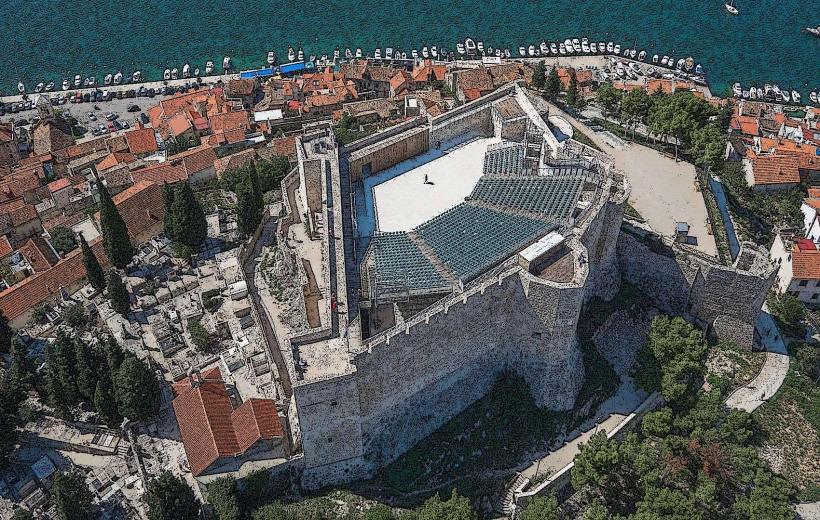
Barone Fortress is a 17th-century fortification located on Vidakuša Hill, 80 meters above sea level, overlooking the historic center of Šibenik, Croatia. It is one of the four key components of the city's integrated defense system.
Visual Characteristics
The fortress is an irregular star-shaped structure designed to withstand 17th-century artillery fire. Its layout consists of a northern "hornwork" featuring two demi-bastions connected by a curtain wall, which served as the primary artillery position. The southern, lower-level section originally housed barracks and magazines. The architecture utilizes thick limestone walls reinforced with earth mounds to absorb cannon impacts.
Location & Access Logistics
The main entrance is located on the northwest side of the fortress at Put Vuka Mandušića street.
Distance: Approximately 0.6km (5–10 minute drive or 20-minute uphill walk) from the city center and the Cathedral of St. James.
Parking: A dedicated parking lot on the northeast side accommodates up to 40 cars. Larger vehicles (buses) cannot access the gate and must use public parking at Težačka ulica or Put Gimnazije.
Accessibility: The site is fully adapted for visitors with mobility impairments, featuring ramps on the eastern side and wheelchair-accessible augmented reality (AR) points.
Historical Origin
Constructed in the summer of 1646, the fortress was built in just 58 days by the citizens of Šibenik to defend against an imminent Ottoman siege during the Cretan War (War of Candia). It was designed by the Genoese military engineer Father Antonio Leni. Unlike other Šibenik forts named after nearby churches, it was named "Barone" in honor of Baron Christoph Martin von Degenfeld, the German nobleman in Venetian service who commanded the city's defense.
Key Highlights & Activities
Augmented Reality Tour: Visitors use provided tablets to view 3D reconstructions of the 1647 battle and historical urban landscapes at designated AR points.
Panoramic Vistas: The ramparts offer unobstructed views of the Šibenik archipelago, St. Anthony’s Channel, and the neighboring St. Michael’s and St. John’s fortresses.
Gastro-Cultural Center: An on-site facility dedicated to local Dalmatian cuisine, offering tastings and educational programs.
Infrastructure & Amenities
Bistro Barone: A modern café bar and restaurant located within the fortress grounds.
Facilities: Equipped with high-speed 5G connectivity, modern restrooms (including disabled-access facilities), and a souvenir shop.
Pet Policy: The location is pet-friendly (dogs on leash), excluding the indoor bistro area.
Best Time to Visit
Photography: Late afternoon and sunset provide the best lighting for the city skyline and the Adriatic Sea.
Seasonality: May, June, and September offer the best balance of mild temperatures and lower crowd density. During the peak summer months (July–August), morning visits (09:00–11:00) are advised to avoid the midday heat.
Facts & Legends
Local history refers to Baron von Degenfeld as the "fourth saint" of Šibenik due to his role in repelling a force of 25,000 Ottoman soldiers with only a few thousand defenders. The fortress was originally built as a temporary "ridotto" (small fort) and was only later expanded into a permanent stone stronghold in 1659. In the early 20th century, it was briefly renamed "Šubićevac," but the original name was restored following its 2016 revitalization.
Nearby Landmarks
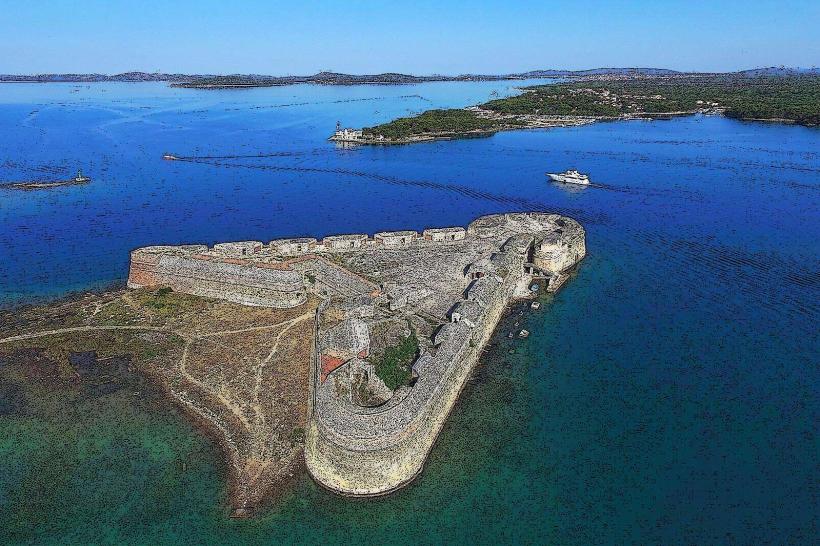
St. John’s Fortress – 0.4km North (accessible via a steep walking path)
St. Michael’s Fortress – 0.7km West
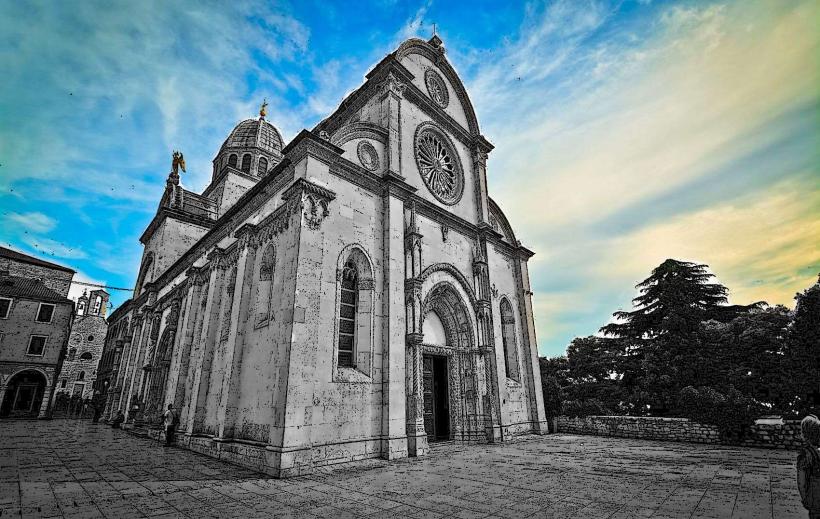
Cathedral of St. James – 0.6km Southwest
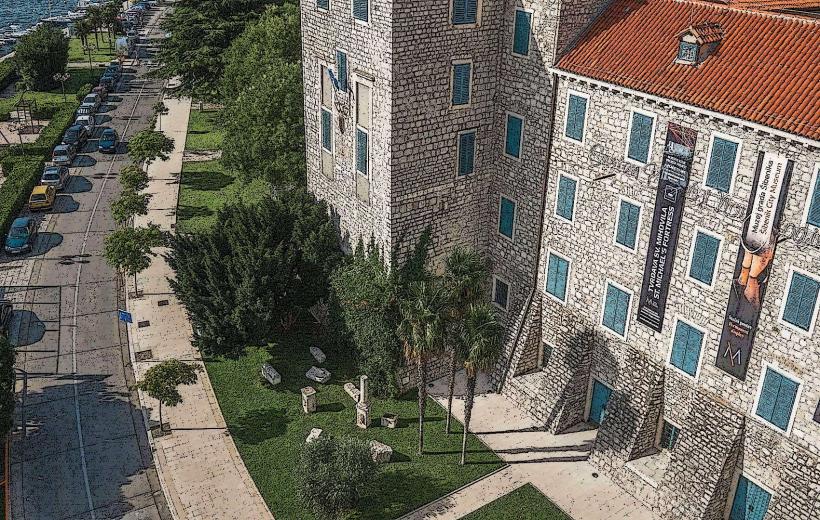
Šibenik City Museum – 0.65km Southwest