Information
Landmark: Krka National ParkCity: Sibenik
Country: Croatia
Continent: Europe
Krka National Park, Sibenik, Croatia, Europe
Krka National Park is a protected area encompassing the Krka River and the lower course of the Čikola River in central Dalmatia, Croatia. It is located approximately 10 kilometers inland from the city of Šibenik, covering an area of 109 square kilometers.
Visual Characteristics
The park features seven travertine waterfalls, with Skradinski Buk being the largest at 400 meters wide and 45.7 meters high. The river flows through deep limestone canyons reaching depths of 200 meters, characterized by turquoise water and dense riparian vegetation including willow, poplar, and alder. Travertine barriers, formed by the encrustation of calcium carbonate on mosses and algae, create a series of stepped pools and cascades.
Location & Access Logistics
There are five main entrances: Lozovac, Skradin, Roški Slap, Burnum, and Kistanje.
Lozovac: The primary road entrance with large free parking; a park shuttle bus transports visitors to the falls during peak season.
Skradin: Access via boat (included in ticket) from the Skradin marina, located 15km north of Šibenik.
Public Transport: Direct buses run from Šibenik bus station to Lozovac and Skradin.
Boats: Internal boat excursions connect Skradinski Buk to Visovac Island and Roški Slap.
Historical & Ecological Origin
The Krka River formed its current travertine profile during the post-Pleistocene era. Historically, the park is home to the Krka Hydropower Plant (Jaruga), which began operations in 1895, making it one of the oldest alternating current power systems in the world. The park also contains the remains of the Roman military camp Burnum and several 14th-century medieval fortresses. It was officially proclaimed a National Park in 1985.
Key Highlights & Activities
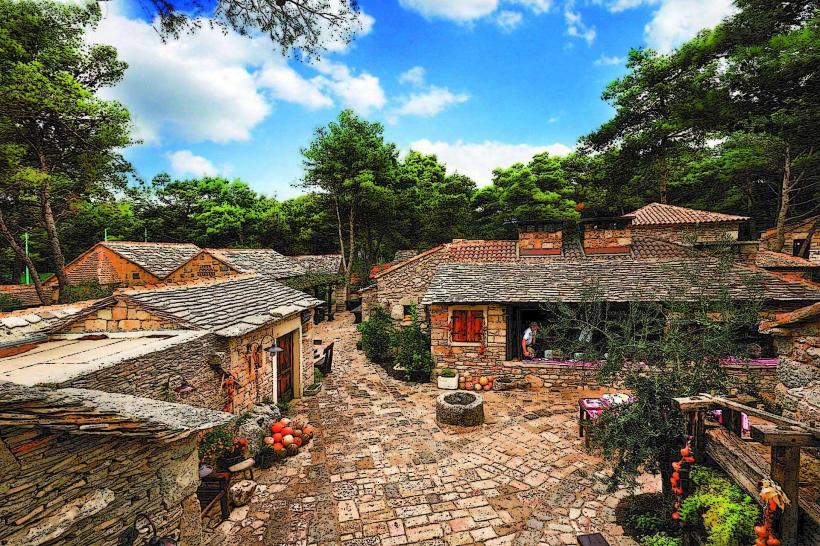
Visitors can traverse the 1.9km circular wooden boardwalk at Skradinski Buk. Swimming is strictly prohibited in all areas of the park as of 2021 to preserve travertine formations. Available activities include boat trips to the Franciscan Monastery on Visovac Island, exploring the Krka Monastery (Holy Archangel), and visiting the ethno-village featuring restored watermills and weaving workshops.
Infrastructure & Amenities
The Lozovac and Skradin entrances feature visitor centers, souvenir shops, and restaurants. Restrooms are located at Skradinski Buk, Roški Slap, and Lozovac. 4G/5G cellular signal is available at main tourist hubs but becomes unreliable in deep canyon sections. Shade is extensive along the forested boardwalks.
Best Time to Visit
Optimal water flow occurs in April and May, while the best month for lush vegetation is June. For photography, early morning (08:00) provides the most balanced lighting at Skradinski Buk. The park is most crowded between 11:00 and 15:00 from July to August; late afternoon visits during these months offer lower temperatures and reduced foot traffic.
Facts & Legends
The park contains the second highest density of lavender per square meter in Europe. A local legend concerns the "Ozren" cave near the waterfalls, which was purportedly used by a local hermit who could predict floods based on the sound of the water hitting the travertine barriers.
Nearby Landmarks
Skradin Town – 4.0km West
Bribirska Glavica (Archaeological Site) – 12.0km Northwest
Burnum Roman Amphitheatre – 18.0km North
Visovac Monastery – 6.5km North
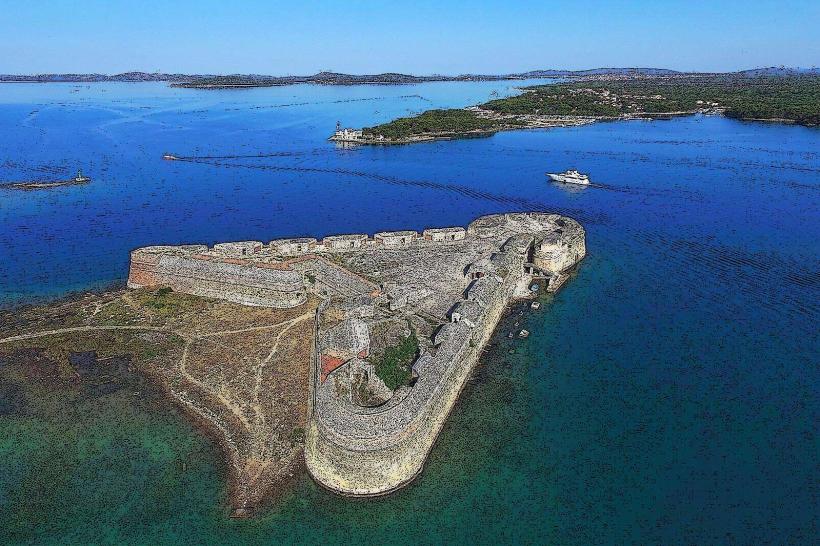
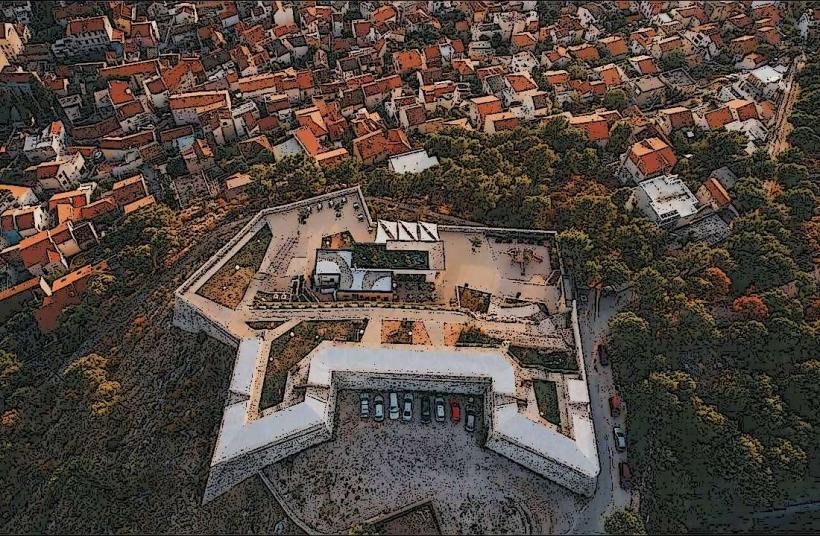
St. Nicholas Fortress – 16.0km Southwest