Information
Landmark: Basilica of Damous El KaritaCity: Carthage
Country: Tunisia
Continent: Africa
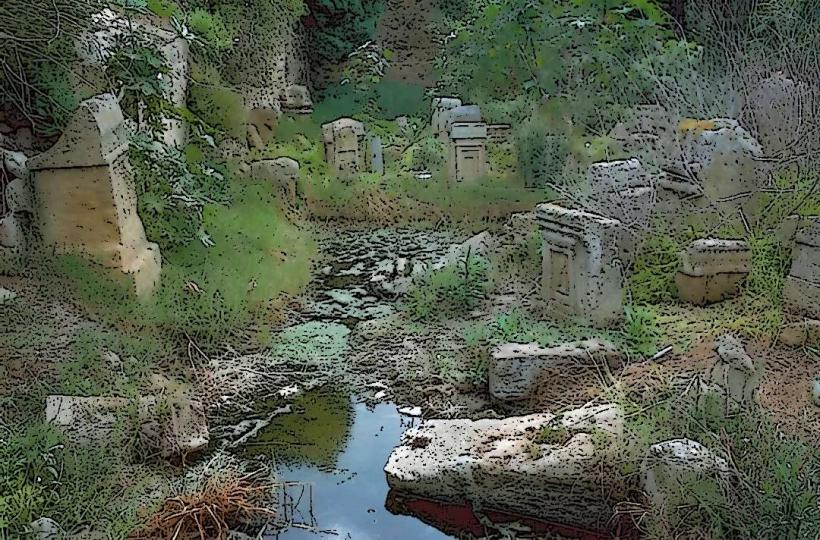
Basilica of Damous El Karita, Carthage, Tunisia, Africa
The Basilica of Damous El Karita is one of the most significant and impressive Christian sites from Late Antiquity in Carthage. It highlights Carthage’s important role as a major center of early Christianity, especially during the Vandal and Byzantine periods.
Here is a detailed description:
Historical Context
Period: The basilica dates from the 4th to the 7th centuries CE.
It was part of a larger religious complex that developed during the time when Christianity had become the dominant religion of the Roman Empire and continued to flourish under the Byzantines.
The basilica served not just for worship but also for religious ceremonies, processions, and possibly as a pilgrimage site.
The name "Damous El Karita" is thought to be a later corruption of the Latin Domus Caritatis, meaning "House of Charity."
Physical Characteristics
Size: It was one of the largest Christian basilicas in North Africa. Some estimates suggest the main building was around 65 meters long.
Architecture:
The basilica followed the classic Roman basilica plan, with a central nave, two side aisles, and a semi-circular apse at the eastern end.
A baptistery with an ornate baptismal font has been found nearby, suggesting the basilica was a center for Christian initiation rites.
The complex also included crypts, chapels, courtyards, and colonnades.
Some parts of the site feature beautiful mosaic floors and decorative stonework.
Materials: Local stone and Roman construction techniques (including the use of mortar and tiles) were used, blending traditional Roman architectural styles with Christian symbolism.
Religious Importance
The basilica was likely a major center for the Christian community of Carthage.
It may have been associated with relics or the memory of important saints or martyrs, making it a pilgrimage destination.
Given its size and complexity, it probably hosted important ceremonies, episcopal functions, and possibly even regional synods.
Decline and Abandonment
After the Arab conquest of North Africa in the 7th century, Christian institutions like Damous El Karita gradually declined.
The basilica complex fell into ruin over time. Stones were often reused for later constructions, and earthquakes and environmental factors accelerated its destruction.
By the medieval period, the site had become mostly buried and forgotten until modern excavations uncovered it.
Archaeological Findings
Excavations in the 20th century revealed the large footprint of the basilica and associated buildings.
Important discoveries include:
Mosaic fragments with Christian symbols (crosses, fish, vines).
A large baptistery shaped like a cross, decorated with marble and mosaics.
Numerous graves and tombs were found in and around the basilica, many decorated, suggesting that it served as a burial place for important individuals.
Remains of porticoes and additional chapels indicate that the complex expanded over time.
Despite damage and looting over centuries, the plan of the complex is still clearly visible today.
Modern State
Today, the Basilica of Damous El Karita is part of the archaeological parks of Carthage near the modern town.
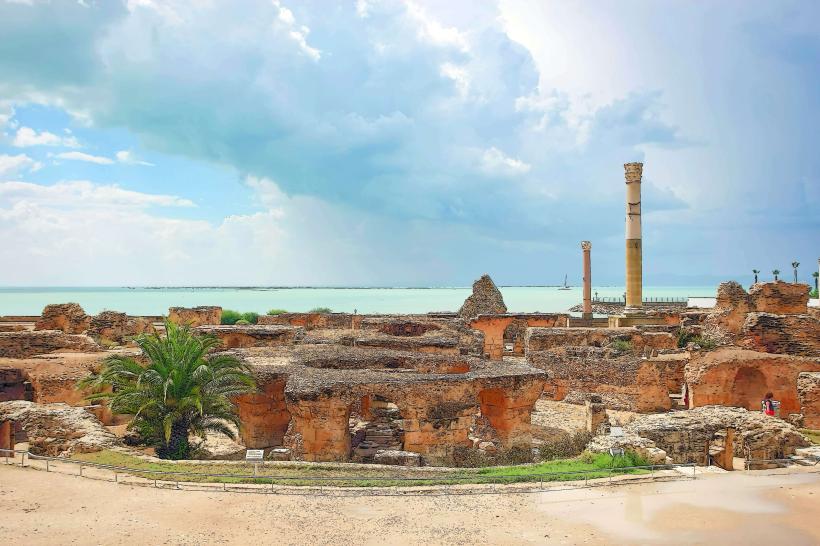
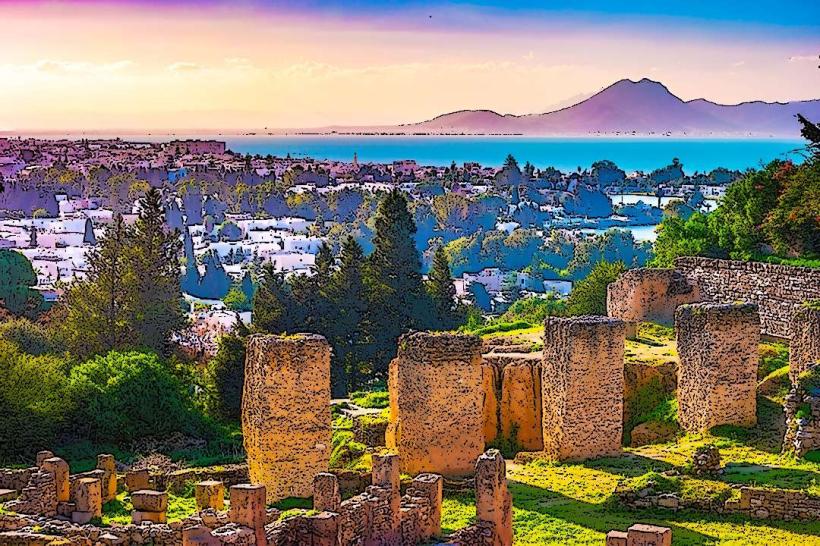
Although much of the superstructure has disappeared, the outlines of walls, the baptistery, parts of the flooring, and many foundation stones remain.
The site is not as reconstructed or monumental as some others in Carthage but retains great historical and spiritual importance.
Symbolism
The Basilica of Damous El Karita represents:
The Christianization of Carthage after centuries of Punic and Roman paganism.
The city’s role as a major center of Christian thought, home to figures like Tertullian, Cyprian, and Saint Augustine.
The resilience of Christian communities through Vandal persecution (since the Vandals followed Arian Christianity, not Nicene Christianity) and into the Byzantine reconquest.
The site stands as a reminder of the religious transformations that swept the Mediterranean world and how Carthage adapted to its role at the crossroads of paganism, Christianity, and later Islam.