Information
Landmark: Blidinje Nature ParkCity: Konjic
Country: Bosnia and Herzegovina
Continent: Europe
Blidinje Nature Park, Konjic, Bosnia and Herzegovina, Europe
Blidinje Nature Park is a 358-square-kilometer protected area situated in the central Dinaric Alps of northern Herzegovina. While it borders the Konjic municipality to the east (separated by the Neretva River and Prenj mountains), it administratively falls within the municipalities of Jablanica, Posušje, Tomislavgrad, Prozor-Rama, and the City of Mostar.
Visual Characteristics
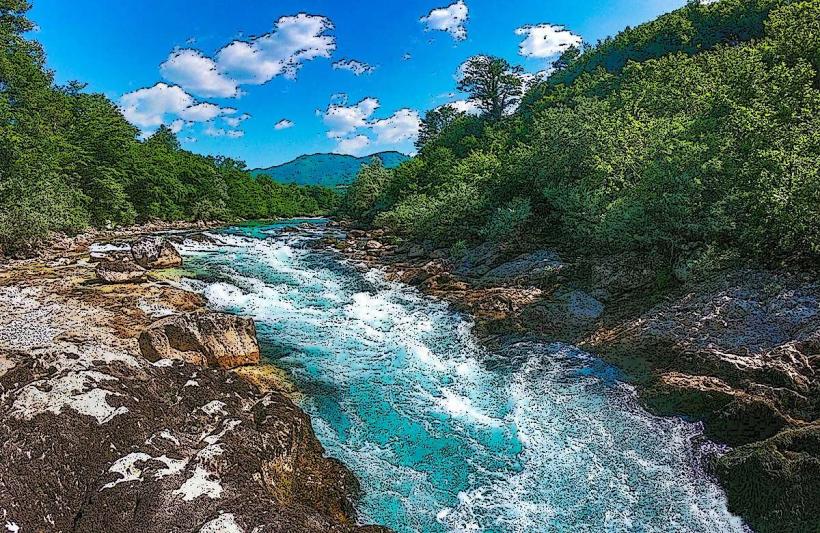
The park is dominated by a vast high-altitude plateau, Dugo Polje, and three major mountain massifs: Čvrsnica ($2,228\text{ m}$), Vran ($2,074\text{ m}$), and Čabulja. The landscape features a mosaic of open grasslands, dense forests of endemic Munika (Bosnian) pine, and rugged karst rock formations. The central visual feature is Blidinje Lake, a shallow glacial lake known for its reflective turquoise water.
Location & Access Logistics
The park is located approximately 1.5 hours from the Adriatic coast and 2 hours from Sarajevo. Access from Konjic involves driving via Jablanica and then following the regional road R-419 into the mountains. Most roads within the park are paved, though access to high-altitude peaks and certain necropolises requires off-road vehicles or hiking. Large parking areas are available at the Risovac ski center and the Masna Luka visitor center.
Historical & Ecological Origin
Established in 1995, the park preserves a unique ecological zone that transitions between Mediterranean and continental climates. It is home to over 1,500 plant species, including over 200 endemics. Historically, the area was a significant transit point for medieval caravans, evidenced by numerous stećak (medieval tombstone) necropolises, including the UNESCO-listed Dugo Polje necropolis.
Key Highlights & Activities
Hajdučka Vrata: A natural limestone ring (rock arch) on Čvrsnica Mountain, considered a national geomorphological monument.
Blidinje Lake: The largest mountain lake in Bosnia and Herzegovina, ideal for photography and bird watching.
Risovac Ski Resort: A winter sports hub featuring a four-seater lift and diverse slopes.
Hiking & Biking: Extensive trail networks, including sections of the Via Dinarica "White Trail."
Masna Luka: A protected forest reserve containing a Franciscan monastery and a natural spring.
Infrastructure & Amenities
The main visitor center and administrative building are located in Masna Luka. The park features several mountain lodges (Vilinac, Orlova Stina), motels, and traditional restaurants like Hajdučke Vrleti, famous for local Herzegovinian cuisine. 4G cellular signals are generally available in the plateau area but can be lost in deep canyons or high mountain peaks.
Best Time to Visit
Spring (May–June) is optimal for seeing blooming endemic flora and the full lake. Summer (July–August) provides a cool mountain retreat from the Herzegovinian heat. Winter (December–March) is the peak season for skiing and snowshoeing at Risovac. The lake often partially dries out during late summer and autumn.
Facts & Legends
The park is home to the symbolic "Hajdučka Republika Mijata Tomića," a self-proclaimed humorous micronation centered at the Hajdučke Vrleti motel. Legend states that outlaws (hajduks) who passed through the Hajdučka Vrata arch would become bulletproof. The area is also the primary habitat for the Tornjak, a traditional Bosnian mountain shepherd dog.
Nearby Landmarks
Jablanica (25km East)
Ramsko Lake (35km North)
Prenj Mountain Massif (Visible to the East)
Diva Grabovica Canyon (Southeastern edge of the park)
Mostar (55km South)