Information
Landmark: Old Konjic MosqueCity: Konjic
Country: Bosnia and Herzegovina
Continent: Europe
Old Konjic Mosque, Konjic, Bosnia and Herzegovina, Europe
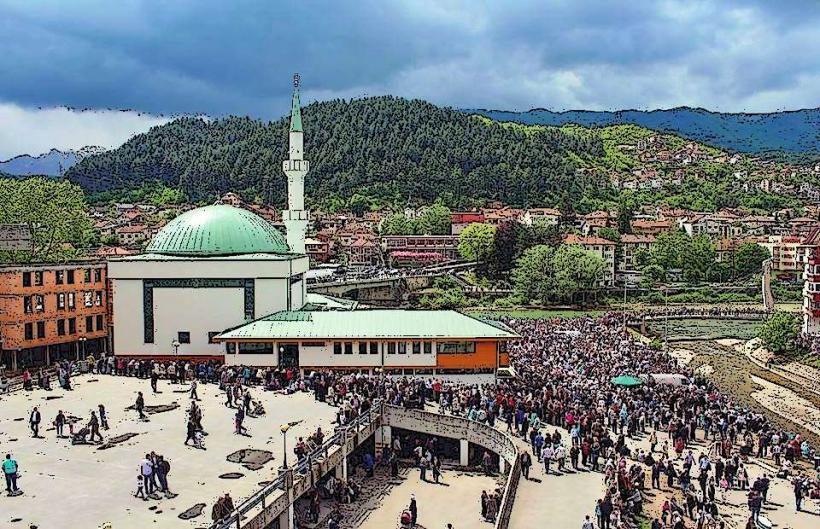
The Old Mosque in Konjic, most commonly identified as the Junuz-Čauš Mosque or Čaršija Mosque, is a 16th-century religious structure located in the center of the town's historic market district. It is recognized as a National Monument of Bosnia and Herzegovina.
Visual Characteristics
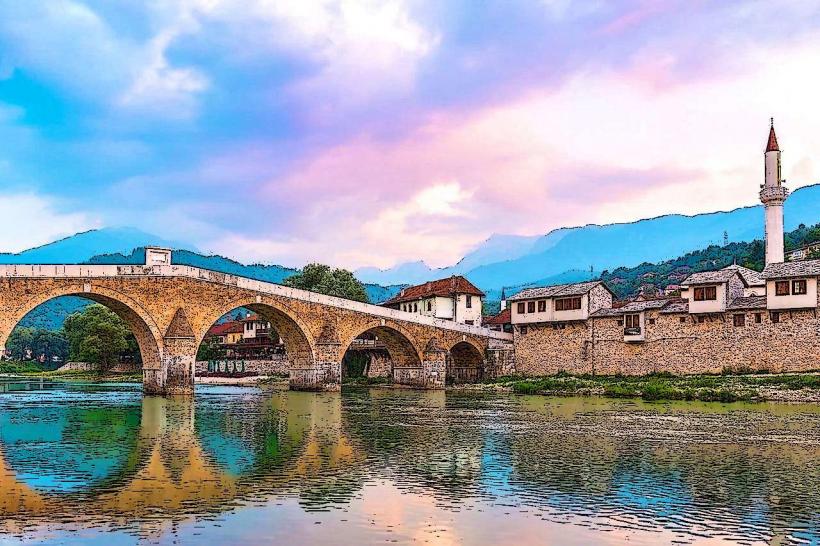
The mosque is a single-spaced building with a stone minaret and a hipped (four-sloped) roof. Following a 1922 restoration, the original stone floor was replaced with timber, and the roof was covered with sheet metal. Its current appearance includes a reconstructed minaret and a prayer hall featuring traditional Islamic calligraphy. The exterior is plastered and whitewashed, consistent with Ottoman neighborhood (mahalle) mosque architecture.
Location & Access Logistics
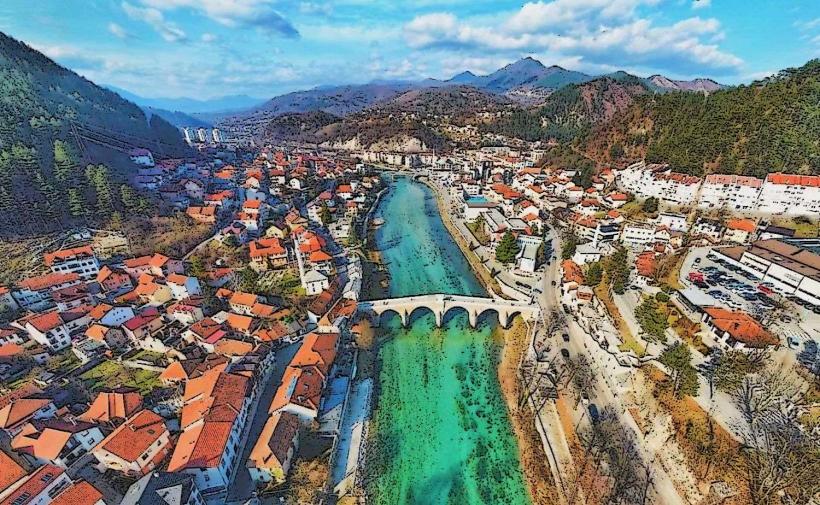
The mosque is situated at Stara čaršija 15, in the heart of the old merchant zone on the left bank of the Neretva River. It is approximately 250 meters from the Konjic Old Stone Bridge. Access is via the pedestrian streets of the old town core. For visitors arriving by vehicle, the closest parking is available at the municipal lots near the primary school or the riverbank, roughly 5 minutes away on foot.
Historical & Ecological Origin
The mosque was built in the first half of the 16th century (before 1579). Local tradition attributes its construction to an Ottoman officer named Junuz-čauš. Historical records suggest it was originally endowed by Mehmed Hudaverdi Bosna and later renovated by Junuz-čauš. The building sits on a flat river terrace of the Neretva. During the 1992–1995 war, the mosque was hit by multiple artillery shells, resulting in significant damage to the roof and minaret, which were meticulously restored between 2004 and 2005.
Key Highlights & Activities
Visitors can observe the mosque's harem (courtyard cemetery), which contains approximately twenty nišan (tombstones). Noteworthy among these is the grave of Dervish Pasha (Dedaga Čengić), a high-ranking military officer who died in Konjic in 1874. The site also includes the purported unmarked grave of the founder, Junuz-čauš. The interior is open for prayer and quiet reflection outside of designated prayer times.
Infrastructure & Amenities
The complex includes a small library and a renovated šadrvan (ablution fountain). Basic public facilities are available in the surrounding Čaršija district, including numerous traditional cafes and shops. 4G and 5G cellular coverage is excellent throughout the area. The building of the Medžlis (local Islamic council) is located immediately south of the mosque.
Best Time to Visit
The mosque is best viewed in the morning when the sun illuminates the facade and minaret. Friday afternoons are particularly busy due to congregational prayers, providing a perspective on contemporary religious life in Konjic. For quiet exploration and photography of the harem, weekday mornings are recommended.
Facts & Legends
A historical oddity is the presence of several nišan tombstones without epitaphs, which local folklore identifies as the resting place of the mosque’s founder to maintain humbleness. Another nearby structure, the Repovačka Mosque, is famous for its "left-sided" minaret, which legend says was built on the "side of the heart" to honor the founder's deceased wife and daughter.
Nearby Landmarks
Konjic Old Stone Bridge (0.25km North)
Zuko Džumhur Birth House (0.2km North)
Repovačka Mosque (0.4km West)
Varda Mosque (0.3km East)
Heritage Museum of Konjic (0.35km West)