Information
Landmark: Buraco do PadreCity: Ponta Grossa
Country: Brazil
Continent: South America
Buraco do Padre, Ponta Grossa, Brazil, South America
Buraco do Padre is a natural cave formation located in Ponta Grossa, Paraná, Brazil. It is a significant geological site within the Campos Gerais National Park.
Visual Characteristics
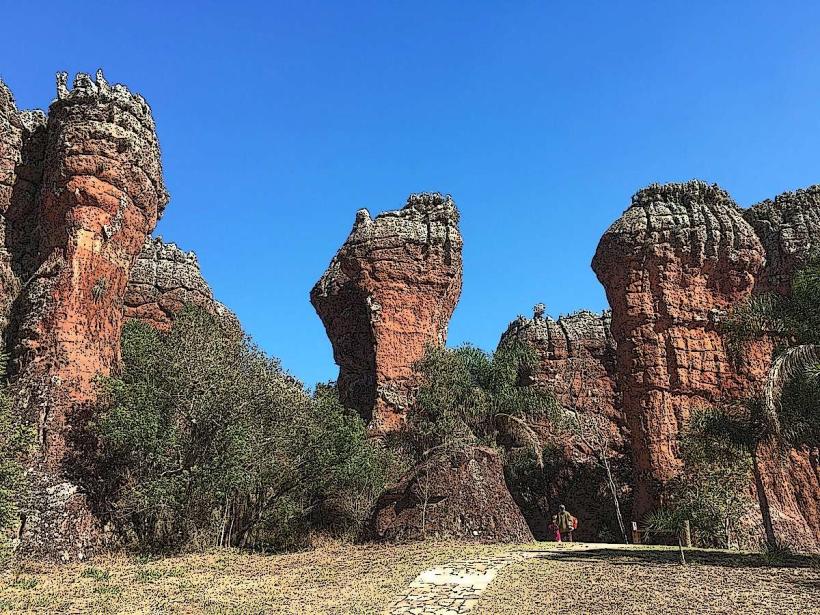
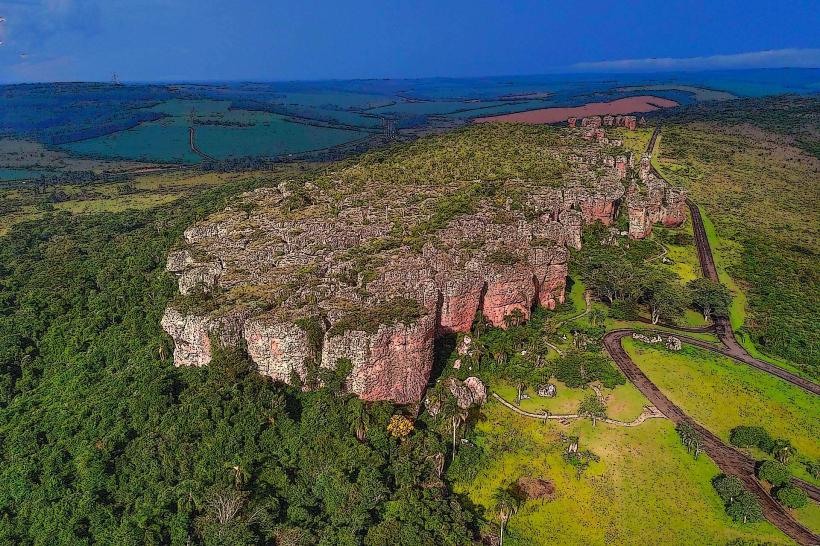
The primary feature is a large sandstone cave, approximately 30 meters high and 20 meters wide, with a distinctive archway. The cave walls exhibit layered sandstone strata, displaying shades of brown, red, and beige. A small waterfall cascades from the top of the cave entrance into a pool below. The surrounding vegetation is dense Atlantic Forest, characterized by tall trees and undergrowth.
Location & Access Logistics
Buraco do Padre is situated 30 kilometers from the center of Ponta Grossa. Access is via the PR-151 highway, turning onto a dirt road (Estrada da Lapa) for approximately 5 kilometers. Parking is available at the park entrance. Public transport to the park entrance is limited; bus lines serving the PR-151 may require a significant walk from the highway.
Historical & Ecological Origin
This site is a sandstone cave formed by aeolian processes (wind erosion) and subsequent fluvial erosion over millions of years. It is part of the geological formations of the Paraná Basin. The cave's name, "Buraco do Padre" (Priest's Hole), originates from local lore suggesting a priest sought refuge within the cave.
Key Highlights & Activities
Exploration of the cave interior is permitted. Observation of the waterfall and surrounding rock formations is a primary activity. Hiking trails within Campos Gerais National Park are accessible from the vicinity. Photography of the geological features and vegetation is common.
Infrastructure & Amenities
Restrooms are available at the park entrance. Limited shade is present near the cave entrance. Cell phone signal (4G/5G) is generally unreliable within the park. No food vendors are located directly at the cave site; provisions should be brought from Ponta Grossa.
Best Time to Visit
For optimal lighting for photography, visit during mid-morning or late afternoon when sunlight directly illuminates the cave entrance. The dry season (April to September) generally offers more stable weather conditions. The waterfall's flow is more substantial after periods of rain.
Facts & Legends
Local legend states that a Jesuit priest used the cave as a sanctuary during colonial times. The sandstone layers within the cave are estimated to be over 200 million years old, dating back to the Triassic period.
Nearby Landmarks
- Parque Estadual de Vila Velha (10km Southwest)
- Furnas Gêmeas (12km Southwest)
- Lagoa Dourada (15km Northwest)
- Monumento Natural dos Botamurtos (18km West)