Information
Landmark: Ca dOroCity: Venice
Country: Italy
Continent: Europe
Ca dOro, Venice, Italy, Europe
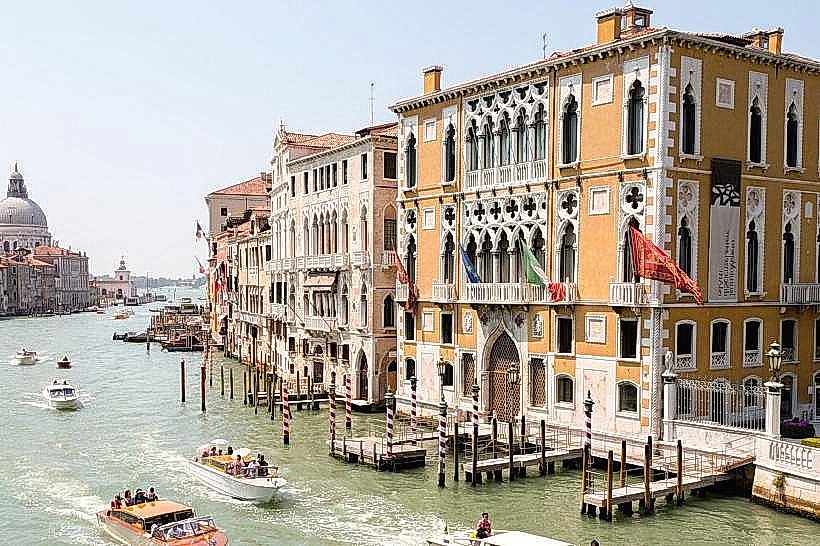
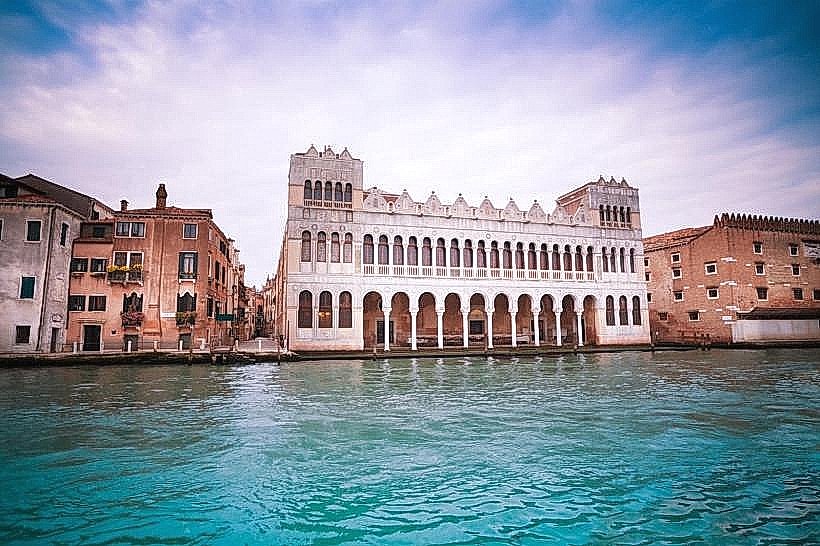
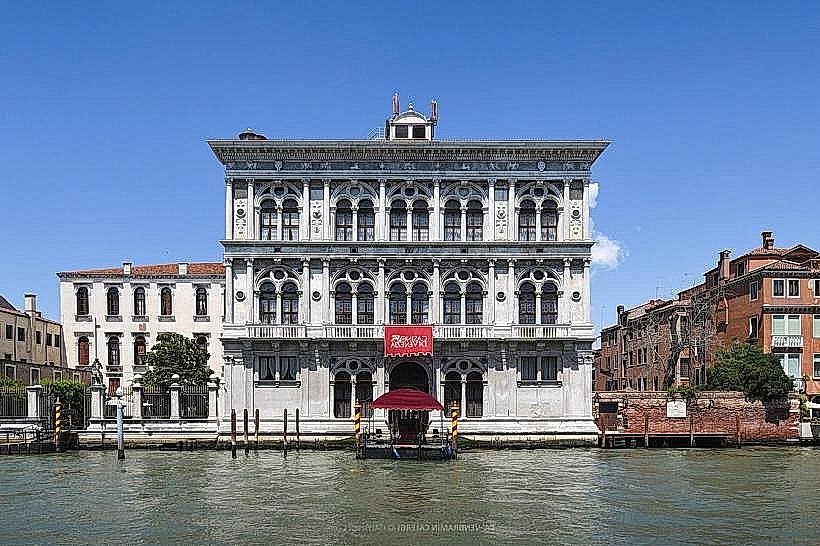
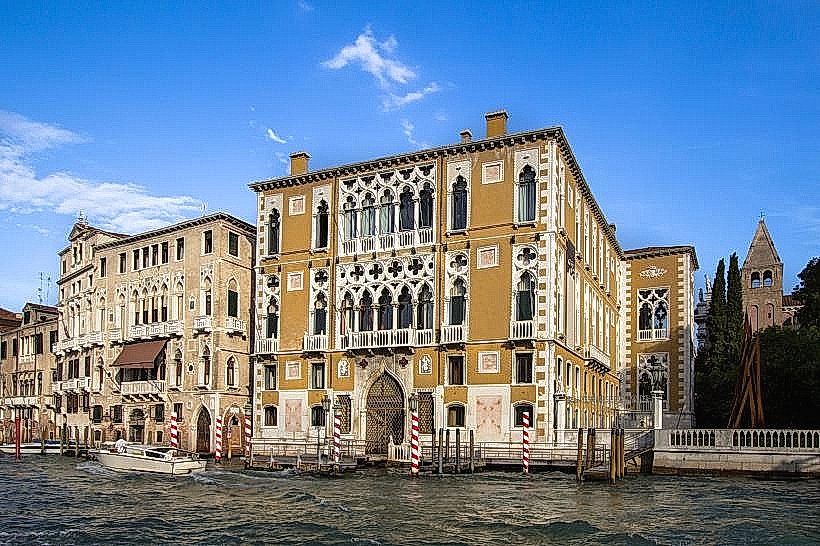
Ca' d'Oro (Palazzo Santa Sofia) is a late Gothic palace located on the Grand Canal in the Cannaregio district. It is widely considered the most prestigious example of Venetian floral Gothic architecture and currently houses the Giorgio Franchetti Gallery.
Visual Characteristics
The facade is defined by an asymmetrical design with two tiers of ornate, traceried loggias. The stonework features delicate quatrefoil openings and marble crenellations. Originally, the facade was embellished with extensive gold leaf, ultramarine blue, and red vermillion paint, giving the building its name ("House of Gold"). The interior courtyard contains a 15th-century red marble well-head and an intricate polychrome mosaic floor.
Location & Access Logistics
The palace is located at Calle Ca' d'Oro, 3932.
Public Transit: Vaporetto Line 1 stops at the "Ca' d'Oro" station directly adjacent to the building.
Pedestrian: It is a 15-minute walk (1.1km) from the Venezia Santa Lucia railway station and a 10-minute walk (0.8km) from the Rialto Bridge.
Accessibility: The ground floor and courtyard are accessible. Upper floors housing the gallery are reached via a historical staircase and a modern elevator.
Historical & Ecological Origin
Built between 1428 and 1430 for the Contarini family, the design is attributed to architects Giovanni and Bartolomeo Bon. After centuries of neglect and architectural mutilation-including the removal of the original internal staircase-it was purchased in 1894 by Baron Giorgio Franchetti. He restored the building to its Gothic state and bequeathed it, along with his private art collection, to the Italian state in 1916.
Key Highlights & Activities
St. Sebastian by Andrea Mantegna: The museum's most significant masterpiece, housed in a dedicated marble shrine.
The Loggias: Visitors can access the open-air balconies for unobstructed views of the Grand Canal.
The Franchetti Collection: Features works by Titian, Van Dyck, and Guardi, alongside Renaissance bronzes and medals.
Facade Mosaic: The ground-floor portico features a 350-square-meter floor mosaic composed of ancient marbles.
Infrastructure & Amenities
The museum includes a bookshop and restrooms on the ground level. 4G/5G cellular coverage is reliable throughout the palace. The building is climate-controlled in the galleries to preserve the artworks. There is no on-site cafeteria, but the surrounding Strada Nova area contains a high density of dining options.
Best Time to Visit
Morning hours (09:00–11:00) provide the best natural light for viewing the courtyard mosaics. Mid-afternoon is optimal for viewing the Grand Canal from the loggias. The museum is closed on Monday afternoons.
Facts & Legends
The 19th-century restoration saved the building from total collapse, but much of the original gold leaf was lost during the mid-1800s when the ballet dancer Marie Taglioni owned the palace and removed many Gothic elements. Baron Franchetti’s ashes are buried in the palace courtyard under the ancient well-head he recovered.
Nearby Landmarks
Strada Nova: 0.1km North
Rialto Bridge: 0.8km South
Church of the Santi Apostoli: 0.4km East
Grand Canal: 0km (Facade is on the water)
Gesuiti Church: 0.6km Northeast