Information
Landmark: Casco AntiguoCity: A Coruna
Country: Spain
Continent: Europe
Casco Antiguo, A Coruna, Spain, Europe
The Casco Antiguo, also known as the Ciudad Vieja (Old City), is the historic core of A Coruña, located on the eastern part of the peninsula. It is characterized by narrow, winding streets, medieval stone architecture, and a quiet, residential atmosphere that contrasts with the commercial center.
Visual Characteristics
The district is defined by its use of local granite and 18th-century masonry. Unlike the modern "City of Glass" nearby, the Old City features heavy stone facades, coat-of-arms carvings, and hidden leafy plazas. Most streets are paved with original granite slabs and are largely pedestrianized. The area is bounded on one side by the remnants of the 14th-century defensive walls.
Location & Access Logistics
The Old City starts immediately east of Praza de María Pita.
Access: Entry is best made on foot via the ramps of the Port Authority or through the Plaza de la Constitución.
Transport: Buses do not enter the narrow streets; the closest stops are at "Abente y Lago" or "María Pita" (Lines 1, 1A, 2, 3, 5).
Parking: Extremely restricted. Visitors must use the underground "Parking María Pita" or "Parking Metrosidero."
Historical & Ecological Origin
The site has been inhabited since Roman times, but the current layout is medieval. It served as the city’s primary defensive stronghold until the 19th century. Ecologically, the area is home to the Jardín de San Carlos, a botanical space containing ancient elms and a variety of Atlantic flora, built on the site of a former defensive bastion.
Key Highlights & Activities
Church of Santiago: A 12th-century Romanesque church, the oldest in the city.
Collegiate Church of Santa María del Campo: A late-Gothic structure housing the Sacred Art Museum.
Plaza de la Constitución: A central square flanked by the Military Archives and the Governor’s Palace.
Jardín de San Carlos: A romantic garden containing the granite tomb of Sir John Moore, a British general who died at the Battle of Elviña in 1809.
Convent of Santa Barbara: A quiet plaza featuring a 14th-century relief above the convent doors.
Infrastructure & Amenities
The district is largely residential and lacks large commercial malls. 5G signal is functional but can be obstructed by thick granite walls. Public restrooms are located in the Jardín de San Carlos. Small, traditional taverns and bakeries are scattered throughout the streets. The area provides natural shade due to the narrowness of the alleys.
Best Time to Visit
Late morning is ideal for visiting the churches and the San Carlos garden. The area is particularly evocative at night when the granite buildings are illuminated by yellow streetlights. Most cultural sites close for "siesta" between 14:00 and 16:00.
Facts & Legends
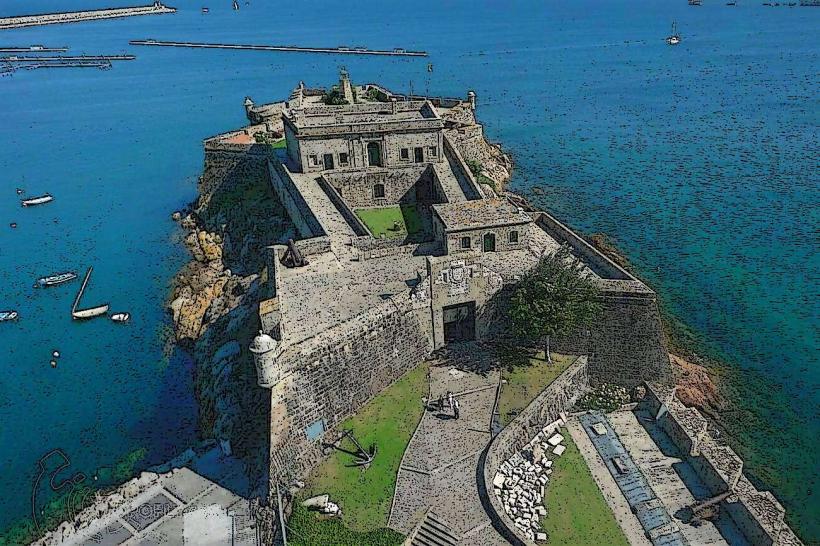
The district houses the House-Museum of Emilia Pardo Bazán, one of Spain's most famous feminist writers. A historical tip: visit the Mirador de San Carlos at the edge of the gardens for the best view of the Castillo de San Antón and the industrial port.
Nearby Landmarks
Castillo de San Antón: 0.4km Southeast
Praza de María Pita: 0.1km West
Military Museum: 0.2km South
Church of Santo Domingo: 0.1km North
Teatro Rosalía de Castro: 0.4km West