Information
Landmark: Castillo de San AntonCity: A Coruna
Country: Spain
Continent: Europe
Castillo de San Anton, A Coruna, Spain, Europe
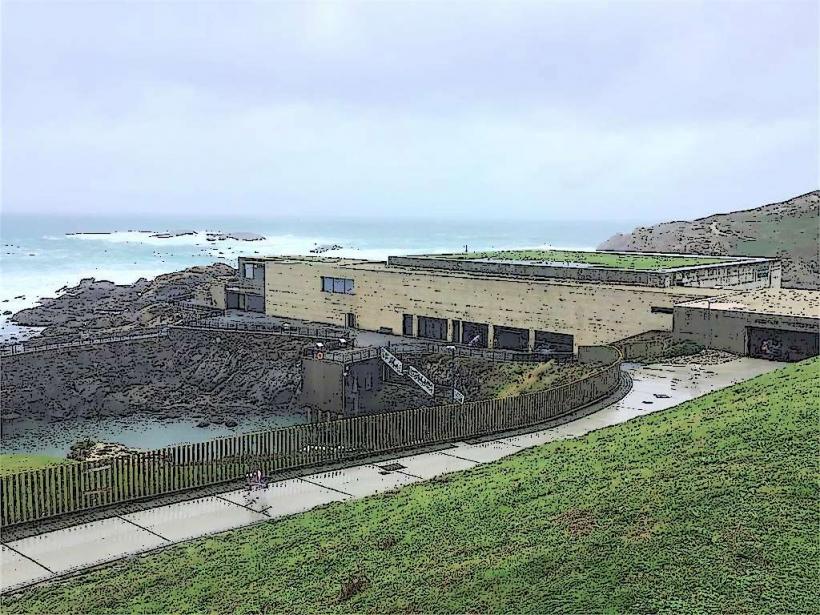
The Castillo de San Antón is a 16th-century fortress and archaeological museum located on a former island (now connected to the mainland) at the entrance of the port of A Coruña, Galicia. It served as a defensive stronghold, a state prison, and a lazaretto before its conversion into a museum.
Visual Characteristics
The castle is a stone-built artillery fortress with a vaulted structure and thick granite walls designed to withstand naval bombardment. It features a central parade ground, several circular defensive towers, and a small Neoclassical chapel. The exterior is surrounded by the sea on three sides, and its elevated position provides views of the Ría de Coruña.
Location & Access Logistics
Address: Paseo Marítimo Alcalde Francisco Vázquez, 2, 15001 A Coruña.
Transport: Accessible via bus lines 1, 1A, 2, 3, 5, 17, and 23, which stop nearby at the Hospital Abente y Lago.
Access: The castle is connected to the city via a permanent stone walkway at the end of the Paseo Marítimo.
Parking: Limited street parking is available along the promenade; the "Parking María Pita" underground facility is approximately 800 meters away.
Historical & Ecological Origin
Construction began in 1587 on a small islet that housed a chapel dedicated to Saint Anthony (San Antón). It played a decisive role in repelling the English Armada led by Francis Drake in 1589. In the 18th century, it was used as a prison for high-profile political figures. In 1968, it was inaugurated as the Archaeological and Historical Museum of A Coruña. The surrounding marine environment is a hub for Atlantic coastal biodiversity.
Key Highlights & Activities
Archaeological Museum: Houses a significant collection of Galician artifacts, including Bronze Age jewelry (the "Cícere" and "Elviña" gold torcs) and Roman stone carvings.
The Casemates: Interior chambers displaying historic cannons and weaponry.
The Upper Terrace: Offers a vantage point for viewing the port's shipping activity and the city skyline.
The Chapel: A small, well-preserved religious space within the walls.
Infrastructure & Amenities
The site includes a ticket office, a small gift shop, and public restrooms. The museum layout includes ramps and a lift, making most areas wheelchair accessible. 5G cellular coverage is available. Due to its maritime location, the site is highly exposed to Atlantic winds and spray.
Best Time to Visit
The museum is closed on Mondays. Visiting hours are typically Tuesday to Saturday (10:00–19:00) and Sunday (10:00–14:30). Morning visits are recommended for the best light on the archaeological exhibits. The outdoor terraces are optimal at high tide when the sea surrounds the base of the fortress.
Facts & Legends
One of the most famous prisoners held in the castle was Alessandro Malaspina, the Italian-Spanish explorer and naval officer. A historical tip: the museum contains the "Gold of the Castros," a world-class collection of Celtic-Galician jewelry that is essential for understanding the pre-Roman history of the region.
Nearby Landmarks
Praza de María Pita: 0.8km Northwest
Jardín de San Carlos: 0.3km West
Collegiate Church of Santa María del Campo: 0.4km West
San Antón Marine Promenade: Adjacent
A Coruña Marina: 0.6km West