Information
Landmark: Museo DomusCity: A Coruna
Country: Spain
Continent: Europe
Museo Domus, A Coruna, Spain, Europe
Domus, formerly known as the Casa del Hombre, is an interactive museum dedicated to human physiology and biology located on the Orzán Bay in A Coruña, Galicia. It is the first museum in the world devoted exclusively to the human species and forms part of the city’s Scientific Museums network.
Visual Characteristics
The building is an architectural landmark designed by Japanese architect Arata Isozaki and César Portela. It features a 94-meter-long curved facade made of 6,600 slate tiles, resembling a wind-filled sail. The structure is built into a former granite quarry. The interior is characterized by vast, open spaces, concrete walls, and a large central staircase.
Location & Access Logistics
Address: Ángel Rebollo, 91, 15002 A Coruña.
Transport: Bus lines 3, 3A, 7, and 17 stop at the museum entrance.
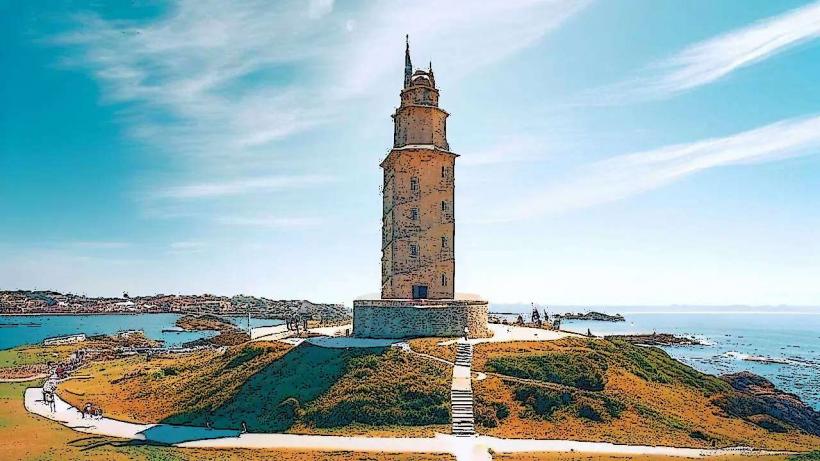
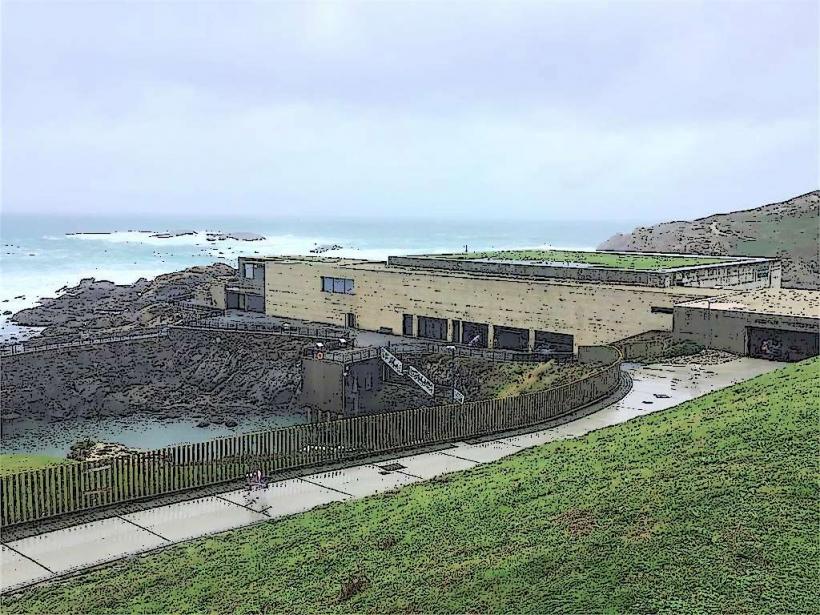
Parking: Limited street parking is available; the nearest large parking facility is at the Aquarium Finisterrae or the Tower of Hercules (approx. 1km away).
Access: Situated on the coastal promenade (Paseo Marítimo).
Historical & Ecological Origin
The museum was inaugurated in 1995. Its design integrates the building into the coastal granite cliffs. The use of Galician slate for the facade serves as a structural response to the corrosive Atlantic environment and high wind speeds common on the A Coruña peninsula.
Key Highlights & Activities
Interactive Exhibits: Over 200 modules focusing on genetics, the brain, evolution, and the senses.
The Giant Heart: A walk-through model explaining cardiovascular functions.
Evolution Gallery: Displays detailing the origins of Homo sapiens.
Domus iMAX: A high-definition cinema projection room located within the complex.
Mona Lisa Mosaic: A reproduction of Da Vinci’s work made from over 10,000 photographs of humans.
Infrastructure & Amenities
The facility includes a gift shop and accessible restrooms. The building is wheelchair accessible via elevators. 5G cellular coverage is functional throughout. The interior is climate-controlled, providing a stable environment contrasted with the highly exposed Atlantic exterior.
Best Time to Visit
Opening hours are typically 10:00 to 19:00 (extended in summer). Early afternoons are generally quieter once school groups have departed. For photography, the late afternoon sun highlights the texture of the slate facade and its contrast with the sea.
Facts & Legends
A distinctive architectural feature is the "monolithic" appearance of the building from the sea, intended to evoke the ancient megalithic structures of Galicia. A specific tip: the museum features a "Cinema of the Senses" that utilizes sensory stimuli to explain biological processes.
Nearby Landmarks
Aquarium Finisterrae: 1.2km North
Tower of Hercules: 1.5km North
Praia de Riazor/Orzán: 0.2km West
Praza de María Pita: 1.0km East
Mount San Pedro: 4.0km West