Information
Landmark: Chiesa di San TrovasoCity: Venice
Country: Italy
Continent: Europe
Chiesa di San Trovaso, Venice, Italy, Europe
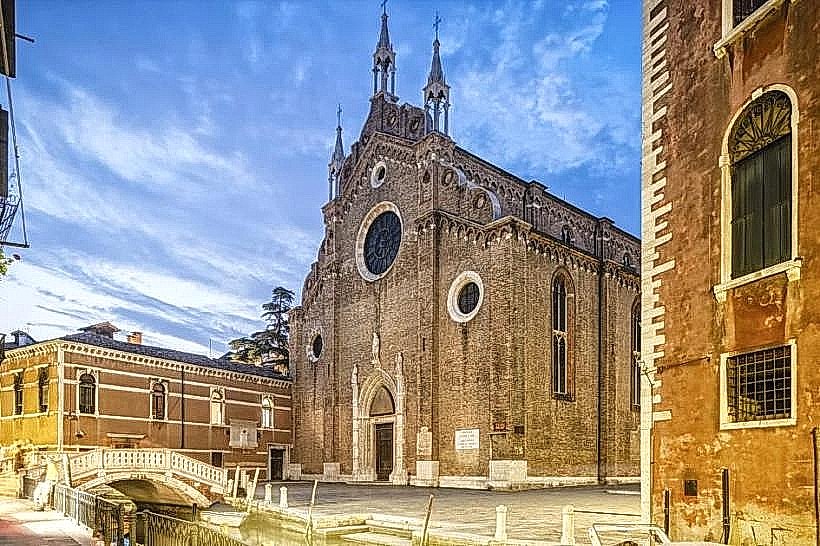
Located in the Dorsoduro district of Venice, along the quieter banks of the Rio dei Tre Ponti, San Trovaso is a striking example of Venetian Renaissance architecture, renowned for its harmonious proportions, artistic treasures, and deep connection to local history and culture. Its relative seclusion allows visitors to experience the church’s elegance without the crowds of central Venice.
Historical Background
The current structure of San Trovaso dates to the late 16th century, although the site had housed earlier religious buildings since the 11th century. The church was built and later restored through the patronage of two prominent Venetian families, the Morosini and Bembo, reflecting the common practice of noble families sponsoring churches both as acts of devotion and social prestige.
San Trovaso also has strong historical ties to the Tarantino guilds, which shaped its community presence, linking the church to local artisans, boatmen, and craftsmen. Its name, deriving from Saint Thorfinn (San Trovaso in Venetian), underscores the blend of local legend and ecclesiastical history.
Architectural Features
San Trovaso is a Renaissance-style church with classical symmetry, clean lines, and understated elegance, offering a contrast to Venice’s more flamboyant Baroque structures:
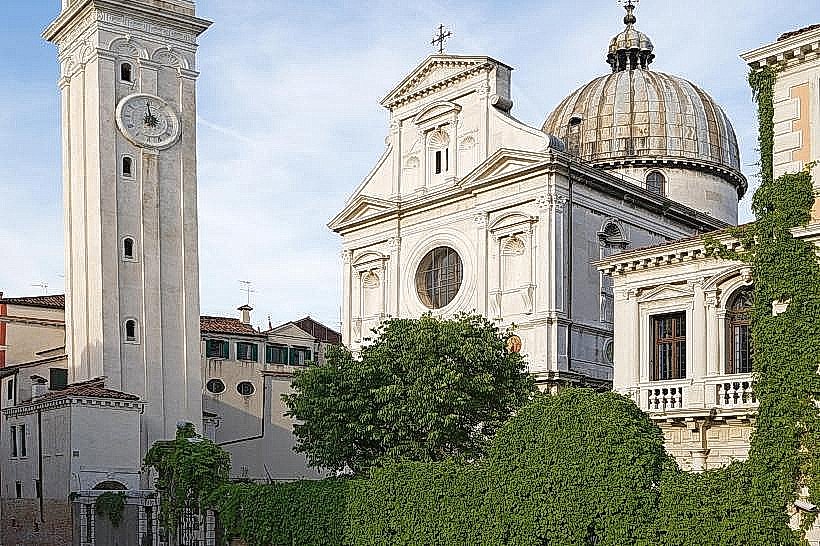
Façade: The exterior features symmetrically arranged pilasters, round-arched windows, and a simple triangular pediment, emphasizing proportion over ornament. A modest water portal opens onto the canal, reflecting Venice’s canal-based lifestyle.
Campanile (Bell Tower): Adjacent to the main building, the bell tower rises simply but gracefully, punctuating the skyline of this quieter neighborhood.
Interior Layout: The church has a single nave with side chapels, designed to focus attention on the altar and enhance the acoustics for liturgical music. The use of natural light and clean lines reinforces the Renaissance ideal of harmony.
Interior Highlights
San Trovaso is home to significant artistic works that enrich its historical and cultural value:
Carlo Ridolfi and Palma il Giovane: Paintings and altarpieces by these Venetian masters adorn the chapels and main nave, depicting religious scenes with characteristic Venetian color and drama.
Frescoes and Sculptures: The church features subtle stucco decoration and frescoed ceilings, harmonizing with the architectural lines to create a serene, contemplative environment.
Morosini Family Chapel: A notable private chapel contains family heraldry and artworks, highlighting the intersection of devotion, patronage, and social prestige.
Cultural and Historical Significance
San Trovaso exemplifies Renaissance ideals adapted to the Venetian urban context. Its restrained façade, proportioned interiors, and artistic adornments demonstrate the city’s ability to balance elegance, function, and civic pride.
The church also reflects Venice’s community-oriented religious life. Unlike the grand ceremonial churches of Piazza San Marco, San Trovaso served local parishioners, artisans, and guild members, making it an integral part of everyday life while maintaining ties to noble patronage.
Visitor Experience
Approaching San Trovaso along the canals of Dorsoduro, visitors immediately sense a quieter, more intimate side of Venice. The façade, though modest, displays refined Renaissance proportions, while the interior invites slow exploration of altarpieces, frescoes, and chapels. The calm of the surrounding neighborhood, punctuated by the soft lapping of canal water, enhances the contemplative atmosphere.
Visitors often pause to admire the church from the Fondamenta dei Tolentini, appreciating how the Renaissance balance of architecture and art is integrated into Venice’s dense, canal-based urban fabric.
Legacy
San Trovaso Church stands as a testament to Venetian Renaissance refinement, community engagement, and artistic patronage. Its harmonious design, collection of artworks, and historical connections to noble families and local guilds provide insight into the layered social and cultural fabric of Venice, offering a quieter but no less profound experience of the city’s spiritual and artistic heritage.