Information
Landmark: Church of Our LadyCity: Bruges
Country: Belgium
Continent: Europe
Church of Our Lady, Bruges, Belgium, Europe
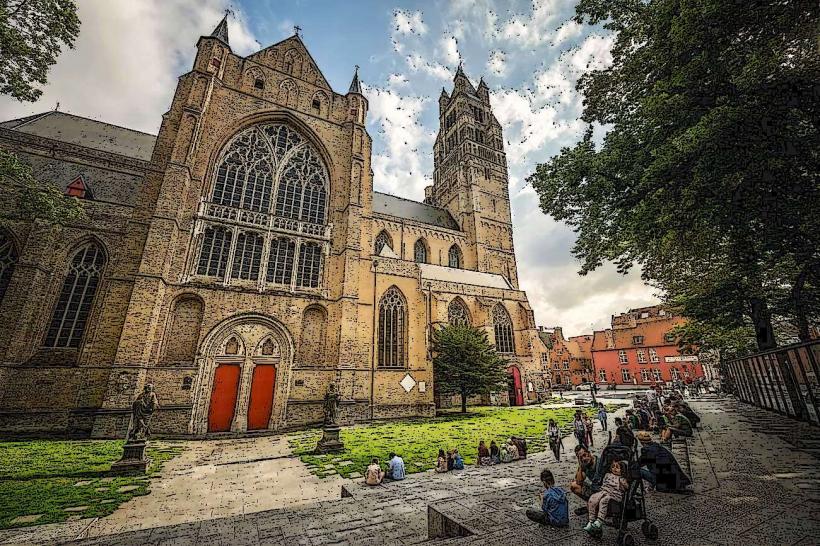
The Church of Our Lady (Onze-Lieve-Vrouwekerk) is a Roman Catholic church and landmark in Bruges, primarily known for its architectural height and its housing of a major work by Michelangelo.
Visual Characteristics
The church is dominated by a $115.5$-meter brick tower, which remains the tallest structure in Bruges and the second-tallest brickwork tower in the world. The exterior is a synthesis of Gothic and Neo-Gothic styles, utilizing dark red brick. The interior features a large nave with white-washed walls and black-and-white marble flooring. The "Lanchals" chapel and the choir are notable for their intricate carved woodwork and ceremonial tombs.
Location & Access Logistics
The site is located at Mariastraat, 8000 Brugge.
Public Transport: A 10-minute walk from the Bruges Railway Station or accessible via city buses to the "O.L.V. Kerk" stop.
Parking: The nearest public facility is Parking Centrum-Zand or Parking Kateljne.
Access: The church is divided into a free area for worship and a paid museum section for viewing the artworks and tombs.
Historical & Ecological Origin
Construction began in the 13th century and continued through the 15th century. It was built to reflect the power of the Burgundian court in Bruges. The foundations rest on the site of an earlier Romanesque church. The tower's height served as a navigational landmark for ships entering the Zwin estuary during the Middle Ages.
Key Highlights & Activities
Michelangelo’s Madonna and Child: A white marble sculpture (c. 1504), the only work by Michelangelo to leave Italy during his lifetime.
Royal Tombs: The ornate bronze and marble tombs of Mary of Burgundy and Charles the Bold are situated in the choir.
Art Collection: The museum section contains a large collection of Flemish paintings, including works by Pieter Pourbus and Gerard David.
Lanchals Tomb: The resting place of Pieter Lanchals, whose execution led to the legend of the Bruges swans.
Infrastructure & Amenities
The museum section is climate-controlled to preserve the marble and wood. Restrooms are available nearby but not within the church itself. 5G signal is functional in the exterior plaza but can be unstable within the thick-walled nave. The church provides an audio guide specifically for the museum section. There is no on-site cafe; the surrounding Katelijnestraat and Mariastraat contain multiple restaurants and chocolate boutiques.
Best Time to Visit
The church is open daily from 9:30 AM to 5:00 PM (1:30 PM to 5:00 PM on Sundays). To view the Madonna and Child without crowds, arrival at 9:30 AM is recommended. Photography is permitted in most areas but is strictly prohibited using flash near the Michelangelo sculpture.
Facts & Legends
The Madonna and Child has been stolen twice: once by French revolutionaries in 1794 and once by Nazi soldiers in 1944; it was recovered both times. A local legend links the church to the city's swans: the city was allegedly forced to keep swans forever as penance for the execution of Pieter Lanchals, whose coat of arms featured a swan.
Nearby Landmarks
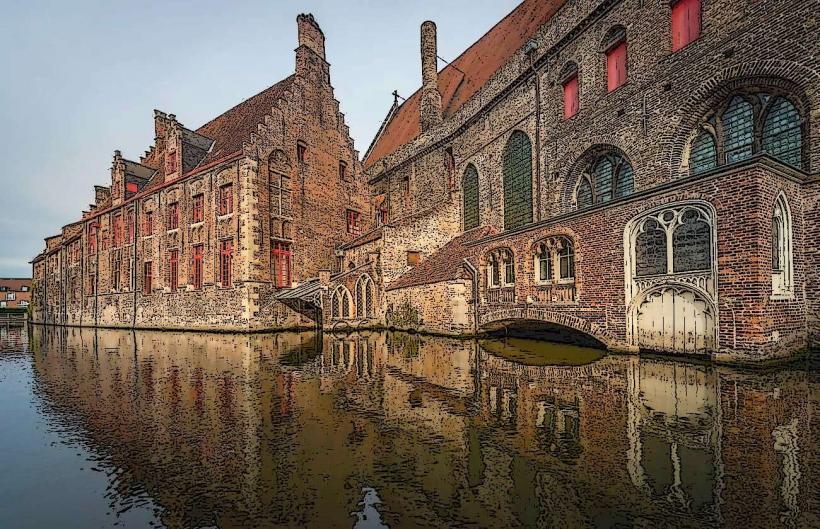
Old St. John’s Hospital – 0.1km West
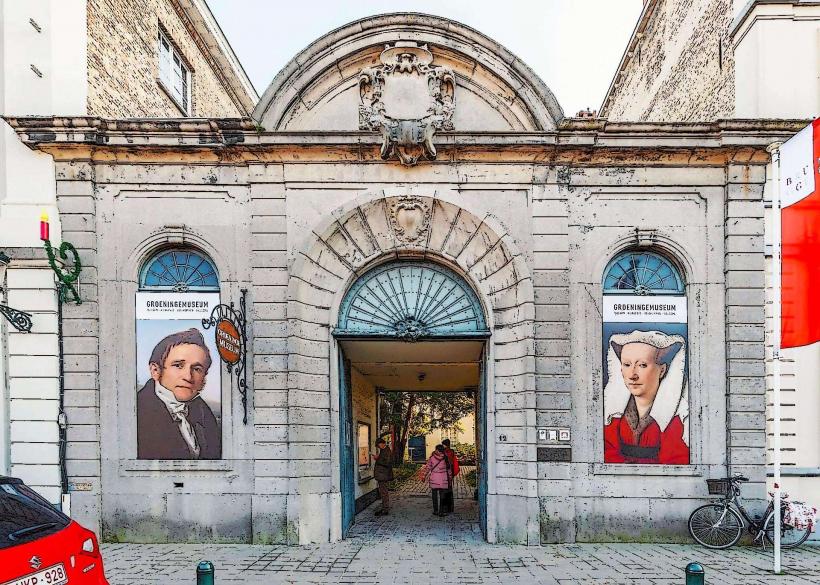
Groeningemuseum – 0.2km East
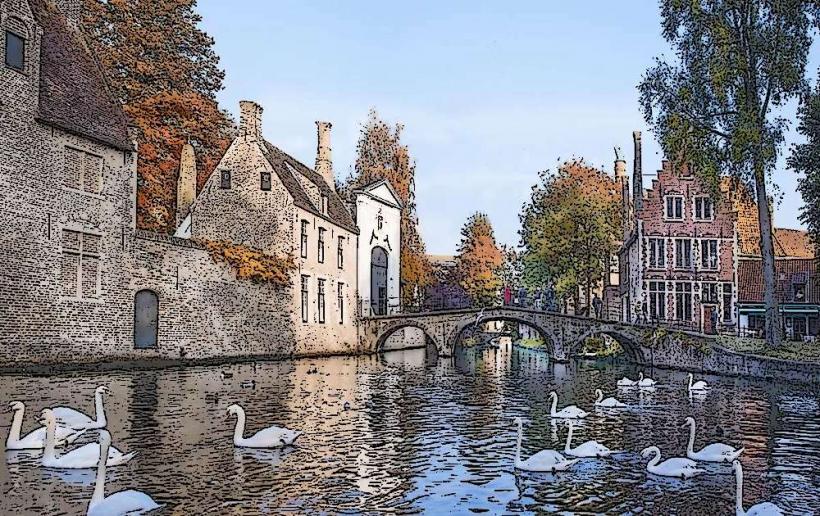
Beguinage (Begijnhof) – 0.4km South
Gruuthusemuseum – Adjacent
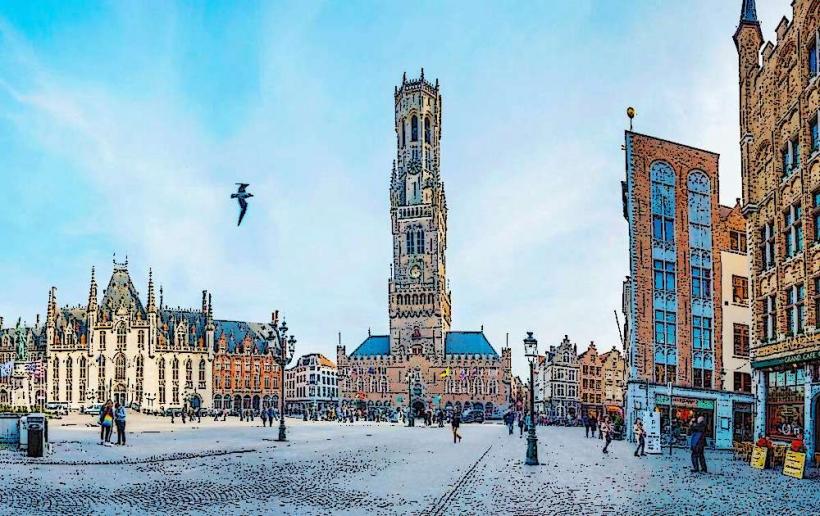
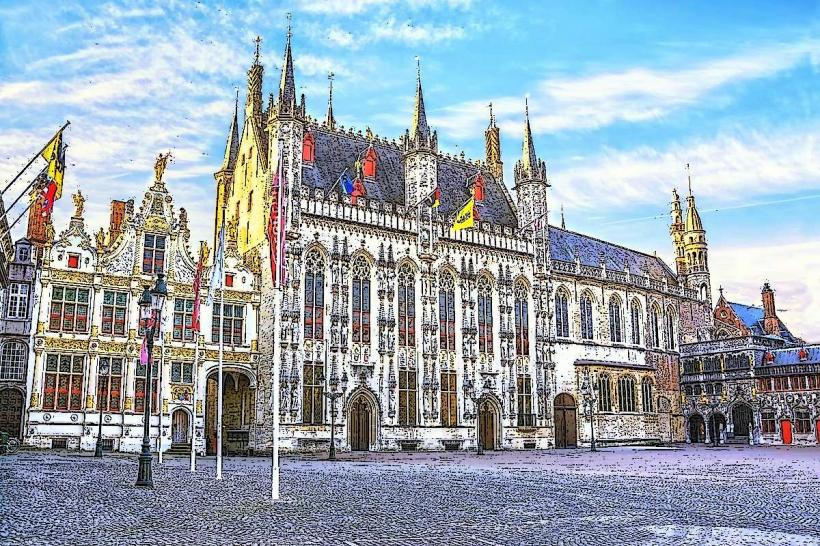
Belfry of Bruges – 0.6km North