Information
Landmark: City Hall SquareCity: Malmo
Country: Sweden
Continent: Europe
City Hall Square, Malmo, Sweden, Europe
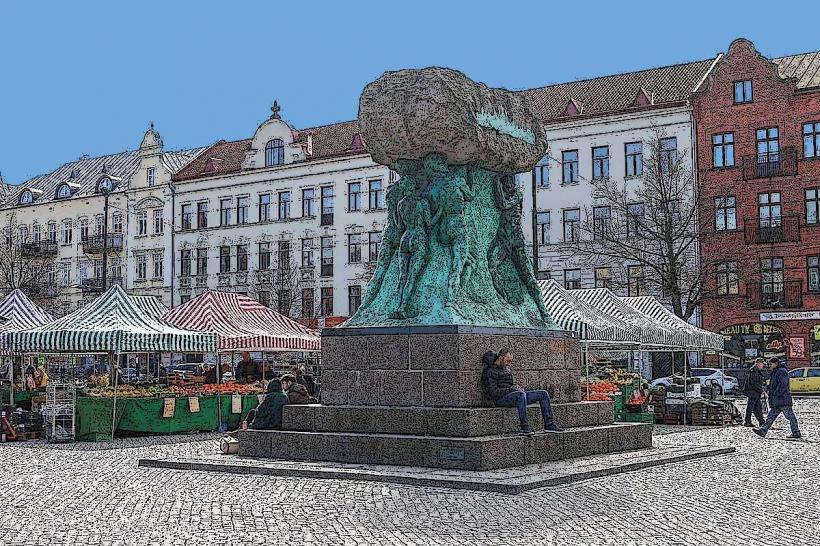
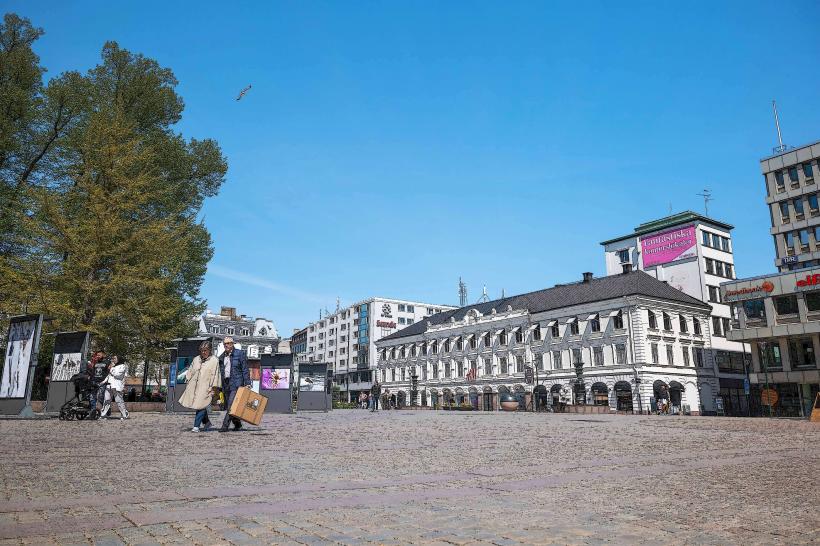
Stortorget (City Hall Square) is a large public square located in the historic center of Malmö, Sweden. It functions as a central gathering point and is surrounded by significant historical buildings.
Visual Characteristics
The square is primarily paved with cobblestones and features a large equestrian statue of King Karl X Gustav at its center. Surrounding the square are several prominent buildings, including the Malmö Rådhus (City Hall), a Dutch Renaissance-style structure with a red brick facade and ornate gables, originally built in the 1540s and later modified. Other notable buildings include the Kockska Huset, a red brick building with stepped gables, and the former Apoteket Lejonet, characterized by its detailed facade. The overall architectural style is predominantly Renaissance and Baroque, with varying heights of three to five stories.
Location & Access Logistics
Stortorget is situated in central Malmö, approximately 0.5 kilometers southeast of Malmo-central-station_malmo" class="underline">Malmö Central Station. Access is primarily via pedestrian routes from the station or surrounding streets. Public transport includes numerous bus lines (e.g., lines 2, 3, 5, 8) that stop at nearby stations like "Gustav Adolfs Torg" or "Malmö C." Limited street parking is available on peripheral streets, but several underground parking garages, such as P-huset Anna or P-huset Hansa, are located within a 0.3-0.5 kilometer radius.
Historical & Ecological Origin
Stortorget was established in 1538 by Mayor Jörgen Kock, making it one of Northern Europe's largest market squares at the time. Its original purpose was to serve as a central marketplace and a venue for public gatherings and proclamations. The Malmö Rådhus (City Hall) was constructed between 1544 and 1547, designed in a Dutch Renaissance style, and has served as the city's administrative center since its completion. The equestrian statue of King Karl X Gustav was erected in 1896.
Key Highlights & Activities
Observation of the surrounding historical architecture, including the Malmö Rådhus and Kockska Huset. Photography of the Karl X Gustav equestrian statue. Sitting on public benches. Attending seasonal markets or public events, which are occasionally hosted in the square.
Infrastructure & Amenities
Public benches are available for seating. Public restrooms are not directly within the square but can be found in nearby commercial establishments or public facilities within a 100-meter radius. Cell phone signal (4G/5G) is consistently strong. Numerous cafes, restaurants, and shops are located along the perimeter of the square, offering food and beverage options. There is no natural shade directly within the open square, but shade is available under the awnings of surrounding buildings.
Best Time to Visit
The square is accessible year-round. For photography, early morning or late afternoon provides softer light, particularly for the facades of the surrounding buildings. During summer months (June to August), the weather is generally mildest, making it suitable for outdoor observation. Winter months (December to February) offer a different aesthetic, especially if snow is present, and seasonal markets may operate.
Facts & Legends
A verified historical oddity is that Stortorget was once significantly larger than it appears today, having been partially reduced by subsequent urban development. The equestrian statue of King Karl X Gustav commemorates his role in the Treaty of Roskilde in 1658, which transferred Scania (including Malmö) from Danish to Swedish rule. A local tip is to observe the intricate details of the Kockska Huset, which was the private residence of Jörgen Kock, the mayor who founded the square.
Nearby Landmarks
- Lilla Torg: 0.1km West
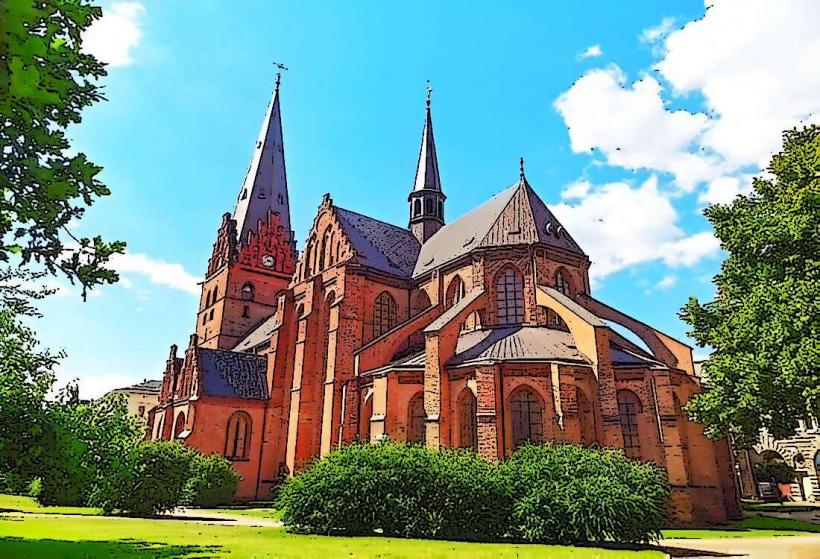
- St. Peter's Church (Sankt Petri Kyrka): 0.2km North
- Malmö Central Station: 0.5km Northwest
- Malmö Castle (Malmöhus Slott): 1.5km West
- Moderna Museet Malmö: 0.8km East