Information
Landmark: Cork Opera HouseCity: Cork
Country: Ireland
Continent: Europe
Cork Opera House, Cork, Ireland, Europe
The Cork Opera House is a municipal theatre located on Emmett Place in Cork City, serving as the region's primary venue for concerts, theatre, dance, and comedy.
Visual Characteristics
The current structure, designed by Scott Tallon Walker and opened in 1965, is a primary example of Mid-Century Modern architecture. It features a stark, functionalist exterior with a glass-fronted facade that allows for views of the River Lee and the city. Following an extensive refurbishment in 2000, the building added a contemporary glass curtain wall designed by Murray Ó Laoire Architects. Internally, the bars and hospitality spaces were revamped in 2024 to blend mid-century elements with plush, modern furniture, utilizing deep heritage colors like "Green Smoke."
Location & Access Logistics
The venue is situated in the city center at Emmett Place (T12 DW6P).
Buses: Serviced by multiple city routes stoping at St. Patrick's Street (2-minute walk).
Parking: No on-site parking is available. Patrons typically use the Q-Park Carroll’s Quay or City Hall car parks nearby.
Entry: The main entrance is accessible via a revolving door leading into a central foyer with a grand staircase and elevator.
Historical Origin
1855: The original building, known as "The Athenaeum," was designed by Sir John Benson. It was originally built for the National Exhibition of 1852 on Anglesea Street before being moved "stone by stone" to the current site.
1877: Renamed the Cork Opera House after redesign by C.J. Phipps to improve acoustics, which were previously noted as "terrible."
1955: The original Victorian structure was completely destroyed by a fire on December 13.
1965: Reopened by President Éamon de Valera after a decade-long community fundraising campaign.
Infrastructure & Amenities
Auditorium: Seating capacity for 1,000 patrons with accessible seating areas.
Hospitality: Includes the Main Bar, Blue Angel Bar, and Half Moon Place Café.
Accessibility: Fully accessible with a wheelchair lift on the ground floor and an elevator serving all levels. Accessible toilets are located on the first and top floors.
Connectivity: High-density 4G/5G cellular coverage; public Wi-Fi is generally available within the foyer and cafe areas.
Best Time to Visit
Event Attendance: The box office is open Monday through Saturday, 10:00–17:00. Evening performances typically start at 20:00.
Photography: Mid-morning or early evening provides the best lighting for the glass facade.
Seasonality: Late spring (May) and early summer offer mild weather and coincide with various city festivals that utilize the Opera House as a hub.
Facts & Legends
Acoustics: The original 19th-century building was locally mocked for its poor sound quality until its 1877 reconstruction.
Anniversary: The institution is currently celebrating its 170th anniversary (2025) with a "Send It Home" campaign to collect historical artifacts and stories from the public.
Symbolism: It remains a symbol of city resilience, having been rebuilt entirely through public subscription after the 1955 fire.
Nearby Landmarks
Crawford Art Gallery – 0.05km East (Adjacent)
The Coal Quay (Cornmarket St) – 0.2km West
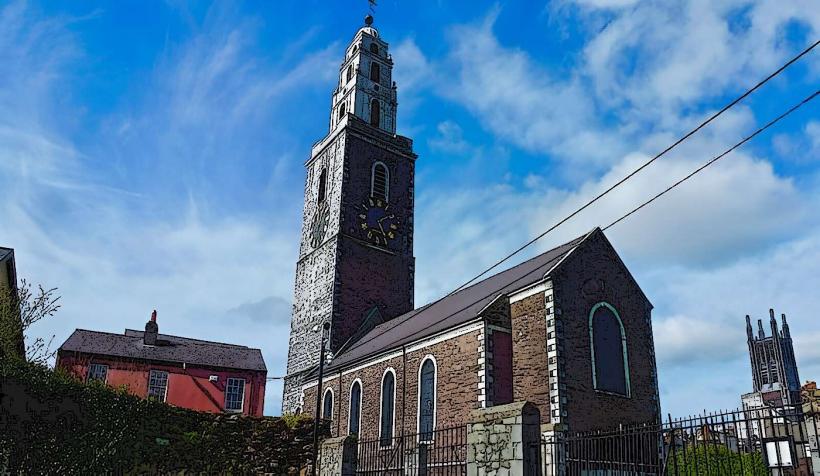
Shandon Bells (St. Anne’s Church) – 0.4km North
St. Patrick's Bridge – 0.2km East
Elizabeth Fort – 1.1km Southwest