Information
Landmark: Coroa CraterCity: Ribeira Grande
Country: Cabo Verde
Continent: Africa
Coroa Crater, Ribeira Grande, Cabo Verde, Africa
Coroa Crater lies high in the mountainous interior of Santo Antão, close to the island’s highest elevations. This vast volcanic depression feels remote and powerful, shaped by ancient eruptions and long erosion. The atmosphere here is noticeably cooler, often wrapped in shifting clouds and strong winds, with the scent of damp earth and volcanic stone lingering in the air.
Geological Character
The crater is broad and irregular rather than perfectly circular, its rim formed by steep ridges and broken volcanic walls. Layers of dark lava, ash, and exposed rock reveal the island’s volcanic history in raw detail. In some sections, erosion has softened the slopes, while in others sharp edges and rocky outcrops remain stark and imposing.
Landscape Inside the Crater
Within the crater, the terrain changes subtly. Patches of soil support low vegetation, grasses, and hardy shrubs adapted to altitude and wind. Mist often drifts across the crater floor, briefly obscuring and then revealing its contours. The quiet here is pronounced, broken mainly by wind moving across open ground.
Surrounding Views
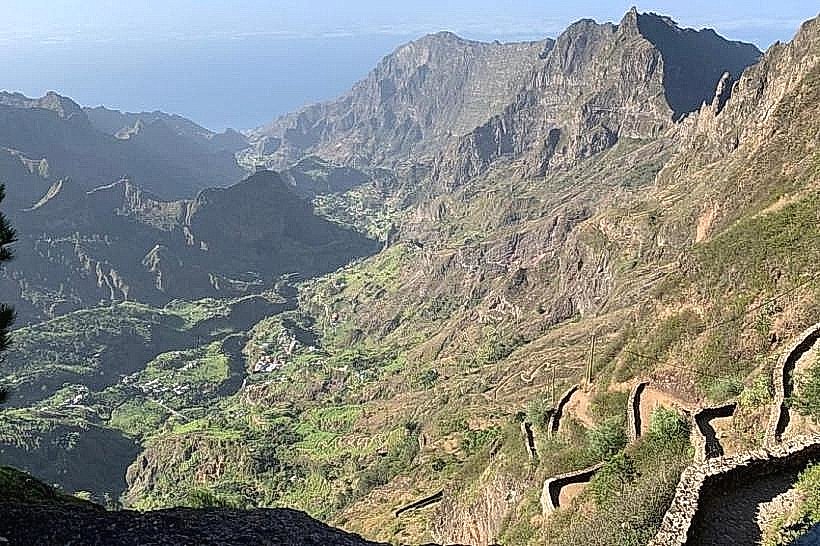
From points along the crater rim, wide views open across Santo Antão’s mountains and valleys. On clearer days, distant ridges, deep valleys, and even hints of the coastline can be seen. The scale of the landscape becomes especially apparent, with the crater acting as a natural balcony over the island’s interior.
Visitor Experience
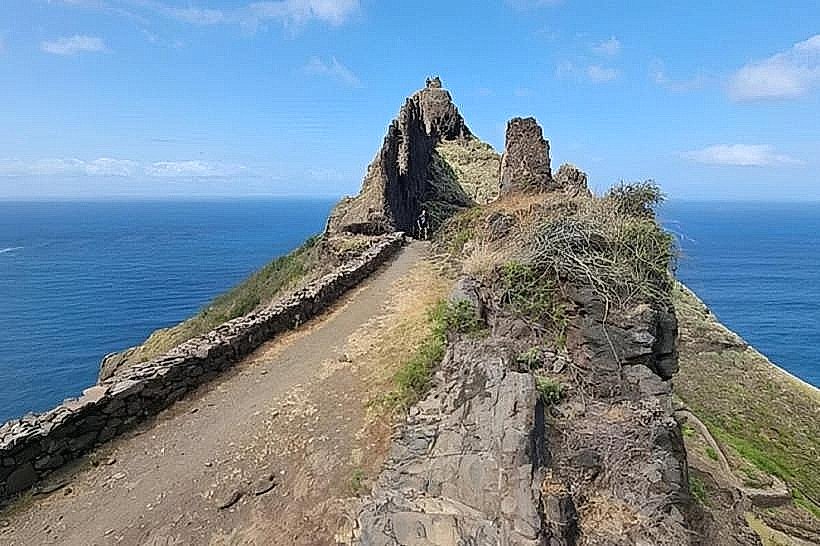
Reaching Coroa Crater involves traveling through high-altitude terrain, often along rough roads or hiking paths. The journey itself emphasizes isolation and elevation. Standing near or within the crater gives a strong sense of the island’s geological origins and the immense forces that shaped it, creating a reflective and almost otherworldly experience.
Closing Impression
Coroa Crater is one of Santo Antão’s most elemental landscapes. Its exposed highland setting, stark volcanic forms, and shifting weather create a powerful impression of scale and time, offering a deep connection to the island’s volcanic heart.