Information
Landmark: Forest of Saint-LaurentCity: Saint Laurent du Maroni
Country: French Guiana
Continent: South America
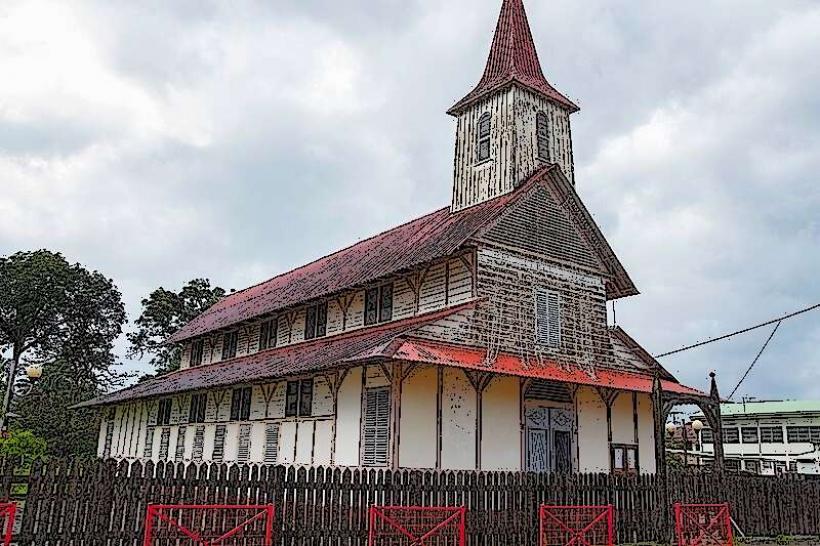
Forest of Saint-Laurent, Saint Laurent du Maroni, French Guiana, South America
The Forest of Saint-Laurent is a tropical rainforest located in the vicinity of Saint-Laurent du Maroni, French Guiana. It is part of the larger Amazon basin ecosystem.
Visual Characteristics
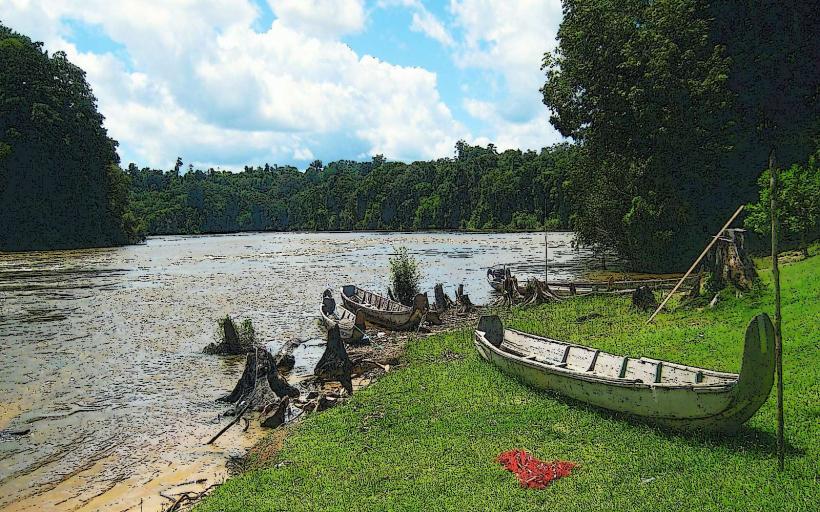
The forest canopy is dense, with emergent trees reaching heights of 40-50 meters. Dominant tree species include ironwood (Dicorynia guianensis) and various species of Vochysia. Undergrowth varies in density depending on light penetration. The forest floor is composed of decomposing organic matter and soil. Rivers and streams within the forest exhibit brown, tannin-stained water.
Location & Access Logistics
The forest begins approximately 2 kilometers west of the Saint-Laurent du Maroni town center. Access is primarily via Route Nationale 1 (RN1) heading west. Several unpaved logging roads and trails branch off RN1 into the forest. Parking is available at designated pull-offs along RN1 and at the start of some trails. Public transport does not directly service forest trails; local taxis or private vehicles are required for access beyond RN1.
Historical & Ecological Origin
This area is part of the Guiana Shield, an ancient geological formation. Ecologically, it is classified as lowland tropical rainforest, characterized by high biodiversity and a complex ecosystem structure. Historically, parts of the forest were utilized for logging and resource extraction, particularly during the colonial era. Indigenous communities have long inhabited and utilized the forest's resources.
Key Highlights & Activities
Hiking is possible on marked and unmarked trails. Birdwatching is a primary activity due to the diverse avian population. Wildlife observation, including primates and reptiles, is feasible. Photography of flora and fauna is recommended. Boat excursions on the Maroni River offer views of the forest edge.
Infrastructure & Amenities
Within the immediate forest area, infrastructure is minimal. Designated trails may have basic signage. Restrooms and shade structures are generally absent on trails. Cell phone signal (4G/5G) is unreliable and often unavailable once deeper into the forest. Food vendors are not present within the forest; provisions should be carried from Saint-Laurent du Maroni.
Best Time to Visit
The best time for visiting is during the dry season, from August to November, to minimize rainfall and improve trail conditions. The early morning (06:00-09:00) and late afternoon (16:00-18:00) offer optimal lighting for photography and increased wildlife activity. High tide on the Maroni River is not a critical factor for forest access via land.
Facts & Legends
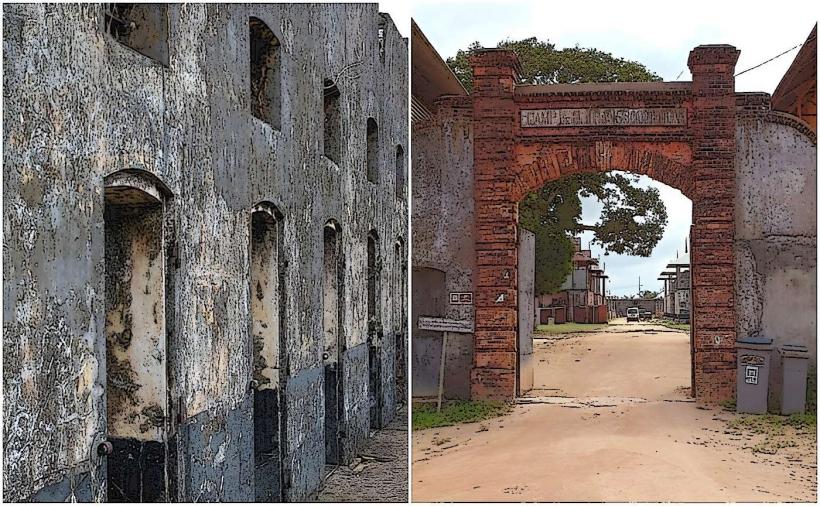
Local folklore speaks of forest spirits and guardians. A specific historical oddity is the presence of remnants of old logging camps and former penal colony outposts within deeper sections of the forest, though these are rarely accessible to the public. A tip for visitors is to carry insect repellent, as mosquitoes and other biting insects are prevalent.
Nearby Landmarks
- Pointe d'Alata (1.5km East)
- Maroni River (2km East)
- Saint-Laurent du Maroni town center (2km East)
- Fort Diamant (4km Southeast)