Information
Landmark: Fort Morgan Historic SiteCity: Gulf Shores
Country: USA Alabama
Continent: North America
Fort Morgan Historic Site, Gulf Shores, USA Alabama, North America
Fort Morgan Historic Site is a coastal fortification located at the mouth of Mobile Bay in Gulf Shores, Alabama, USA.
Visual Characteristics
The fort is constructed primarily of brick and masonry. It features a pentagonal design with bastions at each corner. The exterior walls are approximately 40 feet high and 5 feet thick. The structure exhibits architectural elements consistent with mid-19th-century military fortifications, including casemates, gun emplacements, and a central parade ground.
Location & Access Logistics
Fort Morgan is situated at the westernmost point of the Fort Morgan Peninsula. It is approximately 22 miles west of the city center of Gulf Shores via Highway 180 West (Fort Morgan Road). The site offers ample on-site parking. Public transport options are limited; the nearest bus service terminates in Gulf Shores, requiring private transportation for the final leg.
Historical & Ecological Origin
Construction of Fort Morgan began in 1819 and was completed in 1833. It was designed by Colonel William T. Poussin and served as a coastal defense fortification. The fort played a significant role in the American Civil War, particularly during the Battle of Mobile Bay. Its location is on a sandy peninsula formed by coastal accretion and sediment deposition.
Key Highlights & Activities
Visitors can explore the fort's interior, including casemates and gun emplacements. Interpretive exhibits detail the fort's history and military significance. Walking tours are available. Observation points offer views of Mobile Bay and the Gulf of Mexico. Birdwatching is a common activity due to the site's coastal location.
Infrastructure & Amenities
Restrooms are available on-site. Limited shaded areas are present within the fort's structure. Cell phone signal (4G) is generally available. Food vendors are not present at the immediate fort site, but concessions are available at the nearby Fort Morgan Beach.
Best Time to Visit
The best time of day for photography is generally in the morning or late afternoon when the sun angle provides optimal lighting on the brickwork. The months of April, May, September, and October offer the most favorable weather conditions with lower humidity and moderate temperatures. High tide is not a factor for accessing the fort itself.
Facts & Legends
During the Battle of Mobile Bay, Admiral David Farragut famously ordered his ships to "Damn the torpedoes, full speed ahead!" while passing the fort. A lesser-known fact is that the fort was used as a prisoner-of-war camp after the Civil War.
Nearby Landmarks
- Gulf State Park (15km East)
- Bon Secour National Wildlife Refuge (10km East)
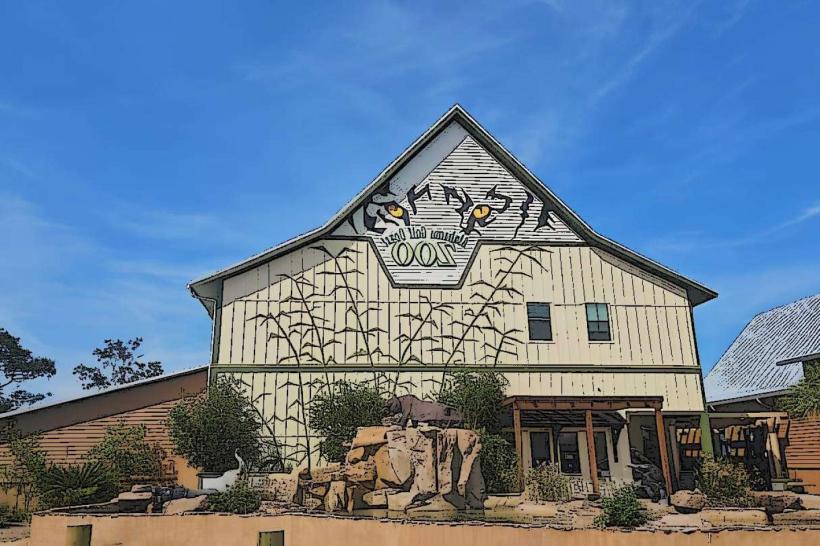
- Alabama Gulf Coast Zoo (20km East)
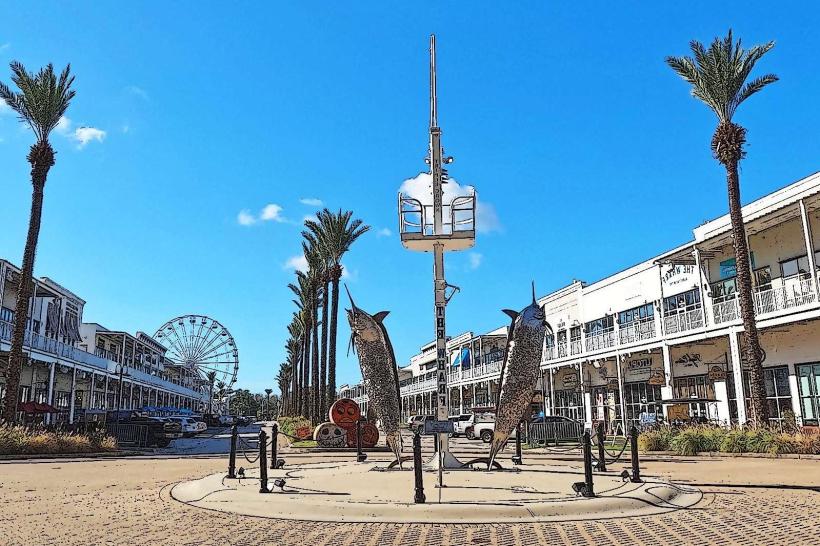
- The Wharf at Orange Beach (25km East)