Information
Landmark: Fort San LorenzoCity: Colon
Country: Panama
Continent: North America
Fort San Lorenzo, Colon, Panama, North America
Fort San Lorenzo is a 17th-century Spanish fortification located at the mouth of the Chagres River in Colón, Panama.
It is a UNESCO World Heritage Site, part of the Fortifications on the Caribbean side of Panama: Portobelo-San Lorenzo.
Visual Characteristics
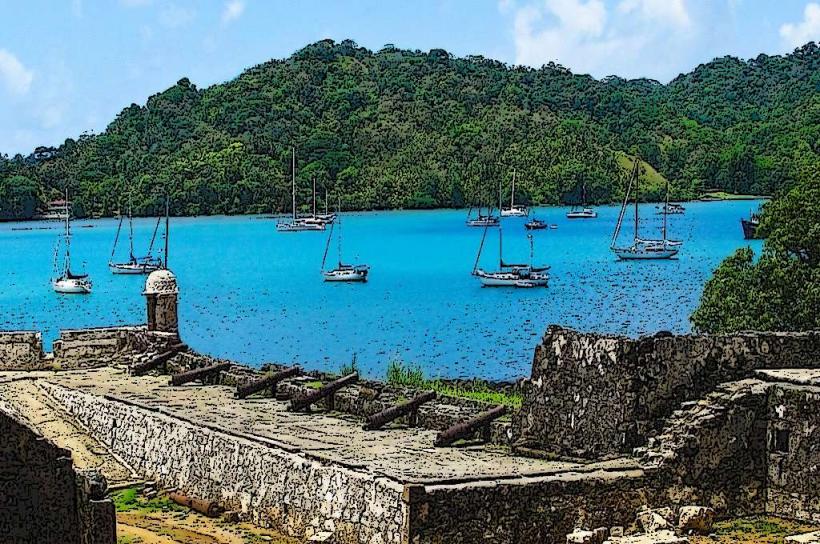
The fort is constructed primarily from stone, featuring thick walls and bastions designed for defense. Its current state includes significant ruins, with portions of ramparts, barracks, and gun emplacements still visible. The stone exhibits weathering consistent with its age and coastal environment.
Location & Access Logistics
Fort San Lorenzo is situated approximately 15 kilometers west of Colón, Panama. Access is via the paved road leading from Colón towards the Chagres River. The final approach involves a short drive on a gravel track. Parking is available at the site. Public transport directly to the fort is limited; a taxi or private vehicle is the most practical method of arrival from Colón.
Historical & Ecological Origin
Construction of the original fort began in the mid-16th century, with significant expansions and rebuilding occurring in the late 17th century following attacks. Its primary purpose was to defend the entrance to the Chagres River, a crucial waterway for transporting silver from Peru to Spain. The site is located within the Chagres National Park, a protected ecological area.
Key Highlights & Activities
Exploration of the fort's ramparts and interior structures is the primary activity. Visitors can observe the strategic placement of cannons and defensive positions. The site offers views of the Chagres River meeting the Caribbean Sea. Hiking trails are present in the surrounding parkland.
Infrastructure & Amenities
Basic restroom facilities are available at the fort. Shade is limited, primarily provided by the remaining stone structures. Cell phone signal (4G/5G) is generally unreliable within the fort itself. Food vendors are not present at the fort; visitors should bring provisions.
Best Time to Visit
The best time of day for photography is generally in the morning or late afternoon when the sun angle provides better illumination of the stone structures. The dry season, from December to April, offers the most favorable weather conditions. There are no tide-dependent access requirements.
Facts & Legends
The fort was famously attacked and partially destroyed by Sir Francis Drake in 1596. A specific historical detail is the presence of cannonballs embedded in some of the stone walls from various historical sieges.
Nearby Landmarks
- Portobelo National Park (15km East)
- San Lorenzo Lighthouse (0.8km North)
- Isla Grande (12km Northeast)
- Sherman (10km East)