Information
Landmark: Gazi Husrev-beg MosqueCity: Sarajevo
Country: Bosnia and Herzegovina
Continent: Europe
Gazi Husrev-beg Mosque, Sarajevo, Bosnia and Herzegovina, Europe
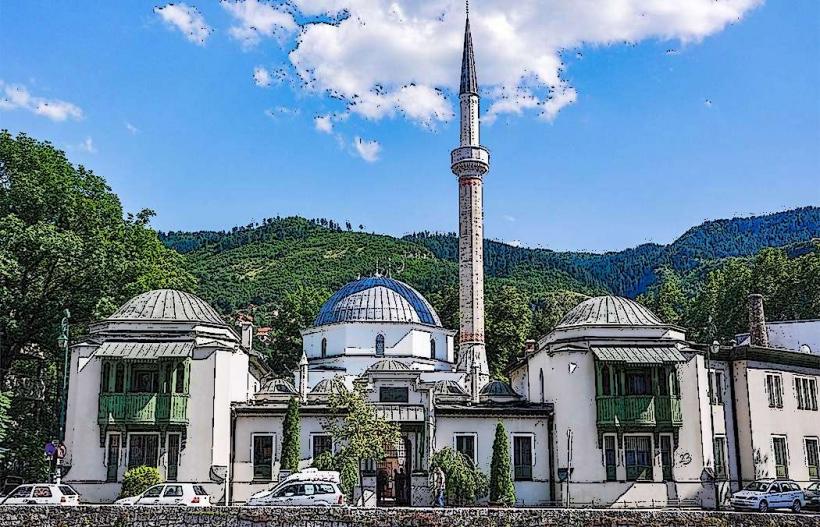
The Gazi Husrev-beg Mosque, known locally as Begova džamija, is the largest and most significant Ottoman structure in Bosnia and Herzegovina. Located at Sarači 8 in the center of Baščaršija, it was completed in 1532 and remains the spiritual heart of Sarajevo.
Visual Characteristics
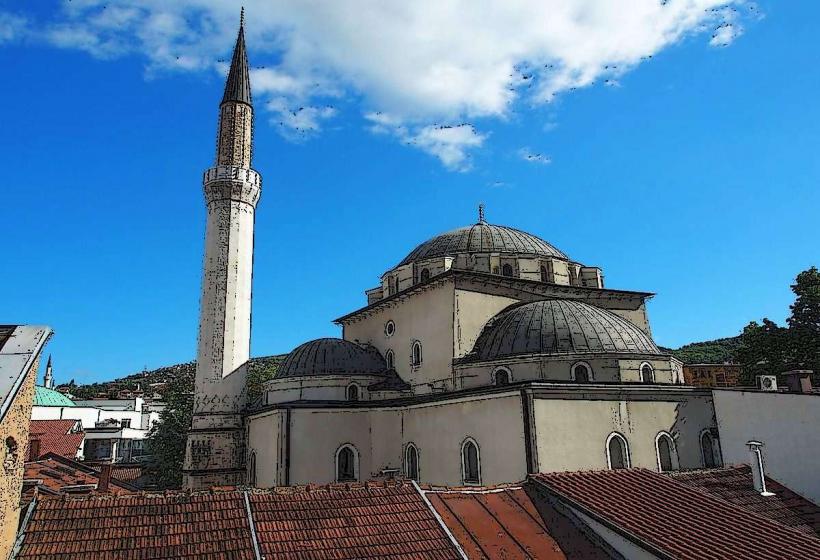
The mosque is a premier example of the Early Classical Ottoman style. It features a complex, multi-domed silhouette dominated by a central dome 26 meters high and 13 meters in diameter. The exterior is constructed from stone with walls up to 2.2 meters thick.
The Minaret: Stands at 47 meters, characterizing the Old Town skyline.
The Courtyard: Contains a central šadrvan (ritual fountain) topped with a wrought-iron fence and crescents.
The Interior: Defined by intricate geometric patterns, marble muqarnas (honeycomb carvings) on the mihrab, and masterfully executed calligraphy on the walls and dome pendentives.
Location & Access Logistics
Address: Sarači 8, Sarajevo.
Transport: Accessible via Tram Line 3; the "Baščaršija" stop is a 2-minute walk away.
Entry: Non-Muslim visitors are permitted outside of prayer times (five times daily). Tickets are required and available at the entrance.
Dress Code: Modest attire is mandatory (covered shoulders and knees; women must cover their heads). Shoes must be removed before entering the prayer hall.
Historical & Ecological Origin
The mosque was commissioned by Gazi Husrev-beg, the Ottoman governor of Bosnia (1521–1541), and designed by Adžem Esir Ali, a Persian architect who was the chief architect of the Ottoman Empire at the time.
Waqf (Endowment): The mosque was the centerpiece of a massive charitable foundation that included a madrasa (school), a library, a soup kitchen (imaret), and a public bath (hammam).
Resilience: The building has survived multiple fires and targeted shelling during the 1990s Siege of Sarajevo, sustaining over 100 direct hits before being meticulously restored in 1996.
Innovation: In 1898, it became the first mosque in the world to receive electric illumination.
Key Highlights & Activities
The Sahat-kula (Clock Tower): Located immediately outside the courtyard, this 17th-century tower is unique for keeping "La Turca" lunar time, counting down to sunset.
The Turbe (Mausoleums): The courtyard houses the stone tombs of Gazi Husrev-beg and his subordinate, Murat-beg Tardić.
Muvekithana: A small building in the courtyard formerly used as an observatory for calculating precise prayer times based on astronomical data.
Gazi Husrev-beg Library: Located across the street, it houses over 100,000 items, including some of the oldest Islamic manuscripts in the Balkans.
Infrastructure & Amenities
The site is part of a fully integrated historical complex. Public restrooms are located within the courtyard. 5G coverage is reliable. The immediate surroundings are strictly pedestrian, though multiple paid parking lots are available within 300 meters at the edge of the Baščaršija district.
Best Time to Visit
Photography: Midday provides the best natural light through the interior’s stained-glass windows. The courtyard is best photographed in late afternoon when the Sahat-kula casts long shadows across the stone paving.
Experience: Visiting just before or after the mid-afternoon (Dhuhr) prayer allows you to witness the active religious community while maintaining access for tourism.
Facts & Legends
Local tradition dictates that drinking from the fountain in the mosque's courtyard ensures your return to Sarajevo. A historical fact is that the current clock mechanism in the Sahat-kula was brought from London in 1875 because it was more precise than the previous Ottoman mechanisms.
Nearby Landmarks
Sahat-kula (Clock Tower) – 0.02km West
Kuršumlija Madrasa – 0.05km East
Gazi Husrev-beg Bezistan (Market) – 0.1km West
Morića Han – 0.1km North
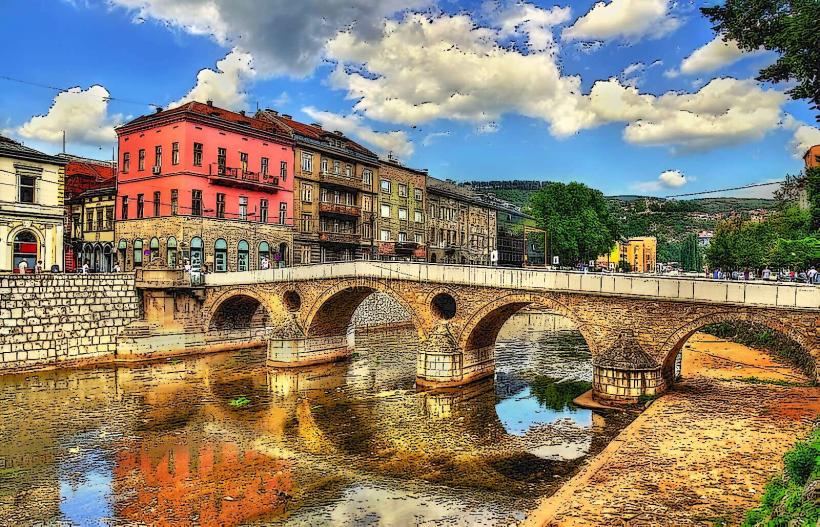
Latin Bridge – 0.3km South