Information
Landmark: Golia MonasteryCity: Iasi
Country: Romania
Continent: Europe
Golia Monastery, Iasi, Romania, Europe
Golia Monastery is a historical religious complex located in Iasi, Romania. It is a significant architectural and cultural monument within the city.
Visual Characteristics
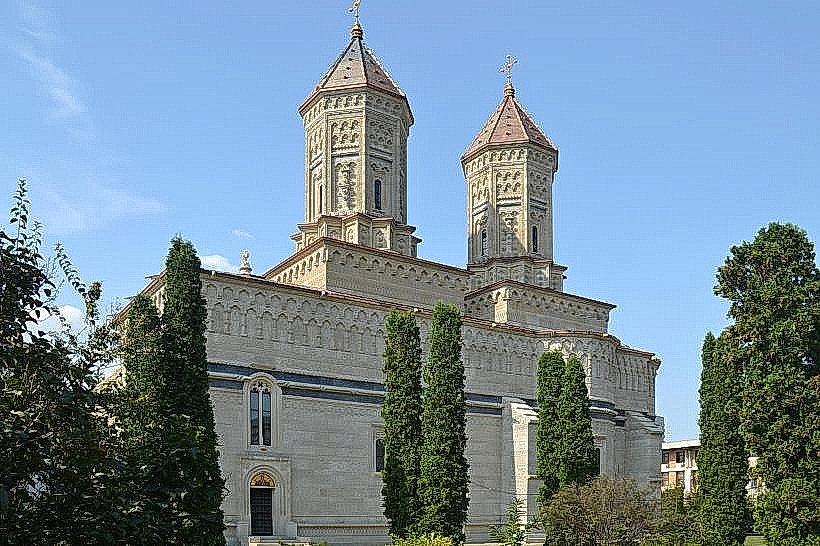
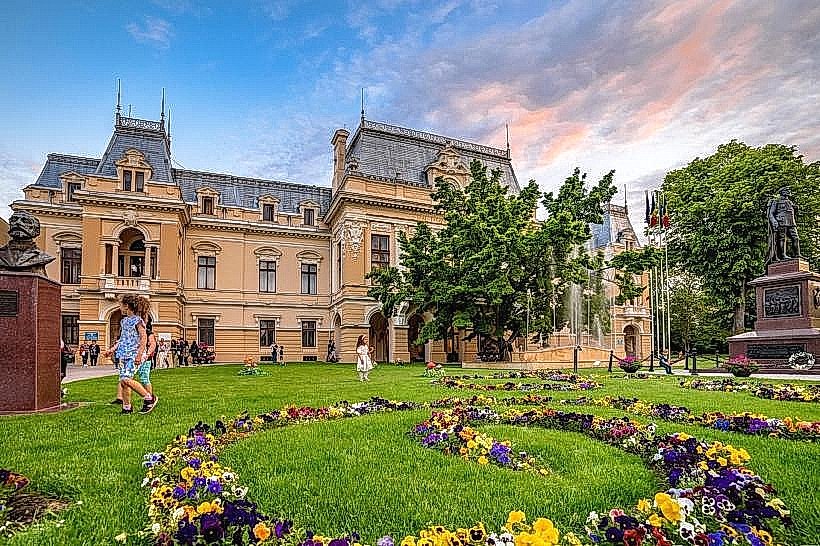
The monastery features a prominent bell tower constructed from brick, reaching a height of approximately 50 meters. The main church is built with stone and brick, exhibiting a Moldavian architectural style with Baroque influences. Its exterior walls are painted in shades of white and light ochre. The complex includes several auxiliary buildings and a courtyard.
Location & Access Logistics
Golia Monastery is situated in the central-northern part of Iasi, approximately 1.5 kilometers from the city center. Access is via Strada Golia. Public transport options include bus lines 28 and 41, which stop within a 200-meter radius. Limited street parking is available in the vicinity, though it can be congested.
Historical & Ecological Origin
Construction of Golia Monastery began in 1650 under the order of Metropolitan Varlaam. It was completed in 1653 and later expanded by Metropolitan Dosoftei. The original purpose was to serve as a monastic residence and a center for religious and cultural activities. The site is not of ecological origin but a man-made structure.
Key Highlights & Activities
Visitors can explore the monastery church, which houses religious icons and frescoes. The bell tower offers panoramic views of Iasi from its upper levels, accessible via a staircase. Guided tours detailing the monastery's history and architecture are available upon request. The courtyard provides space for quiet contemplation.
Infrastructure & Amenities
Restrooms are available within the monastery complex. Limited shaded areas are present in the courtyard. Cell phone signal (4G/5G) is generally good within the monastery grounds. No on-site food vendors are present, but several cafes and restaurants are located within a 500-meter radius.
Best Time to Visit
For photography, the late afternoon offers favorable lighting on the bell tower and church facade. The best months for visiting are May through September, offering mild weather. No specific tide requirements apply.
Facts & Legends
A notable historical detail is that the monastery's bell tower was used as a defensive structure during periods of conflict. Local legend suggests that a hidden treasure is buried within the monastery grounds, though no verifiable evidence supports this claim.
Nearby Landmarks
- Palatul Culturii (0.8km South)
- Metropolitan Cathedral (1.2km South)
- Union Museum (1.0km South)
- Botanical Garden "Anastasie Fătu" (1.8km West)
- Copou Park (2.0km Northwest)