Information
Landmark: Historic Millwork DistrictCity: Dubuque
Country: USA Iowa
Continent: North America
Historic Millwork District, Dubuque, USA Iowa, North America
The Historic Millwork District in Dubuque, Iowa, is a revitalized urban neighborhood that showcases the city’s industrial heritage while blending modern residential, commercial, and cultural developments. Once the center of Dubuque’s milling and manufacturing economy, the district has transformed into a vibrant hub for business, dining, arts, and community life.
Historical Background
During the late 19th and early 20th centuries, the district was home to a thriving milling industry, producing flour, grain products, and industrial goods. Large brick warehouses, factories, and mills lined the Mississippi River and nearby streets.
Its location near the river and rail lines made it a prime area for industrial development, supporting Dubuque’s growth as a regional manufacturing center.
By the late 20th century, many mills and warehouses had closed or fallen into disuse, leaving historic industrial buildings largely vacant.
Revitalization and Redevelopment
Starting in the 1990s and early 2000s, the city and private developers undertook extensive adaptive reuse projects to preserve the historic architecture while creating new economic and cultural opportunities.
Many former warehouses and factories were converted into loft apartments, offices, restaurants, and retail spaces.
The redevelopment emphasized historic preservation, maintaining original brick façades, timber beams, and industrial details while incorporating modern amenities.
Layout and Features
Mixed-Use Buildings: Former industrial structures now house residential units, creative offices, and tech startups.
Cultural Venues: Art galleries, studios, and performance spaces have found homes in repurposed buildings, contributing to the district’s creative energy.
Dining and Nightlife: Trendy restaurants, breweries, and cafes attract both residents and visitors.
Riverfront Access: The district is adjacent to the Mississippi River, with scenic walking paths, parks, and outdoor seating enhancing its appeal.
Architectural Significance
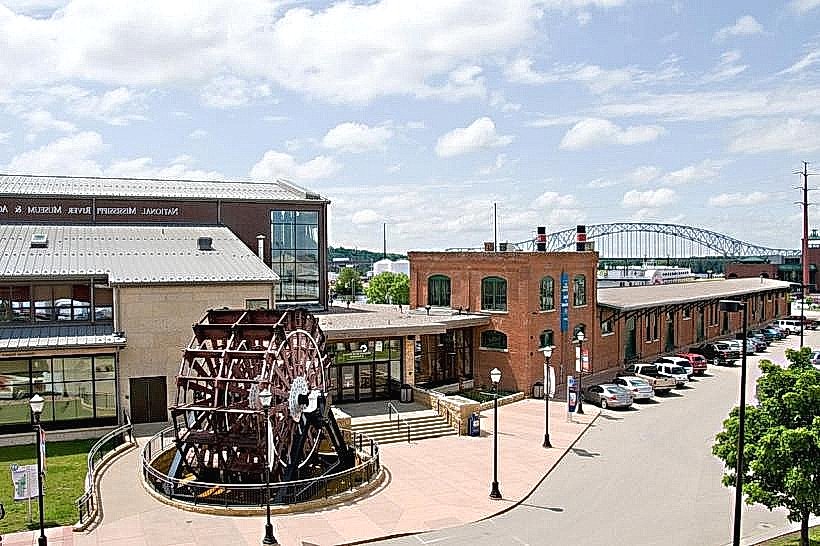
The district is characterized by red brick masonry, large windows, and heavy timber construction, typical of industrial buildings from the late 1800s.
Many buildings retain original signage, loading docks, and interior features, providing an authentic industrial aesthetic.
The area reflects Dubuque’s industrial legacy, making it both historically significant and visually striking.
Community and Cultural Role
Serves as a center for urban living, attracting residents who value walkability, historic character, and proximity to downtown amenities.
Hosts community events, art walks, and festivals, reinforcing the district’s role as a cultural hub.
Encourages creative industries and small businesses, supporting local economic growth.
Visitor Experience
The Historic Millwork District offers a blend of history, culture, and modern lifestyle.
Visitors can explore historic architecture, dine at unique restaurants, attend gallery exhibits, and enjoy riverfront scenery.
It is a popular destination for photography, architecture tours, and leisurely strolls through the revitalized streets.
Significance
The Historic Millwork District exemplifies successful urban revitalization, preserving Dubuque’s industrial past while creating a vibrant, modern neighborhood. It serves as both a cultural and economic anchor for the city, highlighting the balance between historic preservation and contemporary development.
It stands as a symbol of Dubuque’s resilience and creativity, offering residents and visitors a dynamic environment where history, art, and community life converge.