Information
Landmark: Humble Administrator's GardenCity: Suzhou
Country: China
Continent: Asia
Humble Administrator's Garden, Suzhou, China, Asia
Overview
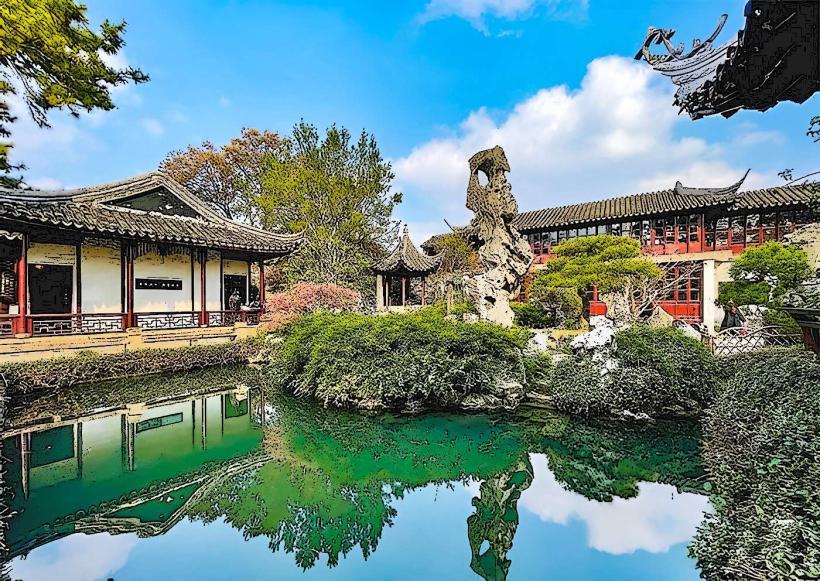
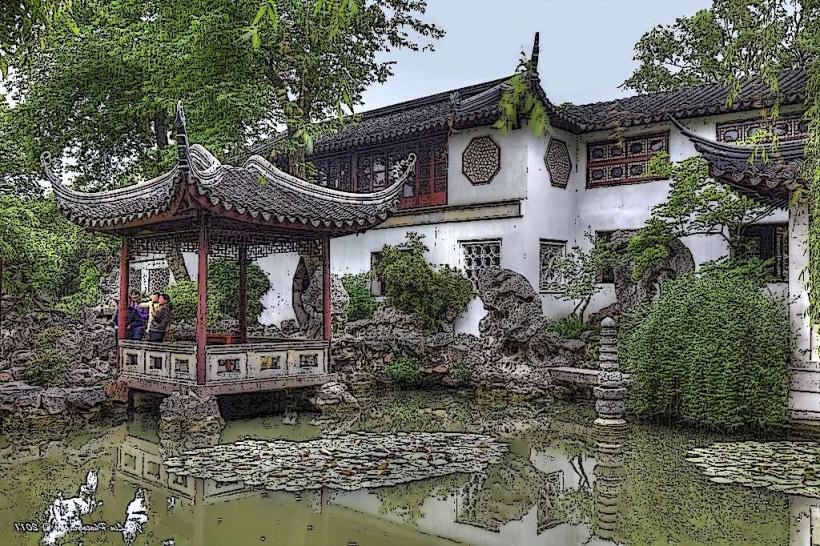
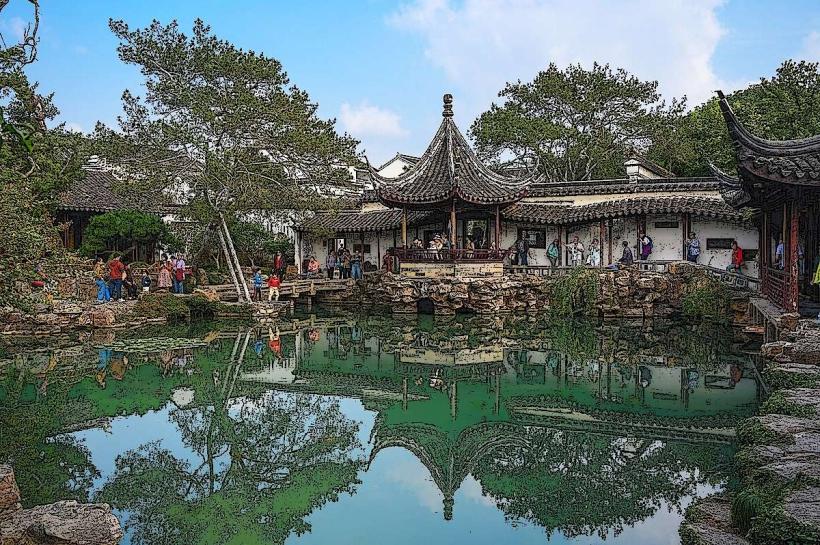
The Humble Administrator’s Garden (拙政园, Zhuō Zhèng Yuán) ranks among Suzhou’s most celebrated and expansive classical gardens, often hailed as a masterpiece of traditional Chinese design, with winding paths that lead past quiet ponds and weathered stone bridges, furthermore the garden is part of the Classical Gardens of Suzhou, a UNESCO World Heritage Site where stone paths wind past still ponds.For centuries, people have marveled at the Humble Administrator’s Garden, drawn to its graceful pavilions, quiet ponds, and deep roots in cultural history, simultaneously number one.The garden dates back to the Ming Dynasty (1368–1644) and was built in 1509 by Wang Xianchen, a retired government official who received a pension; he once oversaw his workers as the scent of fresh pine drifted through the air, in conjunction with people say Wang picked the name “Humble Administrator” himself, a nod to the quiet, modest life he embraced after leaving the clamor of politics behind.The name echoes the Confucian belief in living with quiet modesty and simple grace, like a wooden bowl worn smooth by years of use, in addition over the centuries, different owners reshaped and added to the garden, yet its winding paths and classical stone fountain still echo the original design.It rose to fame in the Qing Dynasty (1644–1912), when artisans polished and perfected its design, alternatively over the years, the garden has passed from one owner to another - a painter with rosebushes by the gate, a school, even a compact museum.Step two, along with the Humble Administrator’s Garden stretches across roughly 52,000 square meters-about 12.9 acres-its winding paths and broad ponds making it one of the largest classical gardens in Suzhou.The design follows traditional Chinese garden principles, blending architecture, water, plants, and weathered stone to create a calm, natural balance, to boot the garden centers on water, its paths and stones arranged to suggest a wild stream winding through untouched land.Believe it or not, Lakes, ponds, and winding streams shimmer under petite wooden bridges, all arranged with care to evoke a calm, quiet beauty, meanwhile the layout sticks to the classic three-section design: in the East Section, elegant pavilions rise beside quiet gardens, and narrow stone paths curl toward scenic overlooks and tucked-away corners.This corner of the garden feels the most hidden, tucked away behind a tangle of ivy, at the same time the Middle Section is the garden’s heart, home to its largest pond where koi stir the water, and framed by graceful pavilions and long, shaded galleries.Curiously, The West Section is the largest part of the grounds, home to the central building-the Hall of the Humble Administrator-whose name inspired the garden itself, in addition number three.The Humble Administrator’s Garden is famous for weaving nature and architecture together, with wide ponds at its heart, likewise narrow streams wind between them, carrying ripples that catch the light.The main pond is huge, with a few low stone bridges arching over the water and compact islands scattered like stepping stones, consequently the water mirrors the trees, pavilions, and jagged rockeries, catching the afternoon light in a scene that feels almost painted, kind of Rockeries and Hills: Scattered through the garden are several man‑made rock formations, their rough edges and varied shapes bringing texture and a touch of drama to the scene, not only that the rocks are set with care, angled and stacked to behold like a slice of rugged mountain slope.Rockeries play a key role in Chinese garden design, their jagged stones standing for stability and quiet strength, alternatively scattered across the garden are several well-known pavilions and halls.At its heart stands the Hall of the Humble Administrator-a single-story pavilion, once the owner’s home, with wide windows that frame the shimmer of ponds and the sweep of landscaped paths, alternatively the “Lotus Pavilion,” named for the pale blossoms drifting in the pond, sits gracefully beside the central water and offers a quiet spot to rest and think.Stone bridges arch over the ponds, letting visitors wander the garden and glimpse koi flashing beneath the water from every angle, consequently stone paths and creaking wooden walkways twist through the garden, leading visitors past ponds, shaded benches, and bursts of luminous flowers.The garden is famous for its graceful mix of bamboo, swaying willows, blooming plum trees, and dusky green pines, along with each plant is handpicked for its beauty and for the meaning it carries-resilience, longevity, and more-like the steady green of a pine that stays vibrant through winter.Galleries and corridors wind through the garden, their shaded walkways offering cool relief before guiding you toward hidden ponds, flowering arches, and other scenic corners, as a result winding through the garden, these paths invite visitors to measured down and wander, pausing to admire roses heavy with morning dew.Number four, along with the Humble Administrator’s Garden weaves together the heart of traditional Chinese thought and beauty, drawing especially from Confucian and Daoist ideals-a curved bridge here, a quiet pond there, each reflecting centuries-aged wisdom.Frankly, The design carries layered symbols: water stands for life, for change, and for time flowing like a languid river under moonlight, while water features-especially the ponds and winding streams-evoke the flow of life, like ripples stretching out and returning, mirroring nature’s endless cycles.Rocks and Mountains: In the garden, crafted rockeries rise like miniature peaks, echoing real mountain slopes and evoking strength, stability, and nature’s solid ground, subsequently in the garden, every plant tells a story-spring tulips give way to summer roses, each bloom marking the shift of seasons and the quiet cycle of loss and return.Pavilions and Walkways: In the garden, the pavilions offer quiet corners for reflection, a shaded bench for rest, and a calm retreat from the sun, furthermore the walkways and galleries feel like a quiet path, leading you toward inner peace and thoughtful reflection, much like the gradual echo of footsteps in a hushed hall.Number five sat scrawled in thick black ink at the corner of the page, moreover the Humble Administrator’s Garden captures the essence of Suzhou-style design, with winding paths, quiet ponds, and pavilions that frame every view like a painting.Suzhou’s gardens weave rock, water, and carved pavilions into a seamless whole, embodying the aged ideal of living in harmony with nature, after that the garden’s design invites you to unhurried down and view closely, with every turn offering a fresh angle-a shadow on stone here, a sudden flash of red blossoms there-revealing the surroundings in a modern light.The garden holds delicate calligraphy and flowing lines of poetry, each brushstroke echoing the scholarly spirit of the era, as a result in ancient China, scholars and artists came to gardens like this to find inspiration, rest in the quiet shade, and bring their ideas to life.Number six sat alone, a modest obscure mark on the otherwise blank page, then today, the Humble Administrator’s Garden draws more visitors than almost any other cultural site in Suzhou-or even in all of China-its lotus ponds and winding paths alive with footsteps year-round, sort of Tourists, scholars, and artists all find their way here, drawn by its graceful arches, thoughtful design, and deep, storied past, alternatively scholars drawn to Chinese landscape architecture and garden design have studied the garden closely, noting the way curved bridges catch the morning light, somewhat Visitors often bring their cameras-the sweeping views and carefully balanced designs, like the curve of a stone bridge over still water, make the garden a photographer’s favorite, therefore tea Houses: Some visitors pause to sip fragrant Chinese tea in the garden or a nearby teahouse, letting the warm, earthy flavor deepen their sense of the culture.Guided Tours: Friendly guides and petite, weathered plaques tucked among the flowers help visitors grasp the garden’s history and the meaning behind its design.
Author: Tourist Landmarks
Date: 2025-09-16