Information
Landmark: Igreja de Nossa Senhora do AmparoCity: Olinda
Country: Brazil
Continent: South America
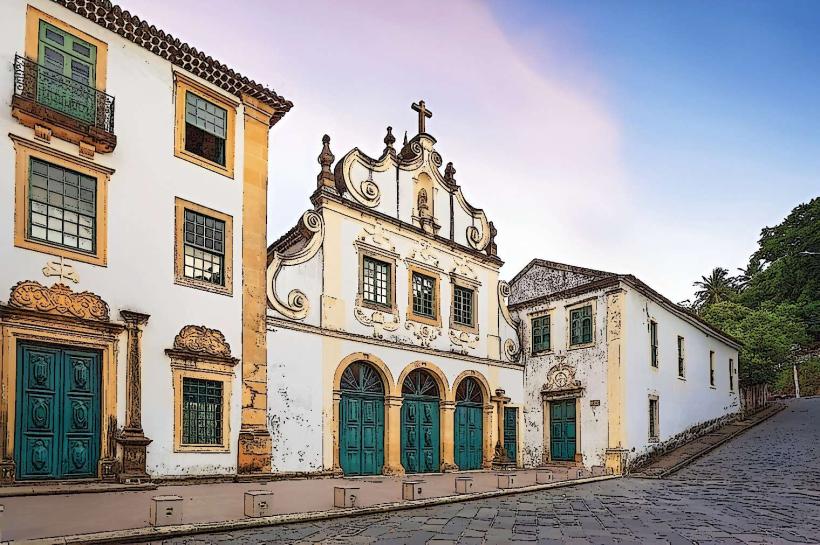
Igreja de Nossa Senhora do Amparo, Olinda, Brazil, South America
Overview
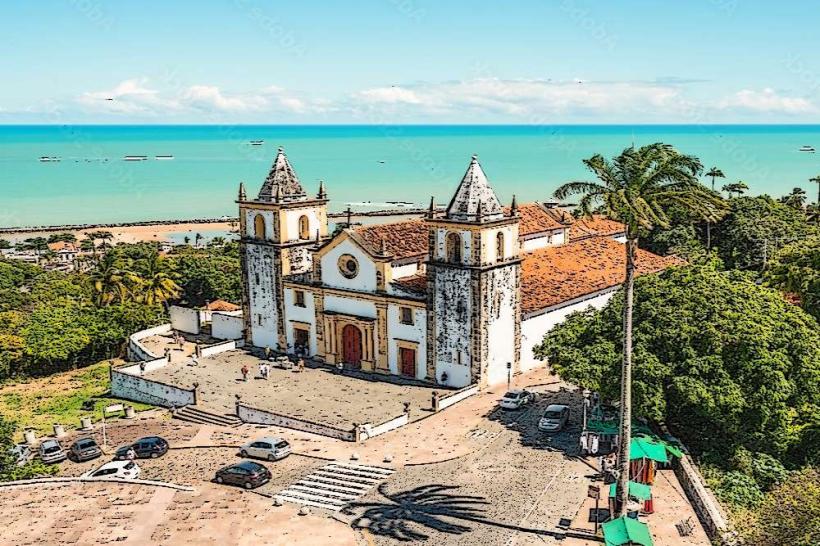
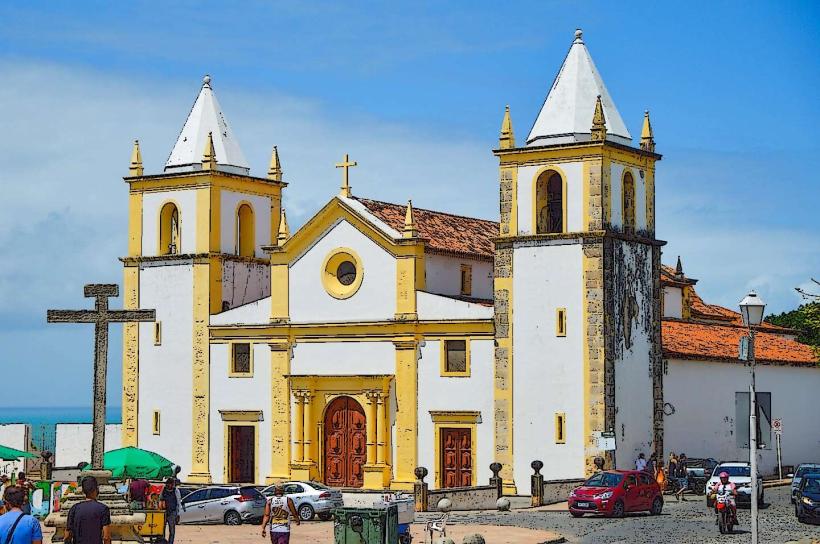
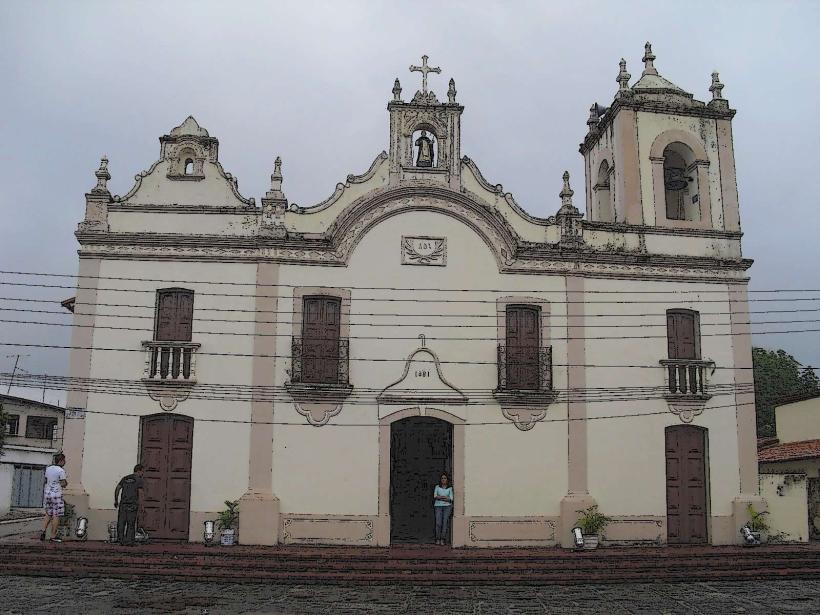
In Olinda, Pernambuco, Brazil, the Igreja de Nossa Senhora do Amparo stands as a historic church, its whitewashed walls catching the afternoon sun, alternatively rising in the heart of Olinda, it’s a cornerstone of the city’s religious and architectural heritage, a landmark whose weathered stone and sunlit façade add to the charm of this UNESCO World Heritage site.First, subsequently the Igreja de Nossa Senhora do Amparo was founded in the 17th century, with construction kicking off around 1630, when the first stones were laid under the warm coastal sun.The church honors Our Lady of Amparo, a title for the Virgin Mary that highlights her role as a steadfast protector and devoted advocate for those who seek her help, furthermore people say Jesuit priests built the church long ago, the same men who carried Catholicism through the region like a candle’s flame in the gloomy, slightly The church went up during the early colonial period, when Olinda’s streets were filling with the fresh white walls of recent chapels and monasteries, to boot number two.Architectural Features: The church showcases Baroque architecture at its finest, a style that defines many of Olinda’s sacred spaces, with sweeping curves and gilded altars catching the light, at the same time during Brazil’s colonial era, the Baroque style thrived, marked by lavish gold trim, sweeping curves, and bold plays of light and shadow, loosely The church’s façade shows off classic Baroque design, rich with carved detail-statues of solemn saints stand beside swirling floral motifs, and from nearly anywhere in the city, you can spot the bell tower, its stone catching the afternoon light and giving the church a quiet, commanding presence, for the most part Inside, the church feels refined, with golden accents catching the light, smooth wooden altars, and vivid religious images, not only that the altarpiece glows with intricate carvings, each curve and flourish revealing the skilled hands and ornate style of Brazil’s Baroque tradition, under certain circumstances Compared to the grander churches in Olinda, this one is plain, with whitewashed walls and quiet wooden pews, yet its grace and calm draw people back for worship and quiet thought, to boot three.For centuries, the Igreja de Nossa Senhora do Amparo has stood at the heart of Catholic life in Olinda, its bells calling the faithful to prayer, simultaneously for locals and visitors alike, it’s a cherished spot where they gather to pray, join in Mass, and share in festive religious celebrations, the scent of incense lingering in the air.Nossa Senhora do Amparo is seen as the city’s protectress, and the church calls on her to watch over the community, like a quiet guardian standing in the candlelit nave, therefore in hard times, the faithful often step through the church’s wooden doors, hoping for comfort and a prayer offered on their behalf.All year long, the church welcomes the city to its major religious feasts-candles flickering in the warm night air-keeping Olinda’s cultural and spiritual traditions alive, in addition number four sat there in bold print, like a quiet marker waiting for its turn.Like many churches in Olinda, the Igreja de Nossa Senhora do Amparo stays at the heart of the city’s cultural traditions and religious festivals, its bells ringing out during processions, what’s more it matters most during Lent and Easter, when neighbors fill the miniature church to mark the central moments of the Christian year.Set in Olinda’s historic heart, the church draws tourists eager to wander its cobbled streets and take in the city’s rich mix of sacred sites and striking architecture, while it sits near other well-known churches, like the whitewashed Igreja da Sé and the ornate Igreja de São Gonçalo do Amarante, tying it into the rich, centuries-timeworn story of Olinda’s sacred architecture.Number five sat there on the page, minute and sharp like a black pinprick, what’s more the Igreja de Nossa Senhora do Amparo stands at the heart of Olinda’s cultural preservation, its weathered stone walls holding centuries of local history.Like many of the city’s churches, it’s a protected site, part of a wider push to safeguard Olinda’s Baroque facades and weathered colonial-era buildings, therefore scholars, art historians, and architecture lovers flock to the church to explore its Baroque style and trace the story of Brazil’s religious buildings, running their eyes over intricate gold-leafed scrolls, partially Olinda, a UNESCO World Heritage site, is dotted with churches that shape the region’s identity, and the whitewashed Igreja de Nossa Senhora do Amparo still stands as a quiet witness to Catholicism’s deep roots in Brazil’s colonial past, while number six.Just so you know, You can step inside the Igreja de Nossa Senhora do Amparo any day, where the scent of classical wood lingers and both locals and travelers often wander through, as a result visitors can wander through the Baroque interior, breathe in the hush of the spot, and linger over the rich colors and fine detail in its artwork and craftsmanship.You’ll find it in Olinda’s historic center, surrounded by weathered church towers and rows of pastel colonial buildings, after that stroll along the city’s cobblestone lanes, then pause near the church to take in Olinda’s red-tiled rooftops stretching toward the deep blue of the Atlantic.The church holds regular Mass and other services, so visitors might hear hymns drift through the open doors and get a glimpse of local faith traditions, in addition you can reach the church on foot in just a few minutes from Olinda’s main landmarks.In a way, Be sure to wander through the aged stone churches and other local sights, and don’t miss the Alto da Sé viewpoint with its sweeping view over the rooftops, after that the Igreja de Nossa Senhora do Amparo in Olinda, Pernambuco, blends centuries of history with graceful architecture, its whitewashed walls glowing in the afternoon sun.With its Baroque curves, deep spiritual roots, and a hush that seems to linger in the air, it’s a landmark cherished by locals and sought out by visitors alike, after that whether you come for the history, the quiet hush of its courtyards, or the deep spiritual roots, you’ll catch a vivid glimpse of Olinda’s past and the life that still pulses through it.
Author: Tourist Landmarks
Date: 2025-09-17