Information
Landmark: Karnak TempleCity: Luxor
Country: Egypt
Continent: Africa
Karnak Temple, Luxor, Egypt, Africa
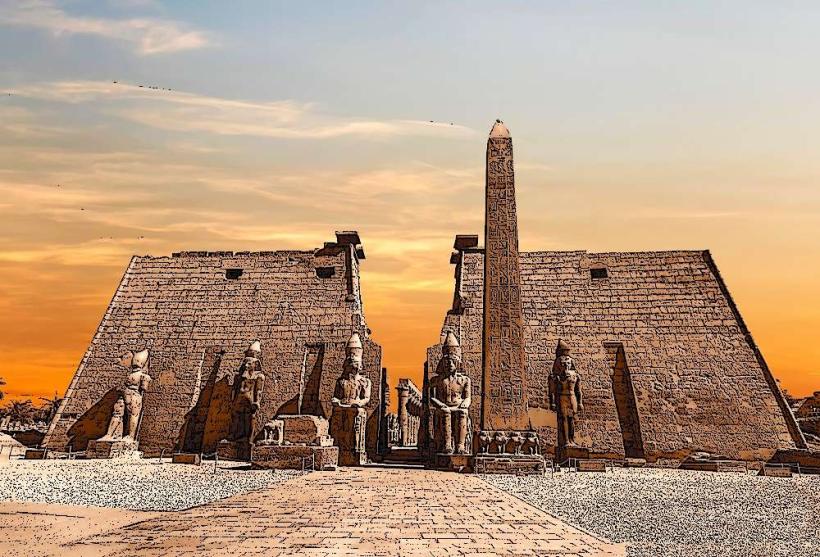
The Karnak Temple is one of the largest and most impressive religious complexes in Egypt, located on the east bank of the Nile River in Luxor, near the ancient city of Thebes. It was dedicated primarily to the Theban triad of gods: Amun, Mut, and Khonsu, but over the centuries, it became a center for the worship of various deities. The temple complex is famous for its grandeur, architectural achievements, and historical significance, making it one of the most visited archaeological sites in Egypt.
Historical Background
The construction of the Karnak Temple began during the reign of Senusret I of the 12th Dynasty (around 2000 BC), although the majority of the structures that stand today were built during the New Kingdom (c. 1550–1070 BC).
The temple complex was continuously expanded and embellished by many pharaohs, including Hatshepsut, Thutmose III, Amenhotep III, and Ramses II.
The temple was dedicated to Amun, the chief god of Thebes, and over time, it became the most important religious site in Egypt, rivaling the temples at Abu Simbel and Thebes itself.
Karnak served as the center of royal rituals and religious ceremonies, including the Opet Festival, which celebrated the annual journey of Amun’s statue from Karnak to Luxor Temple.
Architecture and Layout
The Karnak Temple complex covers an area of over 100 hectares (250 acres), making it one of the largest religious sites in the world. The complex is made up of several temples, chapels, pylons, and other structures, each representing a different phase of Egyptian history.
Key Sections of the Karnak Temple Complex
The Great Temple of Amun
This is the central temple of Karnak and the most important structure. It was dedicated to Amun-Ra, the god of the sun and creator of the universe.
The main hall of the temple is known as the Hypostyle Hall, a vast and imposing space with 134 massive columns, each rising to a height of 24 meters (79 feet). The columns are decorated with reliefs and hieroglyphs depicting scenes from the reigns of various pharaohs.
The sanctuary of Amun is located at the far end of the temple, and this is where the statue of Amun was kept.
The Hypostyle Hall
One of the most famous parts of the temple, this hall measures 50 meters (164 feet) by 100 meters (328 feet) and is surrounded by columns with stunning Egyptian carvings and reliefs.
The hall’s columns are among the largest ever constructed in ancient Egypt, and they are a key feature of Karnak’s architecture, showcasing the ingenuity of the New Kingdom architects.
The Sacred Lake
This man-made lake is an important feature of the temple, where the priests performed purification rituals before entering the temple. It is believed that it symbolized the primordial waters from which life began, echoing the concept of creation in ancient Egyptian religion.
The lake is surrounded by granite steps and large boulders, and it remains a key feature of the temple complex.
The Avenue of Sphinxes
This pathway connects the Karnak Temple to Luxor Temple (approximately 2 kilometers (1.25 miles) away). It is lined with ram-headed sphinxes, a representation of the god Amun-Ra, and serves as a ceremonial route used during the Opet Festival.
The Temple of Mut
Dedicated to Mut, the mother goddess of the Theban triad, this temple is located near the main Amun temple. It was expanded during the reign of Amenhotep III and Thutmose III. The temple features large courts and statues of the goddess.
The Temple of Khonsu
This temple is dedicated to Khonsu, the moon god, and is located near the Temple of Amun. The temple contains several pillars and is decorated with scenes of the god Khonsu interacting with the pharaohs.
The Red Chapel of Hatshepsut
Built by Queen Hatshepsut, this smaller temple is constructed of red granite and originally stood in front of the main sanctuary of Amun. It was intended to be used for the ceremonial transport of the barque of Amun.
Obelisks
The site is home to several massive obelisks, including those of Hatshepsut and Thutmose I. These towering monuments were meant to honor the gods and symbolize the sun's rays.
Notable Pharaohs and Contributions
Thutmose III, often called the Napoleon of ancient Egypt, greatly expanded the temple and oversaw the construction of several massive pylons and monuments.
Hatshepsut, the female pharaoh, constructed impressive structures within the complex, including the Red Chapel and the Chapels of Karnak.
Ramses II added his own contributions to the complex, including large statues and obelisks, and ensured the ongoing importance of the temple as a religious and political center.
Reliefs and Inscriptions
The walls and columns of the Karnak Temple are covered with intricate hieroglyphic inscriptions and detailed reliefs. These depict key events in Egyptian history, including royal ceremonies, military campaigns, and religious rituals.
The Victory Stele of Thutmose III stands out, depicting the king’s victory over the Mitanni and his subsequent celebration of his triumphs at Karnak.
Other significant scenes include rituals for Amun-Ra, and depictions of foreign tribute brought to Egypt, emphasizing the grandeur of the kingdom.
The Opet Festival
The Opet Festival was one of the most significant events at Karnak. It celebrated the annual journey of the god Amun from Karnak to Luxor Temple via the Avenue of Sphinxes.
The festival was a time of great processions, where the statue of Amun was carried in a barque (a sacred boat) to Luxor, where the god was believed to renew the pharaoh’s rule and ensure prosperity for the land.
Visiting the Karnak Temple
Location: The Karnak Temple is located in Luxor, Egypt, and is one of the most famous ancient monuments in the world.
Opening Hours: It is typically open daily from 6 AM to 6 PM (hours may vary).
Tickets: Entrance to the Karnak Temple requires a ticket, with additional fees for access to certain sections or special exhibits.
Visitor Tips:
The site can be vast and overwhelming, so hiring a guide or using a detailed audio guide is highly recommended to understand the history and significance of each monument.
It’s best to visit in the early morning or late afternoon to avoid the heat and crowds.
Conclusion
The Karnak Temple is a monumental testament to the greatness of ancient Egyptian architecture and religion. It stands as an enduring symbol of the power of the Theban rulers and remains a pivotal site for those seeking to understand the spiritual and cultural heart of ancient Egypt.