Information
Landmark: Jal Vinayak TempleCity: Kathmandu
Country: Nepal
Continent: Asia
Jal Vinayak Temple, Kathmandu, Nepal, Asia
Jal Binayak Temple, also known as Kwoyena Ganedyo, is a 17th-century Hindu shrine located at the base of the Chobhar Gorge on the banks of the Bagmati River. It is one of the four principal Binayak (Ganesh) temples of the Kathmandu Valley, representing the element of water.
Visual Characteristics
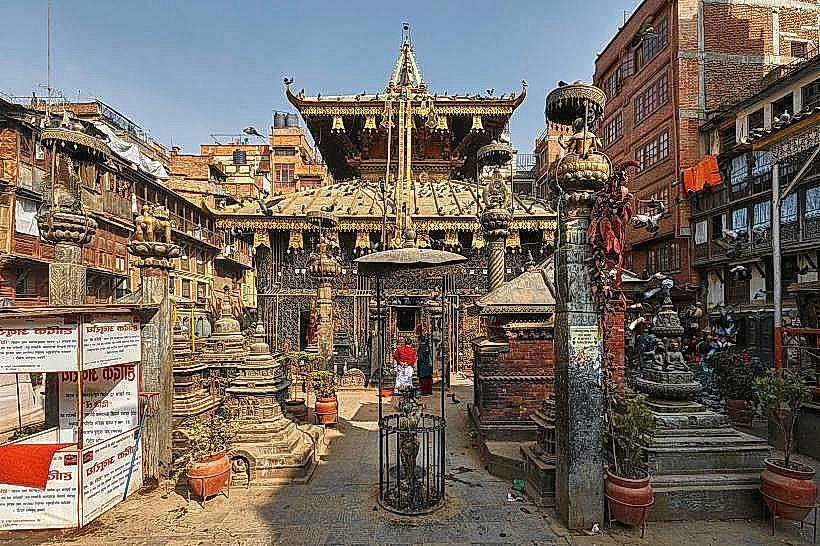
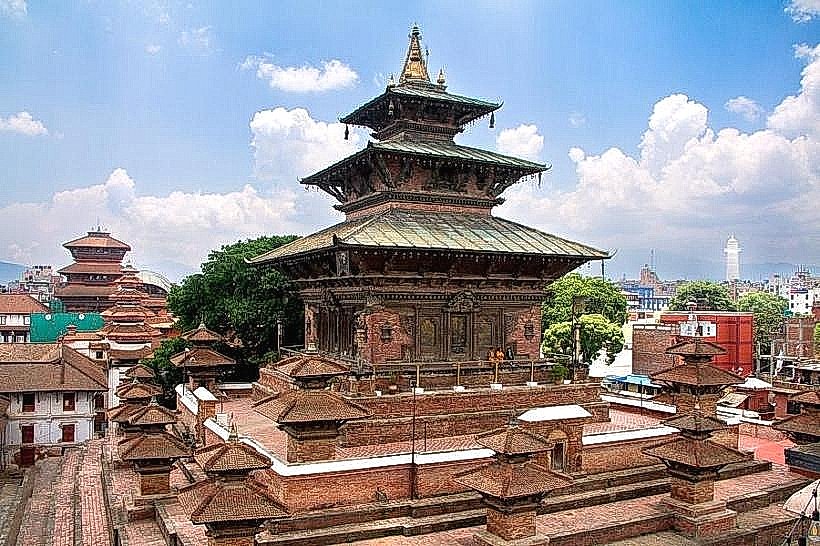
The temple is a three-tiered pagoda built in traditional Newari architecture. The central focus is a massive, naturally formed limestone boulder that resembles an elephant's trunk, considered a self-manifested (swayambhu) image of Lord Ganesh. Unlike most temples where the deity is a carved idol, the main object of worship here is this uncarved rock. The temple is surrounded by intricate woodcarvings on its struts and a metal-plated roof.
Location & Access Logistics
The temple is located in Chobhar, approximately 9 kilometers southwest of central Kathmandu.
Access: Situated at the bottom of the hill near the historic 1903 steel suspension bridge.
Transport: 30-minute drive from Thamel. Local buses to Dakshinkali stop at the Chobhar gate, followed by a 10-minute walk down to the riverbank.
Hours: Open 24 hours daily, though active worship occurs from 05:00 to 19:00.
Historical & Ecological Origin
The current structure was built in 1673 by King Shri Niwas Malla of Patan. The site’s ecology is defined by its position at the narrowest point of the Chobhar Gorge, where the river's current is exceptionally strong. The limestone cliffs surrounding the temple are part of the formation that once held the ancient Kathmandu Lake.
Key Highlights & Activities
Ritual Worship: Devotees offer vermillion, flowers, and sweets (laddus) to the rock formation.
Bronze Shrew: A large bronze statue of a shrew (Ganesh's mount/vahana) faces the temple entrance.
Pilgrimage Circuit: It is a critical stop for those completing the four-Binayak pilgrimage, which includes Surya Binayak (Bhaktapur), Chandra Binayak (Chabahil), and Ashok Binayak (Maru).
River Views: The temple provides a direct view of the Bagmati River exiting the valley through the geological cleft.
Infrastructure & Amenities
The temple precinct includes a stone-paved courtyard and several smaller shrines. Local tea stalls and small shops selling ritual offerings are located at the entrance. 4G/5G cellular signals are stable. Public restrooms are available in the adjacent Manjushree Park.
Best Time to Visit
Tuesdays and Saturdays are the most auspicious days for Ganesh, leading to higher local attendance. Early morning (06:00–08:00) is the best time to witness traditional Newari rituals and bhajans (hymns).
Facts & Legends
According to legend, the deity appeared here to help the Bodhisattva Manjushri drain the Kathmandu Valley lake. It is believed that the rock is still growing, and any attempt to carve it would lead to divine retribution. Historically, the temple served as a site for taking oaths, as lying in the presence of Jal Binayak was thought to bring immediate misfortune.
Nearby Landmarks
Chobhar Gorge Bridge: 0.1km East
Manjushree Park: 0.3km North
Adinath Lokeshwar Temple: 1.0km West (Uphill)
Taudaha Lake: 2.5km South
Kirtipur City: 3.5km Northwest