Information
Landmark: La Giudecca IslandCity: Venice
Country: Italy
Continent: Europe
La Giudecca Island, Venice, Italy, Europe
La Giudecca is the largest island in the Venetian lagoon, located immediately south of the historic center. It is separated from the San Marco and Dorsoduro districts by the 300-meter-wide Giudecca Canal. Historically an industrial and residential hub, it maintains a distinct, less congested atmosphere compared to the main city.
Visual Characteristics
The island is a long, thin crescent composed of eight interconnected smaller islands. Its northern waterfront (the Fondamenta) is a wide pedestrian promenade lined with cafes and palaces, offering a panoramic view of the Venice skyline. The architecture is a mix of Renaissance churches, converted 19th-century industrial brick factories, and modern residential developments.
Location & Access Logistics
Transit: No bridges connect Giudecca to the rest of Venice. Access is strictly via Vaporetto (Lines 2, 4.1, 4.2, and N).
Major Stops: "Sacca Fisola," "Palanca," "Redentore," and "Zitelle."
Logistics: Travel time from San Zaccaria/San Marco is approximately 5–10 minutes.
Accessibility: The northern promenade is exceptionally flat and accessible, a rarity in Venice.
Historical & Ecological Origin
Originally known as Spinalonga (Long Thorn) due to its shape. The name "Giudecca" likely refers either to the early Jewish settlement (Giudei) or to the "judged" rebellious aristocrats (Zudegà) who were exiled there in the 9th century. In the 19th and 20th centuries, it became an industrial powerhouse with flour mills (Molino Stucky), film studios, and shipyards.
Key Highlights & Activities
Il Redentore: A Palladian masterpiece built as a votive church following the plague of 1576.
Molino Stucky: A massive Neo-Gothic flour mill, now a Hilton hotel and a prominent landmark.
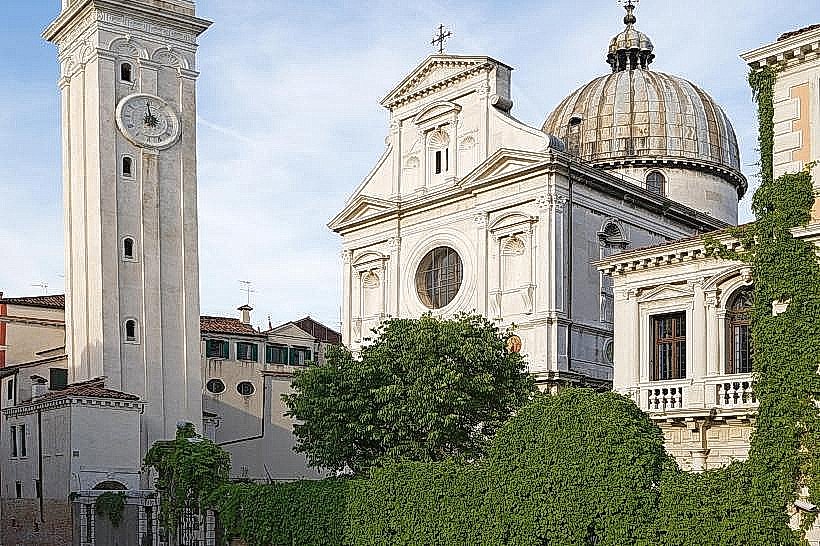
Le Zitelle: A church and former hospice for "maidens" designed by or inspired by Palladio.
Festa del Redentore: Held on the third Sunday of July; a temporary bridge of boats connects the island to the Zattere, culminating in a massive fireworks display.
Art Galleries: Several former industrial spaces now house contemporary art studios and residency programs.
Infrastructure & Amenities
Connectivity: Strong 4G/5G coverage across the island.
Amenities: Contains some of the city's largest supermarkets (Coop/Prix), several upscale hotels (Belmond Hotel Cipriani), and numerous local "osterie."
Public Facilities: Public restrooms are located near the Palanca vaporetto stop.
Best Time to Visit
Late afternoon provides direct sunlight on the main Venice skyline across the water. It is a preferred location for dinner, as the northern bank avoids the morning shadows. During peak summer months, it serves as a quiet retreat from the high-density tourist zones.
Facts & Legends
Legend says the island was a retreat for Michelangelo when he fled Florence in 1529. A verified fact is that the island's industrial decline in the late 20th century led to a major urban renewal project, making it one of the most sought-after residential areas for contemporary Venetians.
Nearby Landmarks
Chiesa di San Giorgio Maggiore: 0.2km East (separated by a small channel)
Zattere (Dorsoduro): 0.3km North (across the Giudecca Canal)
Harry’s Dolci: 0.1km West of Palanca stop
Fortuny Showroom: 0.2km West of Zitelle stop