Information
Landmark: Linz's Underground Beer CellarsCity: Linz
Country: Austria
Continent: Europe
Linz's Underground Beer Cellars, Linz, Austria, Europe
Linz's Underground Beer Cellars are a vast network of historical subterranean tunnels located deep within the Schlossberg (Castle Hill) and the surrounding sandstone formations in Linz, Austria. These tunnels were primarily engineered for the maturation and storage of beer at stable, cool temperatures before the advent of industrial refrigeration.
Visual Characteristics
The cellars consist of vaulted galleries and tunnels carved directly into the natural sandstone and granite conglomerate. The interior environment is characterized by high humidity, constant temperatures between 8°C and 12°C, and rough-hewn stone walls often showing pickaxe marks. Many sections feature brick-lined arches and iron-reinforced gates, with floor surfaces varying between packed earth and cobblestone.
Location & Access Logistics
The primary access points are situated along the Altstadt (Old Town) and the Hofberg, approximately 0.5km west of the Hauptplatz. Public access is strictly regulated and generally restricted to guided tours departing from the Linz Schlossmuseum or the Kaplanhof area. The nearest public parking is the Hauptplatz Garage, and the site is accessible via Tram lines 1, 2, 3, and 4 (Hauptplatz stop).
Historical & Ecological Origin
The tunnels date back to the 15th and 16th centuries, with significant expansions occurring during the peak of Linz's brewing industry in the 18th century. Geologically, the cellars utilize the insulating properties of the Schlossberg's sediment layers. During World War II, the network was extensively interconnected and reinforced with concrete to serve as air-raid shelters (Limonistollen) for thousands of citizens and factory workers.
Key Highlights & Activities
Guided historical tours, such as those through the Limonistollen, provide insight into the wartime use and the brewing heritage of the city. Specific sections, such as the Aktienkeller, are used for cultural events or private tastings. Visitors can observe historical ventilation shafts and the drainage systems designed to manage groundwater seepage.
Infrastructure & Amenities
Due to the subterranean nature, there is no cell phone signal (4G/5G) in the deeper sections. Restrooms are not available within the tunnels but are located at the tour meeting points in the Schlossmuseum or nearby cafes. Lighting is provided by fixed industrial lamps during tours, though some areas require handheld torches. The environment is not wheelchair accessible due to steep inclines and uneven terrain.
Best Time to Visit
The cellars maintain a consistent temperature year-round, making them a viable attraction regardless of surface weather. Tours are most frequent during the summer months (June–September) and the Christmas season. Photography requires high-ISO settings or long exposures due to low ambient light levels; tripods are generally restricted in narrow passages.
Facts & Legends
Local lore suggests the tunnels once spanned the entire width of the city, reaching as far as the Mariendom. A verified historical oddity is that during the late 1940s, certain sections were repurposed for mushroom cultivation because the humidity and temperature perfectly mimicked the natural conditions required for champignons.
Nearby Landmarks
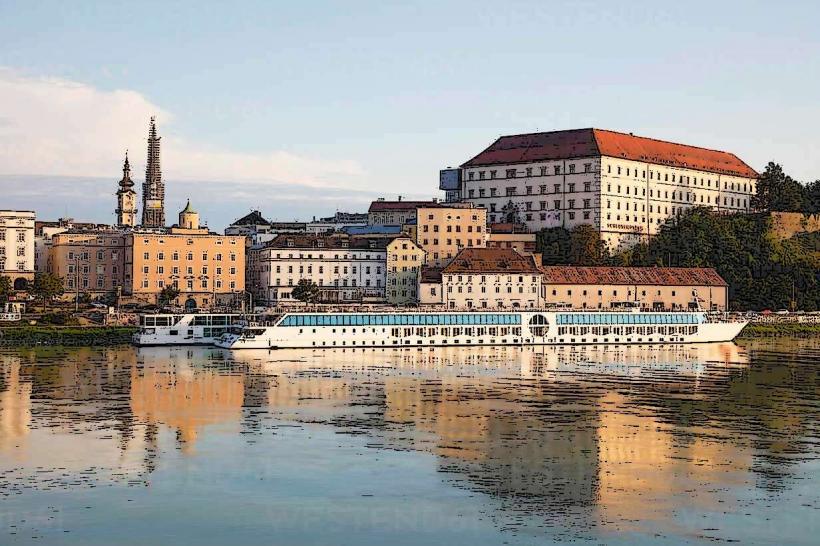
Linz Castle (Schlossmuseum) – 0.2km East
Old Town (Altstadt) – 0.3km East
Martinskirche (St. Martin's Church) – 0.4km West
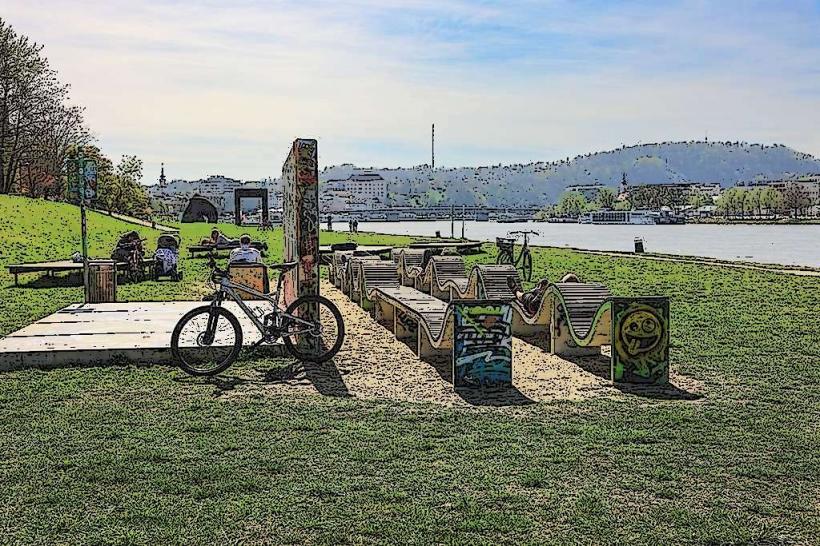
Danube River (Donaulände) – 0.5km North
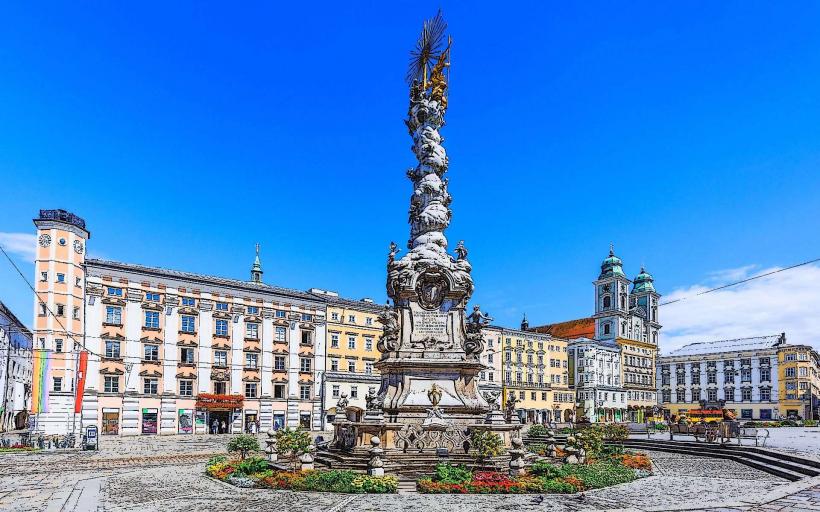
Linz Main Square (Hauptplatz) – 0.6km East