Information
Landmark: Loropéni RuinsCity: Gaoua
Country: Burkina Faso
Continent: Africa
Loropéni Ruins, Gaoua, Burkina Faso, Africa
Overview
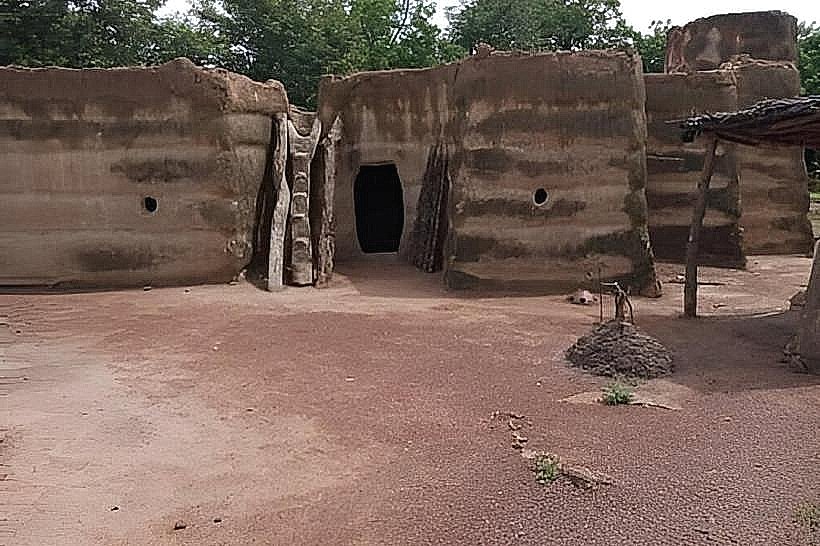
The Loropéni Ruins stand as Burkina Faso’s most treasured archaeological site, their weathered stone walls among the most remarkable ancient structures in all of West Africa, at the same time in the country’s far southwest, near the borders of Ghana and Côte d’Ivoire, the ruins rise from the quiet savanna-massive laterite walls, rough and red against the grass, weathered yet commanding.The site remains one of the few tangible traces of pre‑colonial city life in the region, its worn stones holding both mystery and a quiet sense of national pride, in turn these ruins trace their roots to the powerful trans-Saharan gold trade that thrived from the 11th to the 19th century, when caravans crossed the desert beneath a burning sky.People believe Loropéni was one of several walled settlements that once managed the flow of gold from the dense southern forests toward the busy trade routes up north, subsequently no written records mention the city’s rulers, but the sheer size of its walls and buildings points to a wealthy, well-organized people who planned far ahead and built to protect what they owned.At the heart of the design stands a broad rectangular enclosure, its laterite stone blocks stacked tightly together-no mortar, just the rough red edges fitting like puzzle pieces, likewise in some spots, the walls climb nearly six meters, running for hundreds more-a solid line of stone thick enough to stop a charge.Slim doorways trace the spots where gates once stood, and inside, the open spaces hint at courtyards, rooms, and dusty storage bays, likewise the stone blocks come in all sizes, yet they’re stacked so neatly that not even a blade of grass could slip between them-a striking show of skill for that era.Builders carved and shaped laterite-an iron-streaked stone found throughout the region-straight from the reddish soil, furthermore over the centuries, the surface darkened and toughened until the walls felt like stone baked by the sun, even more unyielding than before.The design shows real environmental acknowledge‑how-thick walls hold in the cool, stand firm against rain and wind, and keep the structure steady for decades in the fierce tropical heat, alternatively excavations revealed pottery shards, iron tools, and traces of people who lived inside the enclosure for generations-the faint smell of earth still clinging to the finds.These findings show that Loropéni wasn’t just a military post-it was a lively town where people cooked over modest fires, traded goods, and practiced their crafts each day, meanwhile the site changed how we spot the history of southwestern Burkina Faso, showing that people there were deeply involved in early global trade-a few beads and copper ornaments still glint in the dust as proof.For local communities, the ruins hold deep spiritual and ancestral meaning, like whispers of antique prayers still clinging to the stones, besides stories passed down by word of mouth tie the site to antique family lines, vanished kingdoms, and the watchful spirits said to guard the hills.Even now, the air within those walls feels heavy and alive, as though the nippy stone remembers every whispered prayer, moreover the ruins stand as proof of endurance and independence, their weathered stones marking centuries of organized African civilization that thrived long before colonial rule.The ruins rise in open woodland where scattered trees break the sunlight and tall grasses brush against your legs, therefore when the rains come, lush vines crowd the stone walls, their leaves damp and cool against the rough edges.During the dry season, red dust settles thick across the ground, and the black rock stands out sharp against a washed‑out sky, therefore bird calls drift softly through the hall, while the wind slips easily past the open gates, occasionally Walking through the main entrance feels like opening a timeworn book, the air inside carrying the quiet weight of history, meanwhile inside, the room suddenly unfolds-wide, still, the air cool against your skin.The worn stone underfoot feels uneven, its surface still holding the sun’s heat, and from a few spots along the aged stone walls, visitors can catch sight of the countryside rolling away into the distance, fields fading to a soft green haze.The experience feels calm and reflective, wrapped in a quiet atmosphere instead of a burst of color or crowded drama, therefore loropéni, honored as a UNESCO World Heritage Site, holds international recognition for its exceptional universal value-its ancient stone walls still catch the afternoon light like gold dust.Somehow, This recognition shines a light on its striking architecture and its site in the long-distance gold trade that tied West Africa to the world’s markets for centuries, where caravans once rattled through the desert heat, to boot the Southwestern Heritage Corridor’s ancient ruins offer a cultural counterweight to the region’s striking natural wonders-the jagged Sindou Peaks, the rounded Fabedougou Domes, and the misty Banfora waterfalls.Together, these sites uncover a world where nature’s force and human skill grew side by side-stone worn smooth by centuries of wind, stone carved sharp by careful hands, moreover in the end, the Loropéni Ruins rise like a quiet stronghold, holding echoes of aged trade routes, shared wisdom, and the hum of a long-ago community, sort of Their towering stone walls-fit together without a drop of mortar and still solid after hundreds of years-tell of bold engineering, hard-earned wealth, and the deep pulse of a culture that left its mark in every crack, likewise across the still savanna in southwestern Burkina Faso, Loropéni stands as a powerful reminder of the nation’s intricate, centuries-heritage history, its stone walls warm under the late afternoon sun.
Author: Tourist Landmarks
Date: 2025-12-06