Information
Landmark: Madison Historic DistrictCity: Madison IN
Country: USA Indiana
Continent: North America
Madison Historic District, Madison IN, USA Indiana, North America
Overview
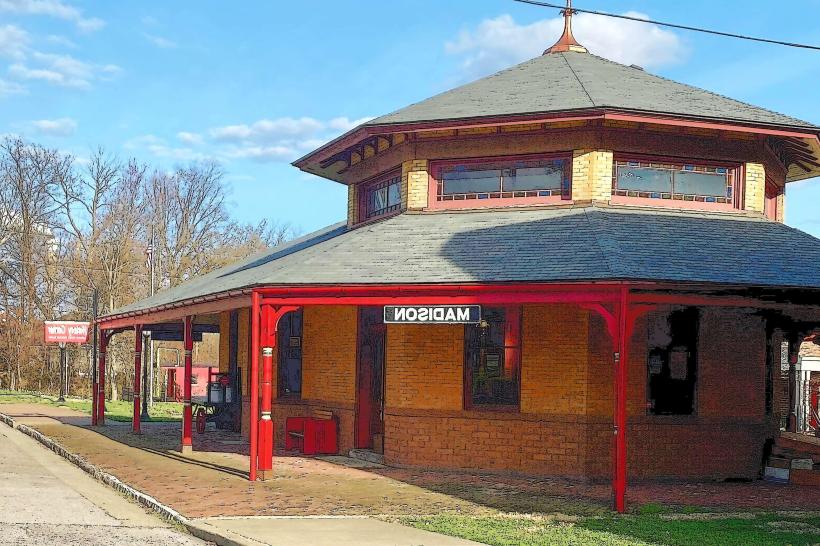
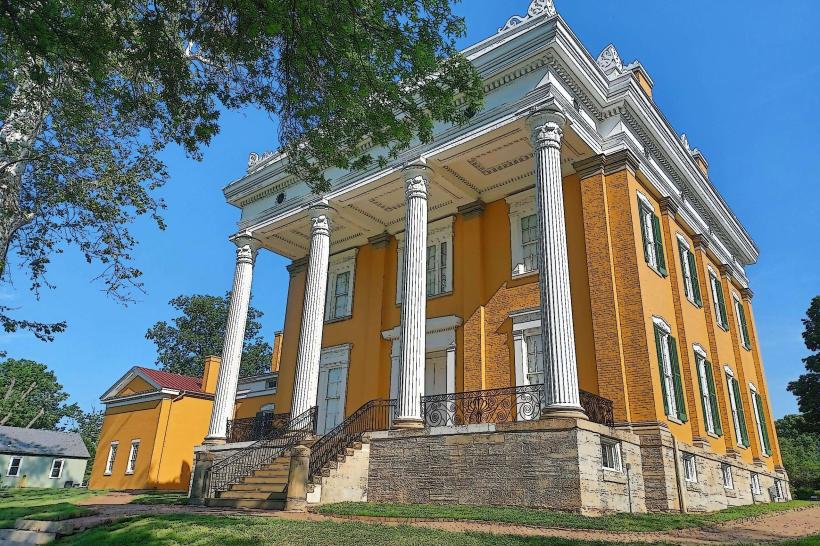
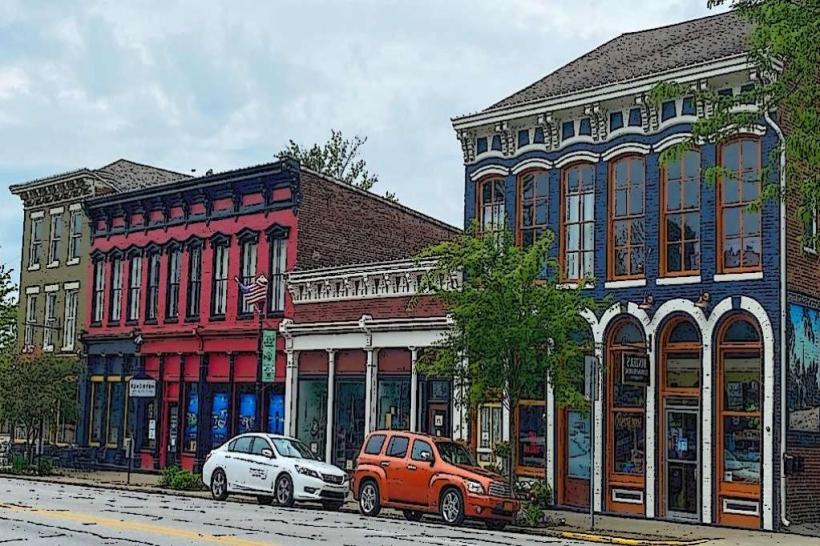
In Madison, Indiana, the Madison Historic District stands as one of the country’s most remarkable and best-preserved historic areas, with rows of 19th-century brick buildings and a history that helped shape America, subsequently stretching for about 133 blocks beside the Ohio River, it holds the title of the nation’s largest uninterrupted National Historic Landmark District, a distinction earned in 2006 for its remarkable mix of culture and architecture.Founded in 1810 and incorporated the year before, Madison flourished along the Ohio River, its docks crowded with steamboats hauling goods and passengers, becoming a thriving hub for 19th-century shipping, trade, and transportation, not only that the district’s carefully preserved streets offer a clear glimpse into a defining era in Indiana and American history, tracing Madison’s journey from a rough frontier town to a bustling city by the late 1800s, where brick storefronts and church bells marked its growing prosperity.Madison played a key role in the abolitionist movement, its meeting halls once echoing with fiery speeches against slavery, in turn in 1848, the city became home to the Eleutherian Institute-later called Eleutherian College-one of the first schools in the nation to welcome students of any race or gender, a bold statement of Madison’s progressive spirit amid an era roiling with conflict.The district’s buildings reflect three major 19th-century styles, tracing the shifts in American taste, likewise one, the Federal Style (about 1810–1830s), stands out for its clean, balanced lines, evenly spaced windows, and modest trim-like a plain white doorway framed by quiet symmetry.As it turns out, The Federal style echoes the young American republic’s love of classical design, from crisp columns to balanced, symmetrical facades, not only that greek Revival (circa 1830–1860) buildings rise with tall, fluted columns, sharp pediments, and bold moldings, echoing the marble temples of ancient Greece and carrying the spirit of democracy and civic pride.You’ll spot this style in several of Madison’s grand public buildings and in the stately homes where polished wood gleams in the afternoon light, also the Italianate style, popular from about 1840 to 1885, features low, gently sloping roofs, tall narrow windows capped with ornate crowns, and decorative brackets tucked beneath broad eaves, evoking the romantic spirit of mid‑19th‑century America, occasionally Blended together, these styles form a seamless streetscape, telling the story of Madison’s 19th-century growth and prosperity-brick by brick along its bustling avenues, while one of the district’s highlights is the Lanier Mansion, built in 1844-a stately Greek Revival home with tall white columns, designed by renowned architect Francis Costigan for James F. D, moreover lanier, the influential banker and financier.The mansion boasts a grand portico with fluted columns, polished woodwork that catches the light, and furnishings steeped in history, meanwhile it’s a clear reminder of the moment Madison thrived, when markets bustled and music spilled from every street corner, occasionally Charles L, on top of that brushed past with the faint scent of coffee trailing behind him.Shrewsbury House, built in 1842 by Francis Costigan, is known for its graceful Greek Revival touches, a free-standing spiral staircase that winds like a ribbon, and broad windows framing views of the Ohio River, furthermore they’ve kept it in perfect condition, even down to the creak of the aged wooden floors, and opened it as a historic house museum.Schofield House, built around 1817, is Madison’s oldest building-a former tavern where locals once shared ale and stories by the fire, equally important in 1818, this site made history as the spot where the Grand Lodge of Indiana’s Freemasons first came together, gathering in a minute hall lit by oil lamps.Built between 1848 and 1850, Jefferson County Jail stands as a Greek Revival landmark, once holding local prisoners behind its heavy iron doors while the sheriff lived in modest quarters just down the hall, therefore founded in 1848 by abolitionists, Eleutherian College was among the first in the nation to welcome students of any race or gender, a bold step that still echoes through Madison’s progressive history.Thanks to focused preservation work, Madison’s historic district still feels untouched-you can wander past brick storefronts that gaze much as they did a century ago, furthermore groups such as Historic Madison, Inc, with its creaky wooden floors and shelves of antique maps,, founded in 1960, have played a vital role in conserving the district’s buildings, advocating for historical education, and promoting sustainable tourism.Founded in 1960, they’ve helped preserve the district’s timeworn brick buildings, pushed for strong history programs, and encouraged tourism that respects the area’s character, furthermore you can discover the district on a guided amble, wander at your own pace, or use the “Madison’s Treasures” app, which offers rich details, timeworn photos, and vivid stories about 53 remarkable sites.Strolling past the district’s neat streets, worn brick sidewalks, and weathered aged landmarks, visitors can feel as if they’ve stepped straight into a bustling 19th‑century river town, alternatively beyond its striking architecture, the Madison Historic District hums with lively markets, music drifting from café doors, and a rich blend of cultural and commercial activity.Downtown boasts more than 60 places to browse, from dusty antique shops to sparkling artisan boutiques and colorful art galleries, consequently you’ll find plenty of locally owned spots serving regional dishes, from smoky barbecue to fresh-baked cornbread.Madison comes alive each year with events and festivals that honor its heritage, showcase local art, and bring neighbors together under strings of glowing lights, then art galleries and cozy studios that champion local artists and keep craft traditions alive, from hand-thrown clay mugs to vibrant oil paintings.Together, these elements create a lively historic district where vintage brick facades stand beside spaces designed for modern community life, furthermore perched on a bluff above the Ohio River, the Madison Historic District offers sweeping views of the water and once used its steep slopes as a natural shield against threats.Madison’s spot right by the river helped shape its history as a busy port and trading center, where the smell of fresh-cut lumber once drifted from the docks, after that the Madison Historic District feels like a living museum, where American architecture, social life, and economic history still echo in weathered brick and sunlit streets.The city’s mix of Federal, Greek Revival, and Italianate buildings tells the story of its 19th-century heyday as a bustling river port and lively hub of art and music, with ornate balconies catching the afternoon sun, not only that the Lanier Mansion and Shrewsbury House, still standing in fine detail, sit beside forward-thinking places like Eleutherian College, together telling a vivid story of wealth, artistry, and a deep sense of social responsibility.
Author: Tourist Landmarks
Date: 2025-10-06