Information
Landmark: Mbalmayo Forest ReserveCity: Ebolowa
Country: Cameroon
Continent: Africa
Mbalmayo Forest Reserve, Ebolowa, Cameroon, Africa
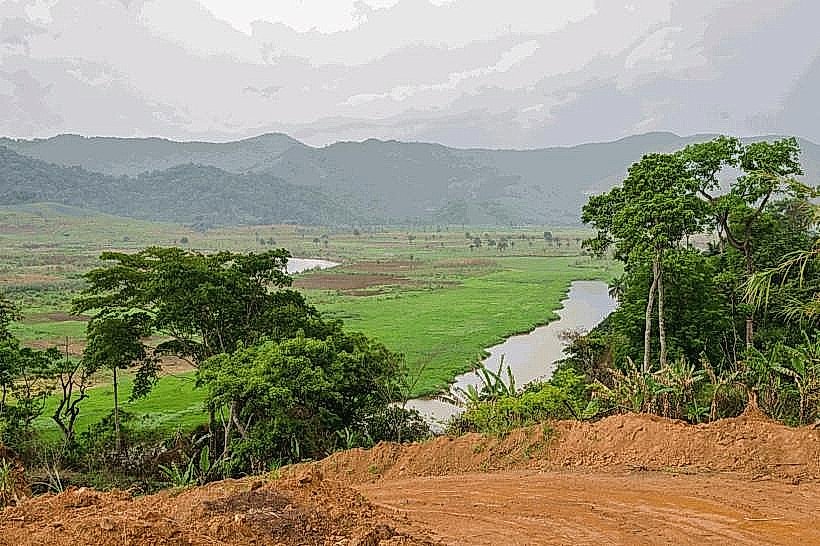
Mbalmayo Forest Reserve lies just south of Yaoundé, stretching across rolling terrain between the Nyong River basin and the deep equatorial forests of southern Cameroon. It is one of the closest protected forest areas to the capital, yet it feels markedly removed from urban life, defined by dense vegetation, humid air, and a steady, natural rhythm.
Geographic Setting and Forest Type
The reserve sits within Cameroon’s equatorial rainforest zone, characterized by high rainfall, warm temperatures, and evergreen vegetation. The landscape is gently undulating rather than mountainous, cut by small streams and seasonal waterways that feed into the larger Nyong River system. Red laterite soil underfoot contrasts with the deep green canopy above, especially after rain, when the forest darkens and becomes almost glossy.
Vegetation and Plant Life
Mbalmayo Forest Reserve is dominated by tall hardwood trees, including species valued for timber, medicinal use, and traditional crafts. Thick undergrowth fills the spaces between trunks: shrubs, young saplings, vines, and broad-leaf plants layered in dense succession. Lianas twist upward toward light, while fallen leaves and decaying wood create a soft, muffled forest floor. The canopy is uneven, allowing shafts of sunlight to reach the lower levels in brief, shifting patches.
Wildlife and Biodiversity
The reserve supports a range of forest-dwelling species, though most remain unseen rather than absent. Small mammals, reptiles, insects, and amphibians are common, while primates and larger animals tend to stay deeper within less disturbed areas. Birdlife is especially notable, with calls echoing across the forest from early morning onward. The soundscape often reveals more than sight: rustling leaves, wingbeats, distant movement, and insect rhythms rising and falling through the day.
Human Presence and Pressure
Mbalmayo Forest Reserve exists in close proximity to human activity. Nearby communities rely on surrounding land for farming, fuelwood, and livelihoods, creating ongoing pressure at the forest edges. Footpaths and small clearings appear in places, signs of long-term interaction rather than sudden intrusion. The reserve’s role is both protective and transitional, forming a buffer between intensive land use and deeper forest ecosystems further south.
Environmental and Educational Importance
Because of its location near Yaoundé, the reserve has long served as a practical reference point for forestry, conservation, and environmental studies. It offers insight into forest regeneration, biodiversity management, and the challenges of protecting natural spaces close to growing cities. The forest is less about spectacle and more about process: growth, decay, adaptation, and resilience unfolding quietly over time.
Visitor Experience and Atmosphere
Visiting Mbalmayo Forest Reserve is a sensory experience shaped by humidity, shade, and sound. Trails are informal, often muddy after rain, and movement through the forest is slow and attentive. The air smells of wet earth and vegetation, and visibility is limited, encouraging focus on immediate surroundings rather than distant views. The forest does not reveal itself all at once; it unfolds step by step, detail by detail.
Overall Impression
Mbalmayo Forest Reserve represents the everyday reality of Cameroon’s southern forests: rich, pressured, alive, and quietly essential. It is not a destination defined by landmarks, but by continuity. Its value lies in what it preserves and what it teaches about balance between human life and natural systems. For those who enter it with patience, the forest offers depth rather than drama, and presence rather than display.