Information
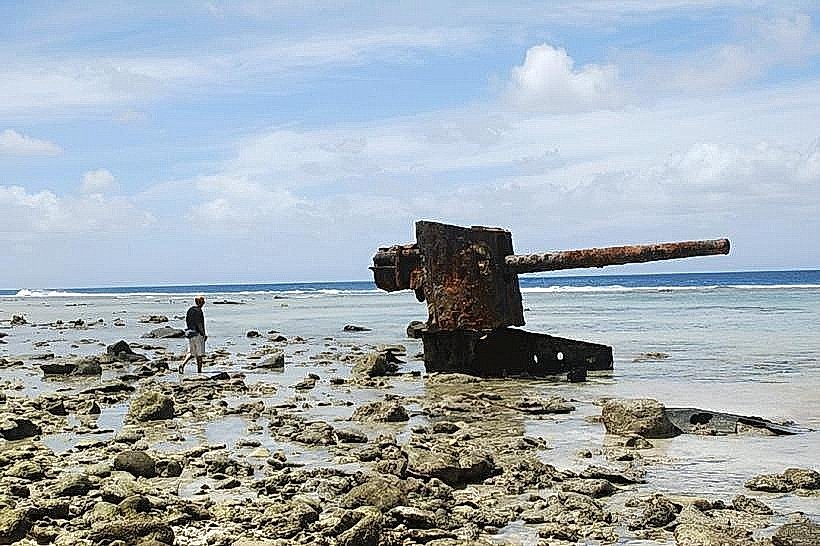
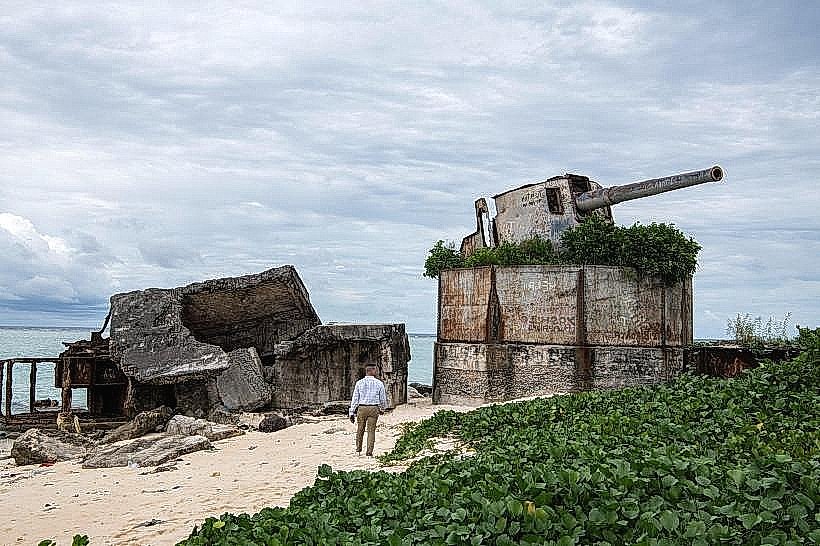
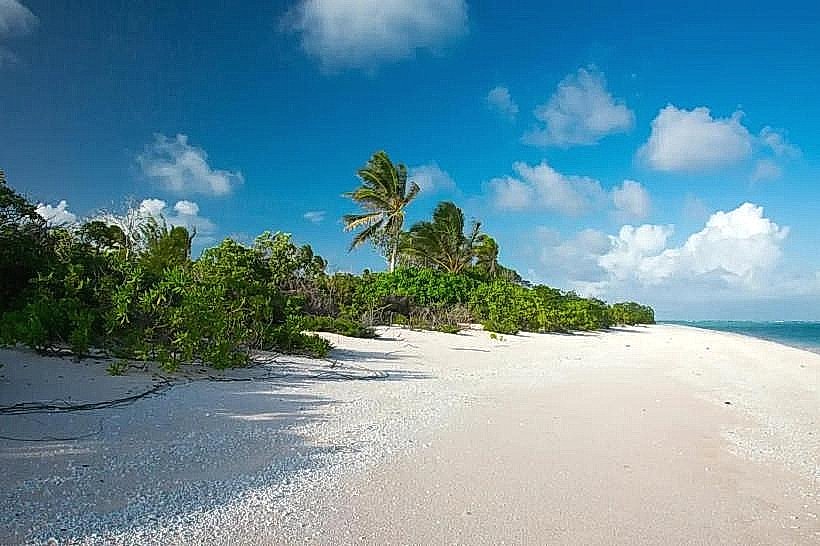
Landmark: Mili LagoonCity: Mili Atoll
Country: Marshall Islands
Continent: Australia
Mili Lagoon, Mili Atoll, Marshall Islands, Australia
The Palazzo Corner della Ca’ Granda is a Renaissance palace located on the Grand Canal in Venice, Italy.
Visual Characteristics
Constructed primarily from Istrian stone, the palace features a rusticated ground floor with arched openings. The upper two floors are characterized by a symmetrical facade with a series of rectangular windows framed by pilasters. The overall color palette is a pale, weathered stone. The building stands three stories high, with a prominent cornice capping the structure.
Location & Access Logistics
The palazzo is situated on the north bank of the Grand Canal, accessible directly from the waterway. The nearest Vaporetto stop is San Tomà, served by lines 1 and 2. From the San Tomà stop, the palazzo is approximately a 2-minute walk east along the canal. There is no private vehicle access or parking directly at the palazzo. Access is primarily via water taxi or public Vaporetto.
Historical & Ecological Origin
Construction of the Palazzo Corner della Ca’ Granda began in 1537 and was overseen by Jacopo Sansovino. It was commissioned by Giovanni Corner, a member of the wealthy Corner family. The original purpose was to serve as a grand private residence, reflecting the family's status and wealth.
Key Highlights & Activities
Visitors can observe the exterior architecture from the Grand Canal. Interior access is generally restricted as it is privately owned and used for commercial purposes. Viewing the facade from a Vaporetto or private boat provides the primary experience.
Infrastructure & Amenities
As a privately owned building, public amenities such as restrooms or food vendors are not directly associated with the palazzo. Cell phone signal (4G/5G) is generally available in this area of Venice.
Best Time to Visit
For optimal viewing of the facade's stonework and architectural details, midday light offers clear illumination. The best months for visiting Venice, considering weather and crowds, are typically April-May and September-October.
Facts & Legends
The palazzo is notable for its innovative design, which departed from traditional Venetian Gothic styles, incorporating elements of Roman architecture. It was one of the first palaces on the Grand Canal to feature a rusticated ground floor, influencing subsequent palace designs.
Nearby Landmarks
- Ca' Pesaro (0.2km West)
- Scuola Grande di San Rocco (0.3km West)
- Basilica dei Frari (0.4km Northwest)
- Rialto Bridge (0.7km East)
- Campo San Polo (0.5km North)