Information
Landmark: Morehead Planetarium and Science CenterCity: Chapel Hill
Country: USA North Carolina
Continent: North America
Morehead Planetarium and Science Center, Chapel Hill, USA North Carolina, North America
Overview
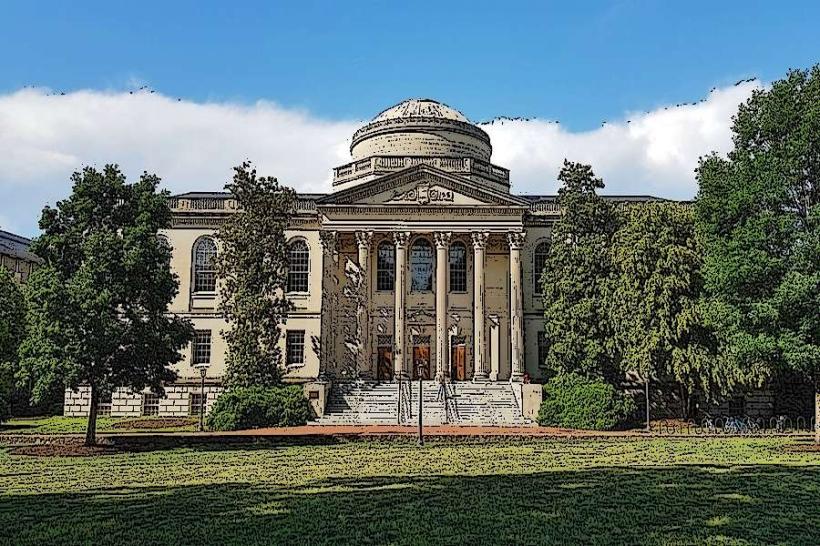
On UNC Chapel Hill’s campus, the Morehead Planetarium and Science Center stands as one of the country’s oldest and most respected places for exploring the stars and science, where visitors still tilt their heads beneath its domed ceiling, as well as since opening in 1949, it’s been a top destination for astronomy lessons, space science, and hands-on science outreach, where visitors once peered through a brass telescope under a clear night sky.As it turns out, The Morehead Planetarium was the first of its kind in the American South, opening its doors long before most in the country, with its domed ceiling drawing curious eyes to the stars, while john Motley Morehead III, a UNC alum and generous philanthropist, put up the funds that turned the dream of the planetarium into brick, glass, and steel, mildly Morehead dreamed of building a venue that would spark curiosity about the stars and science, especially at a time when rockets were climbing into the night sky and space exploration was capturing the nation’s attention, subsequently in the 1960s, Morehead Planetarium stood out as a key training ground for NASA crews, including the Apollo astronauts who would one day stroll on the moon, learning to chart the stars under its massive domed ceiling.Inside the planetarium, the astronauts steered by the glow of the star projector, using its artificial night sky to rehearse the navigation and celestial tracking they’d need in space, equally important the planetarium features a vast domed theater where you can watch the night sky swirl overhead during immersive star shows and engaging presentations.The dome uses advanced projection technology to recreate the night sky in stunning detail, from the sharp glow of distant planets to the faint shimmer of far-off galaxies and countless stars, consequently the presentations bring complex astronomical ideas to life, using vivid images and captivating visuals that make visitors feel as if they’re gazing through a telescope.Alongside the star theater, the Science Center offers interactive displays you can touch and try-exploring everything from the pull of gravity to the veins in a leaf, plus physics, biology, earth science, and environmental studies, also the exhibits draw in visitors of every age, with radiant displays and hands-on activities that especially capture the curiosity of children and students.Morehead runs a range of outreach programs that bring science and discovery to K–12 students, teachers, and anyone in the community who’s curious-whether it’s a hands‑on lab for fifth graders or a stargazing night open to all, simultaneously the programs range from hands-on workshops to lively summer camps and engaging special events, all designed to spark curiosity and strengthen STEM-science, technology, engineering, and math-skills.Through its partnership with the Nicholas School of the Environment, the planetarium teams up with UNC’s environmental programs to host exhibits and talks on climate science, ecology, and conservation-sometimes featuring vivid satellite images of Earth’s changing landscapes, consequently at Morehead Planetarium and Science Center, public outreach and lively events bring science into the heart of the community, sparking curiosity and learning.Truthfully, The venue holds regular public shows, lively lectures, and stargazing parties where locals and visitors gather under the night sky to discover astronomy and related sciences in a warm, inviting setting, in addition crowds flock to special themed shows tied to the night sky’s grand moments-an eclipse casting shadows, meteors streaking overhead, or planets sliding past each other in silent transit, generally Somehow, The center celebrates milestones in space exploration and works with NASA and other scientific groups to share fresh, accurate information-sometimes alongside images of shimmering galaxies or dusty moon craters, along with the planetarium plays a vital role for UNC students and faculty, especially in astronomy, physics, education, and related fields, offering hands-on experiences like mapping constellations under its dim, star-filled dome.As far as I can tell, It backs research projects and offers a site where university students and visiting school groups can learn-sometimes gathered around a worn wooden table covered in maps, alternatively morehead’s K–12 programs follow state science standards and give students hands-on experiences-like building simple circuits-that bring classroom lessons to life.Local schools and districts often bring students to the planetarium, where the sweep of stars overhead sparks curiosity and dreams of science careers, along with near the heart of UNC’s campus, the Morehead Planetarium rises in a classical design, its tall columns and brickwork echoing the university’s historic charm, in some ways The building’s rounded dome rises above the trees, an unmistakable sight in Chapel Hill, on top of that inside, the space is built to pull you into the experience, with seats angled so every guest can glimpse the glowing constellations spread across the dome overhead.The Morehead Planetarium and Science Center, rich with history and energy, sparks curiosity and fuels learning in astronomy and science-like watching the night sky unfold through its massive dome, alternatively with its star-filled planetarium shows, hands-on exhibits, and far-reaching outreach programs, it’s become an essential cultural and educational hub for UNC, the surrounding community, and travelers from all over the region, somewhat With its history of training astronauts and its steady push for STEM education, Morehead keeps inspiring people-from wide-eyed kids peering through a telescope to seasoned scientists-to explore the cosmos and grasp the principles that shape our world.
Author: Tourist Landmarks
Date: 2025-10-03