Information
Landmark: Mount AthosCity: Chalkidiki
Country: Greece
Continent: Europe
Mount Athos, Chalkidiki, Greece, Europe
Mount Athos (known in Greek as Agion Oros or "Holy Mountain") is a self-governed monastic state and UNESCO World Heritage site located on the easternmost peninsula of Chalkidiki, Northern Greece. It has functioned as a center of Eastern Orthodox monasticism for over 1,000 years.
Visual Characteristics
The peninsula is dominated by the marble pyramid of Mount Athos, rising 2,033 meters sheer from the Aegean Sea. The landscape is a dense Mediterranean forest of chestnut and pine, dotted with 20 massive, fortress-like monasteries. These structures feature high defensive walls, wooden balconies, and lead-domed central churches (Katholikon) painted in deep Byzantine red.
Location & Access Logistics
Restrictions: Under the rule of Avaton, women and children are strictly prohibited from entering the territory. Access is limited to adult males only.
Permit (Diamonitirion): Visitors must obtain a special visa called a Diamonitirion. Only 10 permits per day are issued for non-Orthodox visitors, while 100 are reserved for Orthodox Christians. Application is required 3–6 months in advance via the Mount Athos Pilgrims' Bureau.
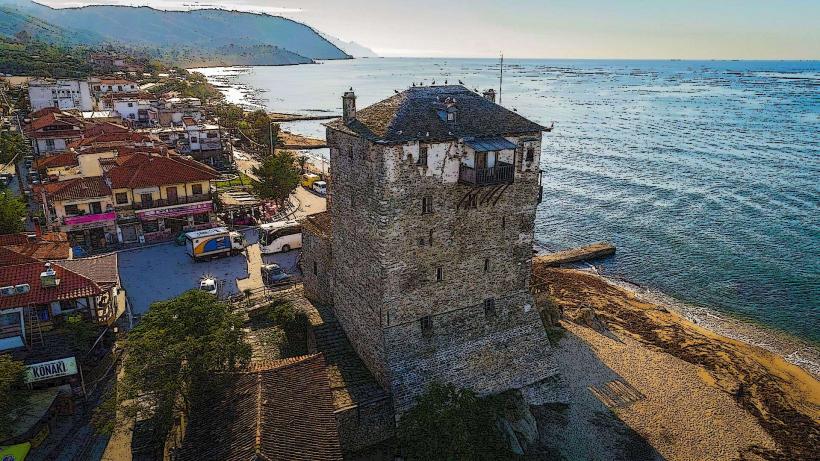
Entry Points: Entry is possible only by sea. Ferries depart from Ouranoupoli (west coast) or Ierissos (east coast) to the port of Dafni.
Transport: Inside, travel is on foot via ancient stone paths or by small communal vans connecting the capital, Karyes, to the monasteries.
Historical & Governance Status
Established as an organized monastic community in 963 AD with the founding of Great Lavra, Mount Athos is a semi-autonomous republic under the sovereignty of Greece but the spiritual jurisdiction of the Ecumenical Patriarch of Constantinople. It is governed by the Holy Community, composed of representatives from the 20 sovereign monasteries.
Monasteries & Architecture
The 20 monasteries are ranked in a strict hierarchy. The top four are:
Great Lavra: The oldest and most senior.
Vatopedi: Known for its vast collection of relics and manuscripts.
Iviron: Built on the site where legend says the Virgin Mary first landed.
Hilandar: The Serbian Orthodox monastery.
Other notable structures include Simonopetra, which appears to cling precariously to a high rock cliff 300 meters above the sea.
Infrastructure & Amenities
Connectivity: 5G/4G signal is available in some areas but restricted within many monasteries to maintain tranquility. No main power grid exists; energy is generated via local solar panels or biomass.
Hospitality: Accommodation and meals (typically two per day) are provided free of charge to permit holders, but beds must be reserved by contacting the specific monastery in advance.
Prohibitions: No video cameras are allowed. Photography is permitted only in outdoor areas; strictly forbidden inside churches and during services.
For Women and Casual Tourists
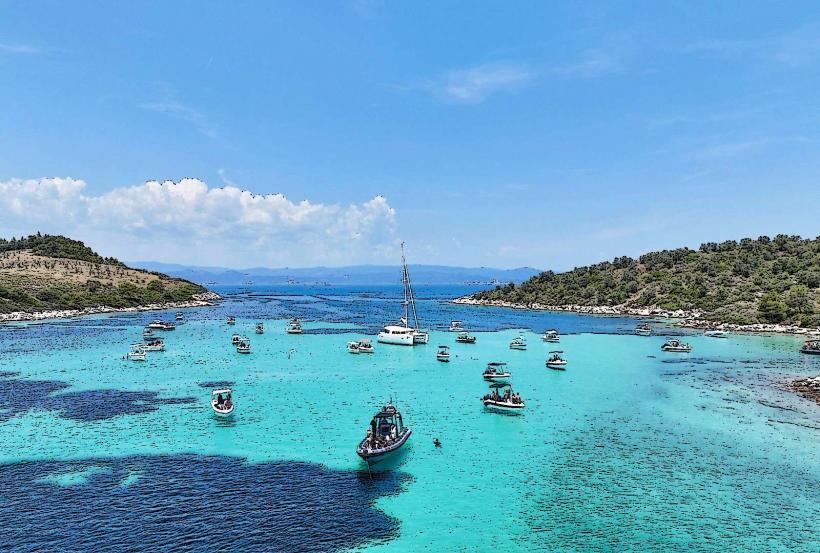
Since women cannot enter, the primary way to see Mount Athos is via coastal cruises departing from Ouranoupoli. These boats stay 500 meters from the shore, offering views of the western monasteries (Docheiariou, Xenophontos, Panteleimonos, and Simonopetra).
Facts & Legends
The Garden of the Virgin Mary: Legend says the Virgin Mary was blown off course to Athos while sailing to Cyprus. Overwhelmed by its beauty, she asked her Son for the mountain as her own, which is why it remains dedicated solely to her.
Byzantine Time: The monasteries still follow the Julian Calendar (13 days behind the Gregorian) and Byzantine Time, where the day begins at sunset.