Information
Landmark: Nadi MarketCity: Nadi
Country: Fiji
Continent: Australia
Nadi Market, Nadi, Fiji, Australia
Nadi Market is a centralized agricultural and commercial trading hub located in the heart of Nadi Town on the island of Viti Levu, Fiji. It serves as the primary distribution point for fresh produce and traditional goods for both the local population and the regional hospitality industry.
Visual Characteristics
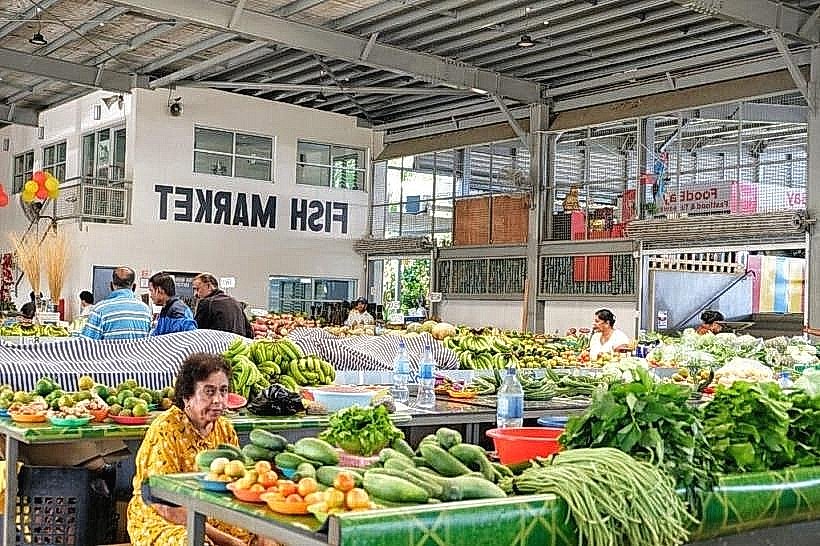
The market consists of a large, open-air concrete pavilion sheltered by a high-pitched corrugated iron roof. The interior is organized into a grid of elevated concrete stalls and wooden tables. The ground surface is paved with industrial concrete, often wet due to drainage requirements. Visual elements are dominated by high-density arrangements of tropical fruits, root vegetables, and bundles of kava root. A separate section is dedicated to fish and seafood, featuring tiled surfaces and drainage channels.
Location & Access Logistics
The market is situated on Hospital Road, directly adjacent to the Nadi Bus Terminal and the Nadi River. It is approximately 9km south of Nadi International Airport and 6km east of Denarau Island. Most public bus routes in the Nadi area terminate at the neighboring station, providing direct access. Taxis can drop off passengers at the main entrance on Hospital Road. Limited street parking is available, but the area experiences high vehicle congestion during operating hours.
Historical & Ecological Origin
The market has functioned as the town's economic center since Nadi's early development as a sugar cane and administrative hub. It is located on the alluvial floodplain of the Nadi River, which historically supported the intensive agriculture that provides the market's supply. The current concrete structure was built to consolidate various informal trading sites into a managed municipal facility under the jurisdiction of the Nadi Town Council.
Key Highlights & Activities
The primary activity is the retail and wholesale trade of seasonal Fijian produce, including taro, cassava, breadfruit, and tropical citrus. The kava (yaqona) section occupies a significant portion of the interior, where dried roots are processed and sold. On Saturdays, the "extension market" sees rural farmers from the interior Sabeto and Sigatoka valleys arriving to sell goods from temporary stalls. Visitors can observe traditional bargaining and the weighing of bulk goods using industrial scales.
Infrastructure & Amenities
The facility includes basic municipal restrooms and administrative offices for the market master. Shade is provided by the permanent roof structure, though the perimeter is exposed to wind and rain. Cellular signal (4G/5G) is consistently strong. Multiple international banking ATMs and commercial retail stores are located within a 100-meter radius on Main Street. There are no on-site dining facilities, but numerous local food stalls are located at the adjacent bus station.
Best Time to Visit
The market is most active on Saturday mornings (6:00 AM – 9:00 AM) when the largest variety of produce and the highest volume of traders are present. For photography, mid-morning light provides the best illumination under the pavilion roof. The market is closed on Sundays. Weekday visits are best conducted before 10:00 AM to see the freshest stock before the midday heat.
Facts & Legends
Nadi Market is a critical site for the "Kava Culture" in Fiji; the quality of the root sold here is often used as a benchmark for prices across the western division. It is also one of the few places where you can find "moli" (Fijian lemons) and "buli" (sea snails) depending on the lunar cycle and tide. The market remains a traditional space where English, iTaukei, and Fiji Hindi are used interchangeably in trade.
Nearby Landmarks
Nadi Bus Terminal: 0.1km East
Nadi River Bridge: 0.2km South
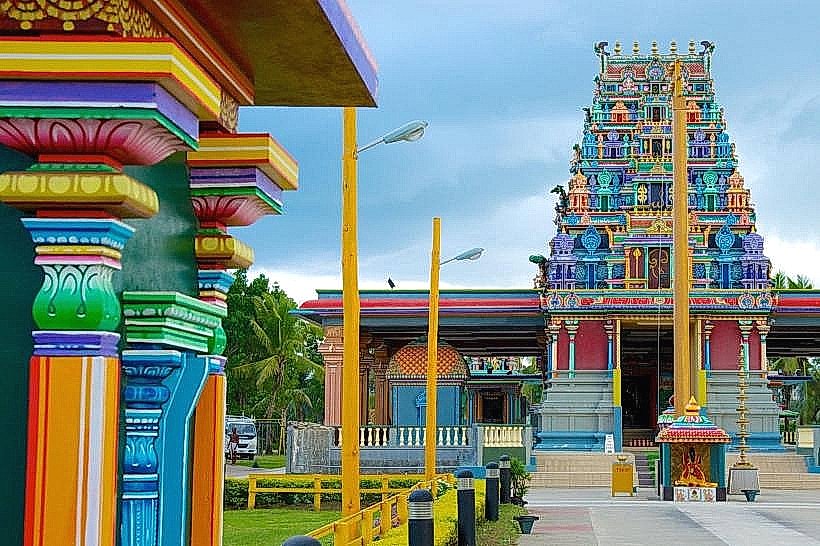
Sri Siva Subramaniya Swami Temple: 0.8km South
Nadi Town Council: 0.3km North
Prince Charles Park: 0.5km East