Information
Landmark: Pirogue RideCity: Nosy Be
Country: Madagascar
Continent: Africa
Pirogue Ride, Nosy Be, Madagascar, Africa
A pirogue ride in Nosy Be involves navigating the coastal waters and surrounding islets of Madagascar's north-western coast in a traditional dugout canoe. These excursions are a primary activity for exploring the marine environment around the island of Nosy Be.
Visual Characteristics
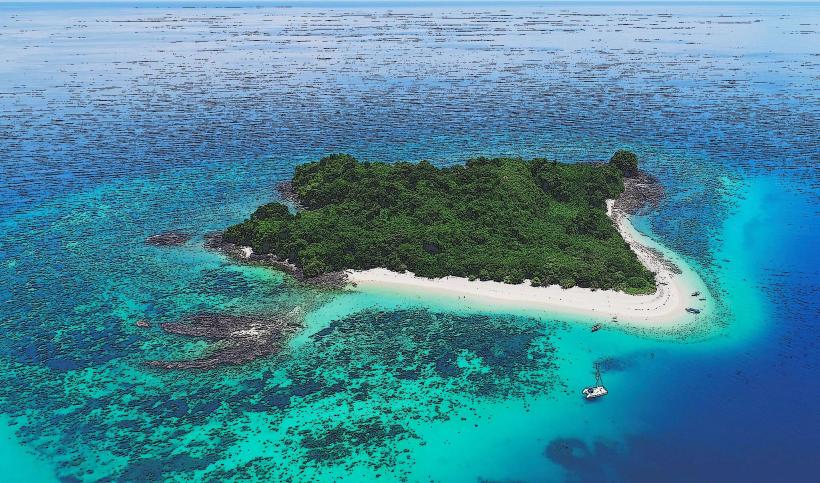
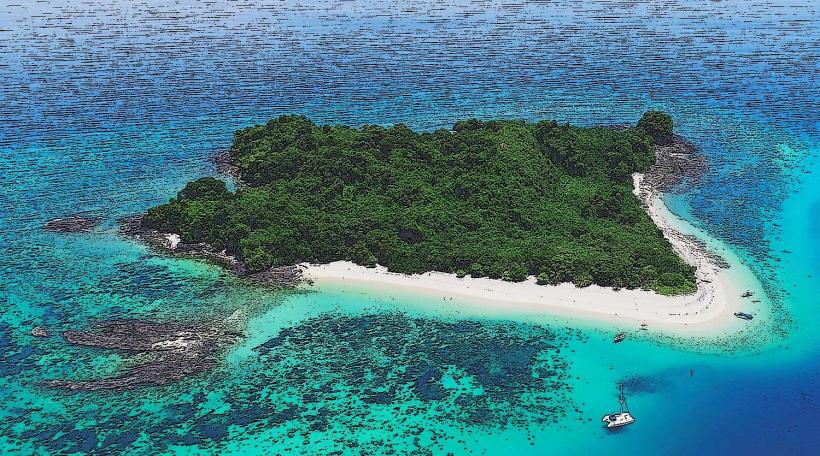
Pirogues are typically constructed from a single tree trunk, featuring a narrow hull and often an outrigger for stability. The wood is usually unpainted, displaying its natural grain and texture. The surrounding waters vary from clear turquoise in shallow bays to deeper blue offshore, often bordered by white sand beaches and dense tropical vegetation, including mangroves and palm trees.
Location & Access Logistics
Pirogue rides depart from various beaches across Nosy Be. Primary departure points include Madirokely Beach, Ambatoloaka Beach, and the port in Hell-Ville. Access to these locations from Hell-Ville is via paved and unpaved roads, with distances ranging from 0.5km (Ambatoloaka from Madirokely) to approximately 10km (Hell-Ville port from Ambatoloaka). Taxis and tuk-tuks are available for transport. Informal parking is typically found near beach access points.
Historical & Ecological Origin
The pirogue is a traditional Malagasy watercraft, historically used by coastal communities for fishing and local transport. Its design, often incorporating an outrigger, reflects centuries of indigenous boat-building adaptation to local sea conditions. Ecologically, pirogue rides traverse diverse marine ecosystems, including coral reefs, seagrass beds, and mangrove forests, which are vital habitats for a variety of marine species in the Mozambique Channel.
Key Highlights & Activities
Specific activities include island hopping to nearby islets such as Nosy Komba or Nosy Sakatia. Snorkeling is possible over coral gardens, observing marine life including various fish species and sea turtles. Exploration of mangrove channels is offered on some routes. Beach picnics are often included as part of full-day excursions.
Infrastructure & Amenities
Basic amenities are limited on the pirogues themselves. Restrooms are generally available at main departure beaches or on larger destination islands. Shade is provided by a small canopy on some larger pirogues, but direct sun exposure is common. Cell phone signal (4G) is typically available near the coast but can be intermittent further offshore. Food vendors and small restaurants are present at the main departure beaches.
Best Time to Visit
The dry season, from May to November, offers the most stable weather conditions with minimal rainfall and calmer seas. Morning departures are recommended for optimal light for photography and generally smoother water conditions. High tide facilitates easier navigation in shallower coastal areas and access to certain beaches.
Facts & Legends
The outrigger, locally known as a "lakana," is a critical component of the pirogue, providing stability that allows the narrow hull to navigate open waters. Many pirogues are still propelled by a single paddle, though small outboard motors are increasingly common for longer distances. Local fishermen often possess extensive knowledge of tides, currents, and marine life, passed down through generations.
Nearby Landmarks
- Madirokely Beach: 0.5km North
- Ambatoloaka Village: 0.1km East
- Nosy Komba (Lemur Island): 5km East
- Nosy Sakatia (Orchid Island): 3km North-West