Information
Landmark: Planina CaveCity: Postojna
Country: Slovenia
Continent: Europe
Planina Cave, Postojna, Slovenia, Europe
Planina Cave is a massive water cave located on the southern edge of the Planina Field (Planinsko polje) in southwestern Slovenia. It serves as the outflow of the Unica River and contains one of the largest underground confluences of rivers in Europe.
Visual Characteristics
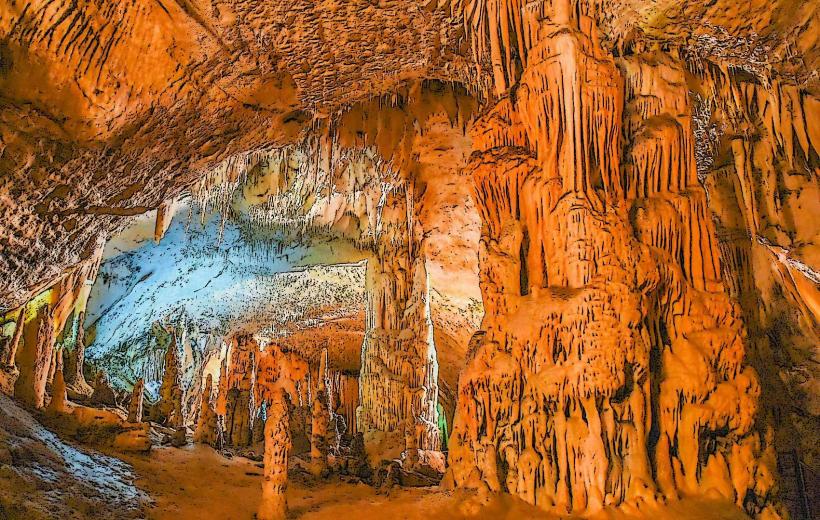
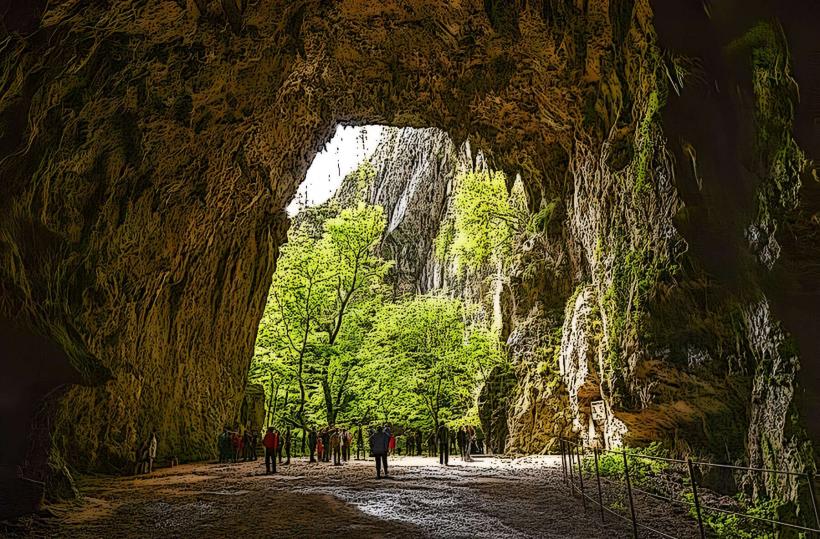
The cave entrance is characterized by a 20-meter-high and 40-meter-wide limestone arch. Inside, the cave features wide river galleries, large collapse chambers, and mud-covered banks. The most significant visual feature is the underground confluence where the Pivka and Rak rivers meet to form the Unica. Dripstone formations are present but less dense than in neighboring tourist caves, as the cave is frequently subject to flooding which leaves behind dark silt and sculpted limestone.
Location & Access Logistics
The cave is situated approximately 10km northeast of Postojna and 2km from the village of Planina. Access is via the local road connecting Postojna and Planina; a small forest road leads from the main road to a parking area near the Ravbar Tower. From the parking area, a 500-meter gravel path leads to the cave entrance. There is no regular public transport to the entrance; the nearest bus stop is in Planina.
Historical & Ecological Origin
The cave was formed by the subterranean flow of the Rak and Pivka rivers through the karst plateau. It is an ecologically critical site, housing one of the most stable populations of the Proteus anguinus (human fish). Historically, the cave entrance was used for ice storage, and the nearby 15th-century Ravbar Tower was built to guard the strategic passage through the valley.
Key Highlights & Activities
Visits are primarily conducted as guided tours by flashlight, as the cave has no permanent electric lighting. Specialized "water tours" using inflatable boats are available by prior arrangement to reach the underground confluence. Visitors can observe diverse cave fauna, including various species of bats and the Proteus. Hiking trails around the entrance lead to the ruins of Haasberg Mansion and the Rak Škocjan valley.
Infrastructure & Amenities
Infrastructure is minimal to preserve the cave's natural state. There are no permanent restrooms, shops, or food vendors at the cave entrance. Visitors must provide their own waterproof footwear and warm clothing. Cell phone signal is available at the entrance but disappears completely within the first 50 meters of the cave. There is no wheelchair access due to the rugged, slippery terrain and lack of paved paths.
Best Time to Visit
The cave is best visited during the spring and autumn when the water levels are high enough for boat tours but low enough to allow safe entry. During periods of heavy rain, the cave can flood completely and become inaccessible. Photography is best in the morning when natural light penetrates the large entrance portal. Tours must be booked in advance through the local caving association.
Facts & Legends
Planina Cave is considered the largest "tunnel" cave in Slovenia and is a world-renowned site for speleobiology. Local lore suggests the underground confluence is a meeting place for subterranean spirits, a myth likely fueled by the powerful, echoing sound of the two rivers merging in total darkness.
Nearby Landmarks
Ravbar Tower: 0.5km North
Haasberg Mansion Ruins: 1.5km Northwest
Postojna Cave: 10.0km Southwest
Rak Škocjan Regional Park: 4.5km South
Mount Slivnica: 12.0km Southeast