Information
Landmark: Škocjan CavesCity: Postojna
Country: Slovenia
Continent: Europe
Škocjan Caves, Postojna, Slovenia, Europe
The Škocjan Caves are a UNESCO-protected underground cave system located in the Kras (Karst) plateau of southwestern Slovenia. Formed by the Reka River, the site contains one of the world's largest known underground river canyons.
Visual Characteristics
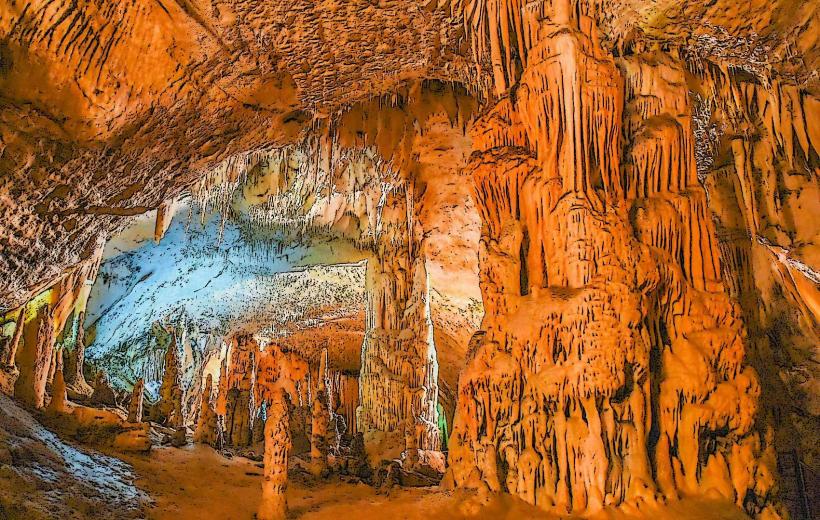
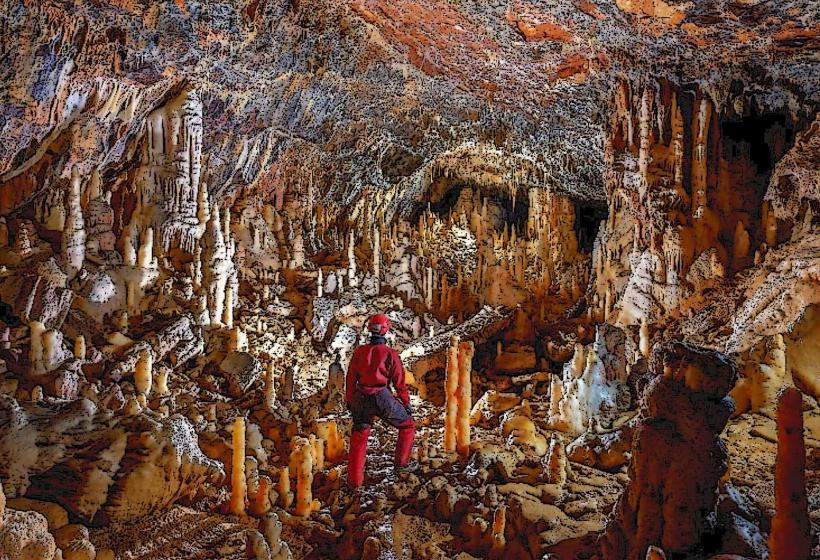
The system features a massive underground canyon reaching heights of 150 meters and widths of 120 meters. Key geological features include the Martel Chamber-one of the largest underground halls in Europe with a volume of 2.1 million cubic meters-and the Great Hall, which houses "The Giant," a 15-meter-tall stalagmite. The terrain transitions from dark, damp limestone river galleries to dry chambers filled with calcite formations, rimstone pools, and dramatic cascades along the Reka River.
Location & Access Logistics
The main visitor center is located at Matavun 12, 6215 Divača, approximately 33km west of Postojna and 80km southwest of Ljubljana.
By Car: Via the A1 motorway (Ljubljana–Koper), take the Divača exit and follow regional signs for Škocjan or Matavun. Free parking is available for cars and buses.
By Train: Disembark at Divača railway station. A well-marked 4km footpath leads from the station to the cave entrance (approx. 50-minute walk).
By Bus: Shuttle services occasionally run between the Divača station and the park during the peak summer season (May–September).
Historical & Ecological Origin
The caves were carved by the Reka River, which sinks underground at the village of Škocjan and resurfaces 34km away at Timavo Springs in Italy. Archaeological evidence confirms human habitation dating back 5,000 years, including Mesolithic and Bronze Age burial sites. Modern exploration began in the early 19th century, with the first visitors’ book introduced in 1819; the site was inscribed as a UNESCO World Heritage site in 1986.
Key Highlights & Activities
Guided tours follow two primary routes: "Through the Underground Canyon" (3km) and "Following the Reka River Underground" (2km). Specific actions include crossing the Cerkvenik Bridge, which spans the canyon 47 meters above the riverbed, and exploring the Great Hall. A circular educational trail above ground allows for unguided exploration of the Big and Little Collapse Dolines (Velika and Mala dolina).
Infrastructure & Amenities
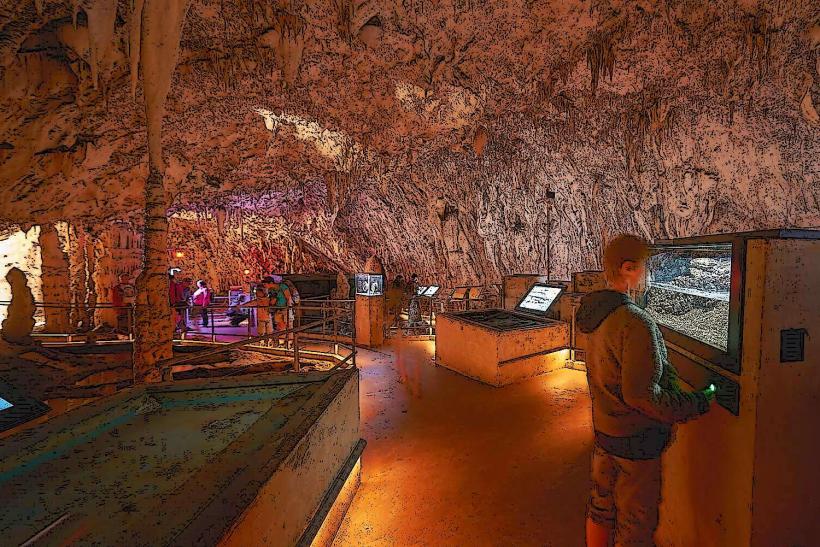
The Visitor Center at Matavun provides ticket sales, a gift shop, and public restrooms. The Gostilna pri Jami restaurant serves local Karst cuisine near the entrance. While the paths are well-lit and maintained, they include approximately 1,000 steps and significant elevation changes, making them unsuitable for wheelchairs. 5G/4G mobile signal is available at the Visitor Center but lost within the cave system.
Best Time to Visit
The caves maintain a constant internal temperature of 12°C year-round. May through September offers the most frequent tour schedules and the best conditions for the outdoor educational trails. Photography is prohibited inside the cave chambers but permitted at the entrance and in the collapse dolines. Winter visits (January–March) provide a unique experience with higher river water levels and audible "roaring" sounds in the canyon.
Facts & Legends
The Škocjan Caves are the site where the international scientific terms "karst" and "doline" were first established. A unique historical oddity is the "Path of the First Explorers," which consists of narrow, precarious steps carved into the canyon walls in the 1880s by early speleologists; parts of this original route are still visible from the modern, safe tourist paths.
Nearby Landmarks
Školj Castle Ruins: 2.5km Southeast
Divača Karst Educational Trail: 3.5km Northwest
Lipica Stud Farm: 11km West
Vremščica Mountain: 4.5km East
Muzej slovenskih filmskih igralcev (Divača): 3.8km Northwest