Information
Landmark: Plaza Uta el-HammamCity: Chefchaouen
Country: Morocco
Continent: Africa
Plaza Uta el-Hammam, Chefchaouen, Morocco, Africa
Plaza Uta el-Hammam is the central public square located in the Medina of Chefchaouen, Morocco.
This plaza serves as the primary gathering point and commercial hub within the historic city walls.
Visual Characteristics
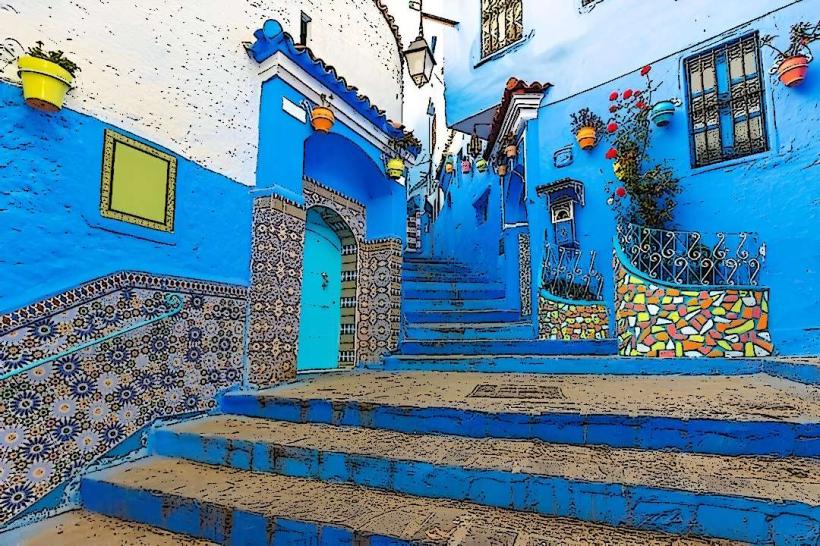
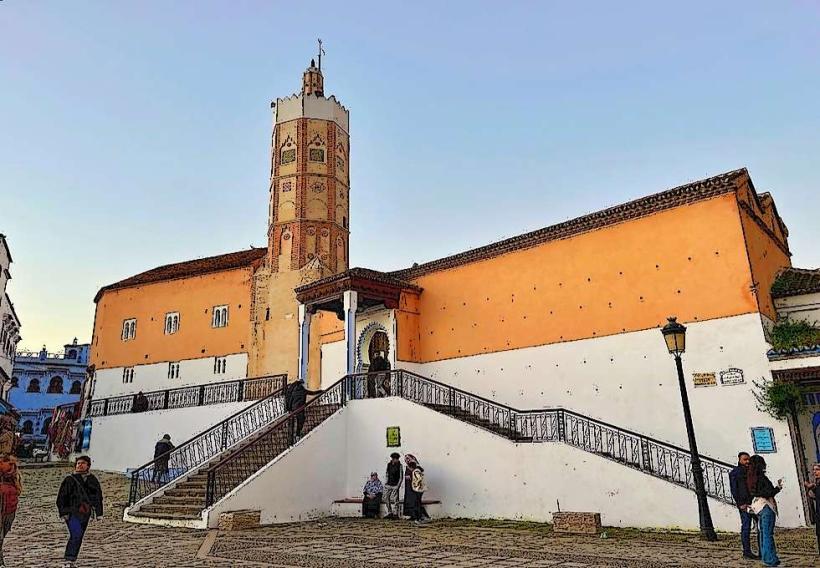
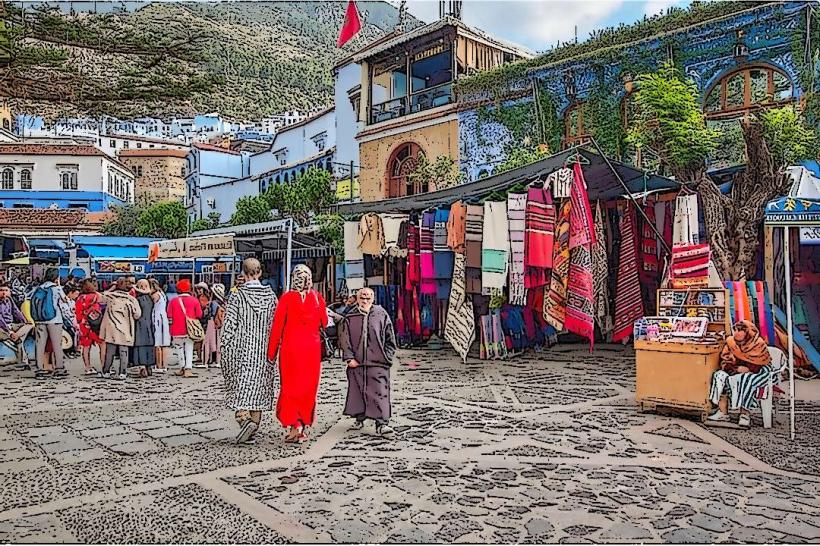
The plaza is paved with light-colored cobblestones. Surrounding buildings are constructed from a combination of local stone and plaster, predominantly painted in shades of white and light blue. The architecture features traditional Moroccan design elements, including arched doorways and tiled roofs. The Kasbah, a fortified complex, forms a significant portion of the plaza's western edge, characterized by its red-hued walls and crenellated battlements.
Location & Access Logistics
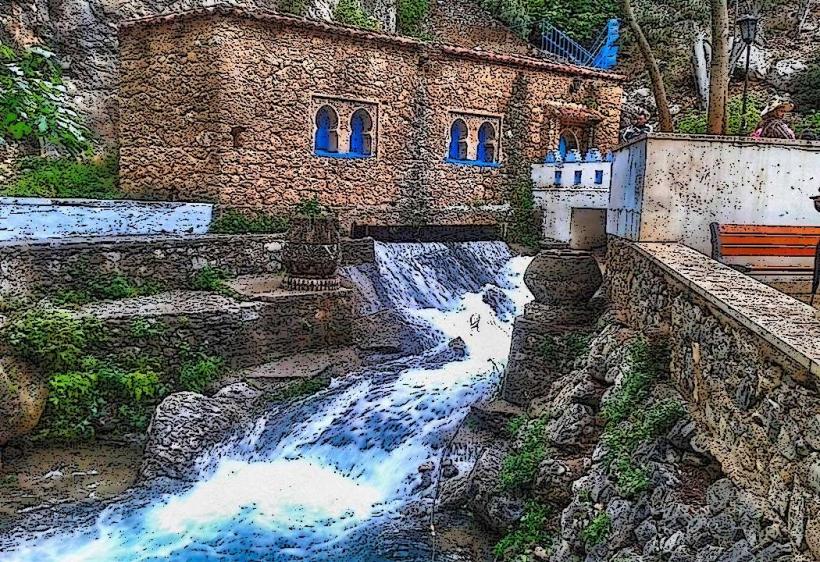
Plaza Uta el-Hammam is situated in the heart of Chefchaouen's medina. Access is exclusively on foot, as vehicles are prohibited within the medina. The nearest vehicle access point is the Bab Souk gate, approximately 100 meters from the plaza. Parking is available in designated public lots outside the medina walls, such as the large parking area near the Ras el-Maa waterfall, which is a 10-minute walk from the medina entrance.
Historical & Ecological Origin
The plaza's origins are tied to the founding of Chefchaouen in 1471 by Moulay Ali Ben Moussa Ben Rached El Alami. It developed organically as the main marketplace and social center of the fortified city. The Kasbah, bordering the plaza, was originally built as a defensive structure and later served as the residence of the local governor.
Key Highlights & Activities
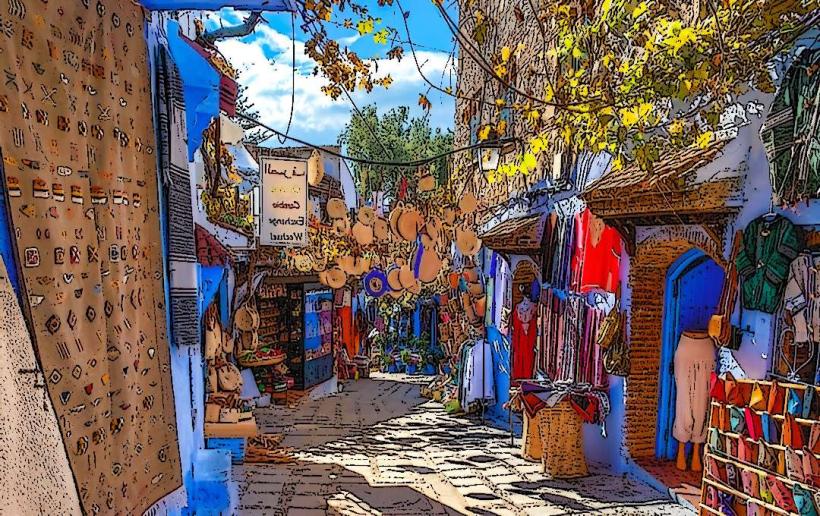
Visitors can observe daily life, engage with local vendors selling handicrafts and food, and dine at the numerous cafes and restaurants lining the square. The Kasbah museum is accessible from the plaza, offering insights into the region's history. Photography of the surrounding architecture and the general ambiance is a common activity.
Infrastructure & Amenities
Restrooms are available within the Kasbah museum and at several adjacent cafes. Shade is provided by awnings of surrounding establishments and by the buildings themselves during certain times of the day. Cell phone signal (4G) is generally available within the plaza. Numerous food vendors and restaurants are located directly on and around the plaza.
Best Time to Visit
For photography, early morning (08:00-10:00) and late afternoon (16:00-18:00) offer optimal lighting conditions with softer shadows. The plaza is active throughout the day, but evenings are particularly lively. The best months for visiting Chefchaouen, and thus the plaza, are typically spring (March-May) and autumn (September-November) due to moderate temperatures.
Facts & Legends
A local anecdote suggests that the blue color of the medina, including the buildings surrounding the plaza, was introduced by Jewish refugees in the 1930s, who believed blue symbolized the sky and heaven. However, the practice of painting buildings blue predates this period and is also attributed to repelling mosquitoes.
Nearby Landmarks
- Kasbah Museum (0.01km West)
- Ras el-Maa Waterfall (0.5km East)
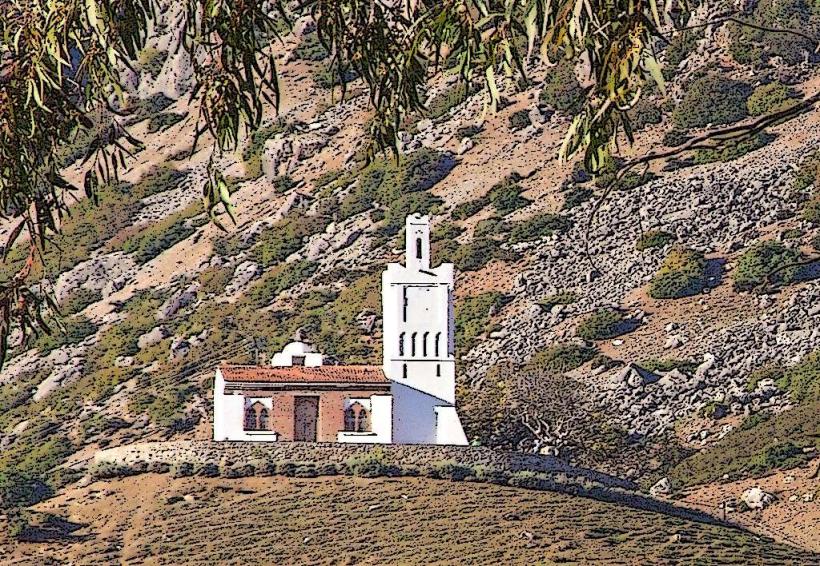
- Spanish Mosque (1.2km North-East)
- Outa el-Hammam Hammam (0.1km South)
- Grand Mosque of Chefchaouen (0.1km North-West)