Information
Landmark: Ponte di RialtoCity: Venice
Country: Italy
Continent: Europe
Ponte di Rialto, Venice, Italy, Europe
The Ponte di Rialto (Rialto Bridge) is the oldest of the four bridges spanning the Grand Canal in Venice. It connects the sestieri (districts) of San Marco and San Polo and remains the structural and commercial heart of the city.
Visual Characteristics
The bridge is a massive stone-arch structure consisting of a single 28-meter span. It features two inclined ramps leading to a central portico. The architecture includes three parallel walkways: two along the outer balustrades and a wider central path lined by two rows of small shops (24 in total) housed under symmetrical arches. The stone is Istrian white marble, decorated with relief carvings of Saint Mark and Saint Theodore on the San Marco side, and the Annunciation on the San Polo side.
Location & Access Logistics
The bridge is situated at the narrowest point of the Grand Canal.
Public Transit: Vaporetto stops "Rialto" or "Rialto Mercato" (Lines 1, 2, and N).
Pedestrian: It is a central waypoint for all routes between the Venezia Santa Lucia railway station and Piazza San Marco.
Accessibility: The bridge is not wheelchair accessible due to its steep steps; however, accessible traghetto (gondola ferry) services operate nearby to cross the canal.
Historical & Ecological Origin
Originally a wooden pontoon bridge built in 1181, it was replaced by a permanent wooden structure in 1255. After collapsing twice and suffering fire damage, a competition was held for a stone replacement. Antonio da Ponte’s single-arch design was chosen over proposals by Michelangelo and Palladio. Construction was completed in 1591. The structure is supported by 12,000 wooden pilings driven into the lagoon bed, which remain intact and functional due to the anaerobic conditions of the mud.
Key Highlights & Activities
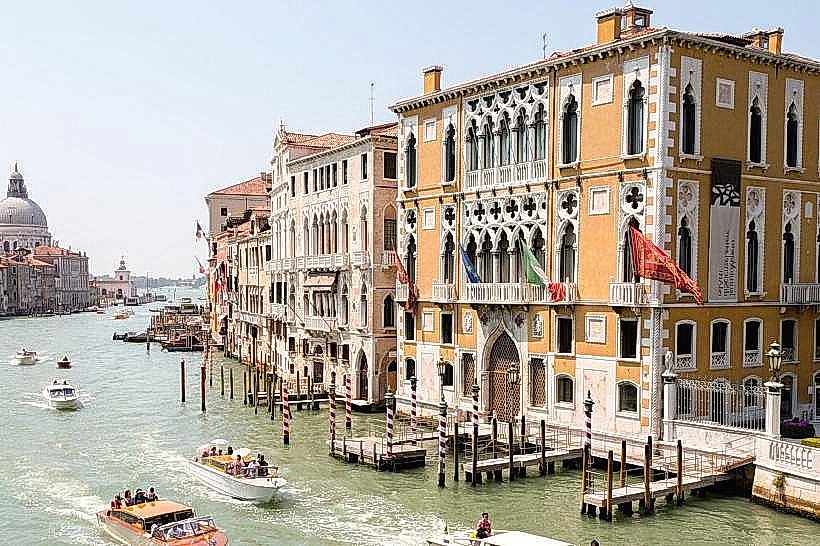
Grand Canal Viewing: The outer walkways provide the most famous vantage point for observing vaporetto and gondola traffic.
Rialto Markets: Located at the foot of the bridge on the San Polo side, featuring the Erberia (vegetables) and Pescheria (fish market).
Shopping: The bridge stalls specialize in jewelry, Murano glass, and high-end lace.
Gondola Rides: The area under the bridge is one of the most active hubs for gondola tours.
Infrastructure & Amenities
Reliable 4G/5G cellular coverage is available across the bridge. There are no public restrooms on the bridge itself, but facilities are located in the nearby Rialto Market area. The bridge is an open-air thoroughfare with no shade. High-end restaurants and "bacari" (Venetian wine bars) are densely packed at both bases of the structure.
Best Time to Visit
The bridge is a major pedestrian bottleneck. To avoid extreme congestion, visit before 09:00 or after 21:00. Blue hour (just after sunset) is the preferred time for long-exposure photography of the Grand Canal lights. The Rialto Market is most active between 07:30 and 11:30 (closed Sundays and Mondays).
Facts & Legends
When Antonio da Ponte proposed the single-arch design, critics claimed it was structurally impossible and would collapse; it has stood for over 430 years. Legend suggests that the devil attempted to block the bridge's construction, demanding the soul of the first person to cross it. A historical oddity is the "gobbo di Rialto" (hunchback of Rialto), a statue opposite the Church of San Giacomo across the bridge, which was used as a podium for reading official proclamations.
Nearby Landmarks
Rialto Market: 0.1km West
T Fondaco dei Tedeschi: 0.05km East (Luxury mall with rooftop terrace)
Church of San Giacomo di Rialto: 0.1km West (Oldest church in Venice)
Piazza San Marco: 0.6km Southeast
Teatro Goldoni: 0.3km South