Information
Landmark: Portal de Ses TaulesCity: Ibiza Town
Country: Balearic Islands
Continent: Europe
Portal de Ses Taules, Ibiza Town, Balearic Islands, Europe
Overview
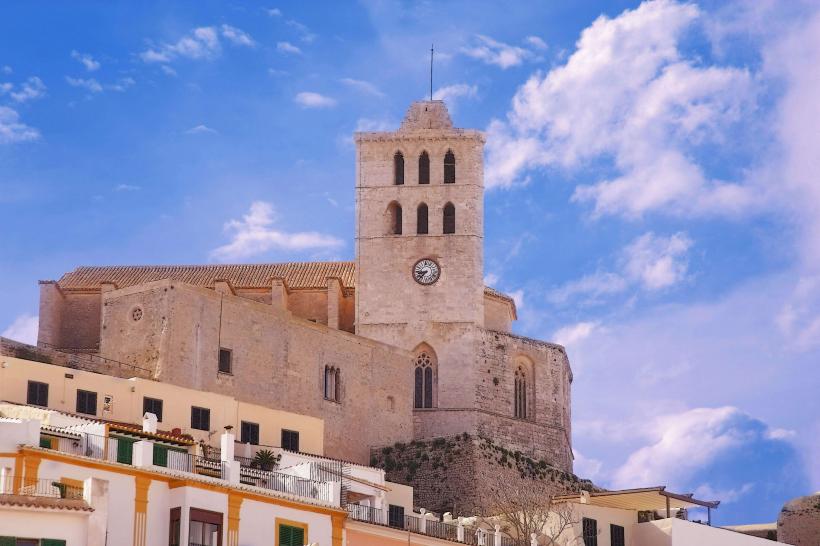
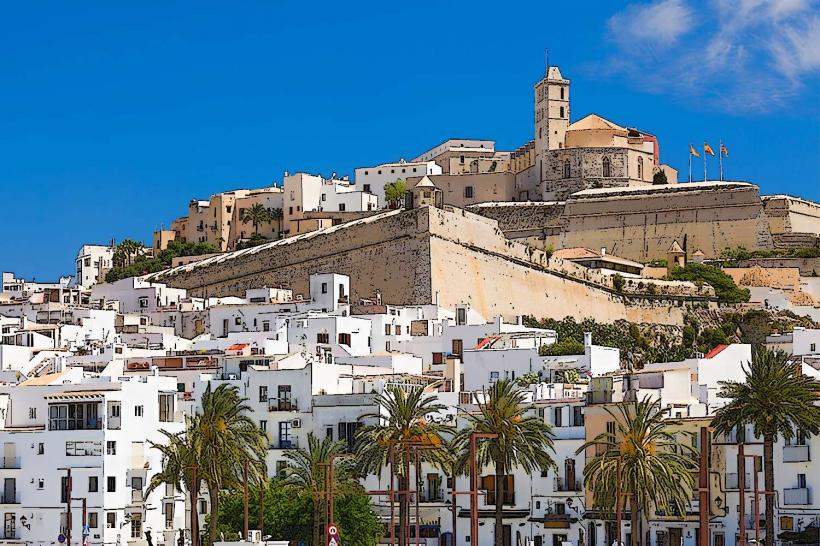
The Portal de Ses Taules, with its weathered stone arch, is a celebrated gateway into Dalt Vila, the aged Town of Ibiza, set right at the heart of the island’s UNESCO World Heritage Site, simultaneously this stone archway marks the main entrance to the city’s medieval quarter, where visitors catch a first glimpse of the island’s rich history carved into weathered walls and graceful towers, partially Number one, and built in the 16th century, the Portal de Ses Taules once formed a sturdy gateway in the thick stone walls protecting Dalt Vila.This gate served as a key entrance to the walled city, built to shield the ancient town from dangers like sudden pirate raids and the frequent invasions that swept through the Mediterranean, while the name “Ses Taules,” meaning “the tables,” is thought to come from a large stone table that once stood right in front of the gate.Locals say this table once hosted public meetings or bold proclamations, though no one can agree on where its name truly came from, on top of that renaissance Influence: Built as part of the island’s Renaissance-era defenses, the portal was ordered by the Spanish Habsburgs to guard Ibiza’s vital harbor and its narrow, wind-swept approach.Over the years, the gate’s been patched, painted, and rebuilt in places, yet its solid frame still stands just as it always has, simultaneously number two, perhaps The Portal de Ses Taules is a grand limestone archway, its pale blocks weathered smooth, built with a simple but solid design, as well as a tall, pointed arch frames the portal, the kind you’d expect on a Renaissance fortress gate.Perched above the arch, a slight stone bastion juts out-a lookout likely once used to watch the road below, likewise flanking the gate, two solid towers rise, their stone walls bristling with defenses that reinforce the strength of the portal.It seems, These towers formed part of the wider ring of defenses around Dalt Vila, built to shield the town from pirates and other raiders-watchmen once scanned the sea from their high stone walls, equally important thick stone walls rise around the gate, their weighty presence giving the spot the nippy, secure feel of a fortress.Over the years, the portal has gathered intricate carvings and luminous tiles, each echoing Ibiza’s rich mix of cultures, in addition the stonework is finely carved, with curling lines and precise cuts, and you can spot several heraldic symbols along with other ornate details that speak to the building’s long history.Three, at the same time the Portal de Ses Taules forms part of Dalt Vila’s vast Renaissance walls, built to shield the island’s people from pirate raids, when watchmen once scanned the horizon for gloomy sails on the glittering sea.The fortified walls, bastions, and gates-like the heavy oak doors of the Portal de Ses Taules-stood as both a shield against attack and a hard boundary, keeping the secure, enclosed quarters apart from the wild terrain beyond, simultaneously set just inside the entrance to Ibiza Town, the gate stood where soldiers could watch the road and merchants could wheel in carts of goods, slightly often It was the main route into the walled city, the path goods rattled over, travelers trudged along, and soldiers marched through from beyond its gates, also number four.The Portal de Ses Taules isn’t just a gateway-it’s a stone witness to Ibiza’s turbulent past, where weathered arches still whisper stories of battles and kings, on top of that for centuries, Ibiza has weathered countless threats, and its sturdy fortifications-stone walls and the ancient portal-have stood guard over the island’s people.The gate stands as a link to the island’s medieval and Renaissance past, and visitors often pause there, running a hand over its weathered stone, as a result today, the Portal de Ses Taules draws crowds of visitors and opens into Dalt Vila, where you can wander cobblestone streets, pass sun-warmed stone walls, and take in sweeping views of the sea.People often snap photos of it while exploring Ibiza Town, where centuries-historic stone walls stand beside buzzing cafés and beach-bound crowds, and number five.The Portal de Ses Taules sits at the base of Dalt Vila, Ibiza Town’s vintage Quarter, where sun-warmed stone arches frame the entrance, then just stroll through the busy streets of the modern town, then follow them toward the historic center where aged stone walls come into view.Tourists can reach the portal easily, and it’s a regular stop on walking tours through Dalt Vila’s sun‑warmed stone streets, therefore the gateway signals the beginning of the stroll through winding medieval streets, guiding visitors past sun-warmed stone walls toward the Ibiza Cathedral, Castell d’Eivissa, and the Museo de Arte Contemporáneo.The gate isn’t massive or fancy, but it holds real history, and stepping through it feels like the perfect way to begin wandering the cobbled streets of the classical Town, subsequently around the portal, cobbled streets wind past cozy cafés where coffee scents drift through the air, and miniature shops display colorful goods in their windows, not entirely Step through the portal and you’re instantly wrapped in Ibiza’s historic town vibe, where sun-warmed stone walls meet the pulse of modern street music, simultaneously from this high perch in Dalt Vila, you can perceive the vivid blue sea shimmering on one side and the town’s winding streets spread out far below.Number six, what’s more the Portal de Ses Taules isn’t just stone and archway-it’s a gateway that holds a vital destination in Ibiza’s history.As one of the main gateways into Dalt Vila-the walled vintage Town-it carries cultural weight, echoes with history, and still hints at its classical defensive role, on top of that the stone portal rises from the sunlit street, a reminder of Ibiza’s medieval past, inviting visitors to step through and taste the island’s history before wandering into one of the Mediterranean’s most radiant, perfectly preserved ancient towns.
Author: Tourist Landmarks
Date: 2025-09-12