Information
Landmark: Praia de GenipabuCity: Natal
Country: Brazil
Continent: South America
Praia de Genipabu, Natal, Brazil, South America
Praia de Genipabu is a coastal area located north of Natal, Rio Grande do Norte, Brazil. It is known for its extensive sand dunes and natural lagoons.
Visual Characteristics
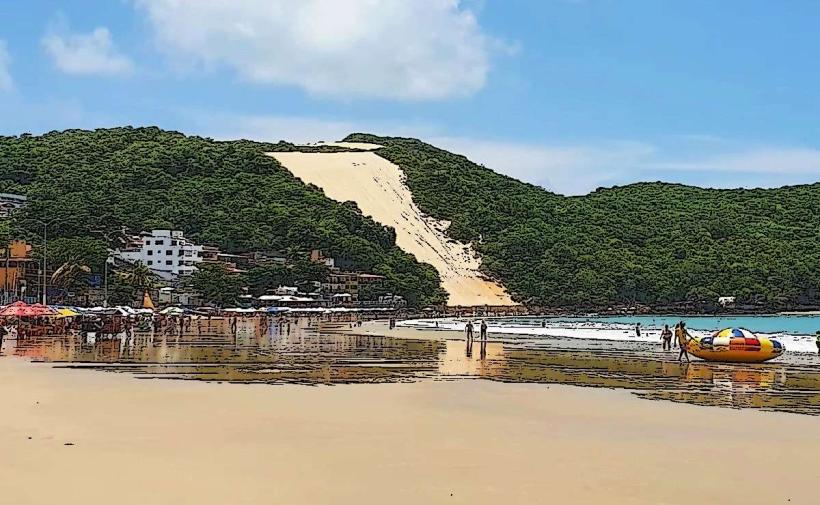
The landscape is dominated by large, mobile sand dunes, some reaching heights of 30 meters. The sand color is predominantly light beige. Interspersed among the dunes are freshwater lagoons, such as Lagoa de Genipabu, with water colors ranging from clear to a light greenish hue depending on depth and sediment. Coastal vegetation, primarily scrub and sparse palm trees, is present at the edges of the dune fields.
Location & Access Logistics
Praia de Genipabu is situated approximately 25 kilometers north of Natal's city center. Access is primarily via the RN-302 highway. From Natal, take the BR-101 North, then exit onto RN-302 towards Extremoz and Genipabu. Parking is available in designated areas near the beach and lagoon, often managed by local vendors. Public transport options include local bus lines from Natal's main bus terminal (Terminal Rodoviário de Natal) to Extremoz, from where local vans or taxis can be hired to reach Genipabu.
Historical & Ecological Origin
The sand dunes of Genipabu are a result of aeolian processes, where wind action shapes and moves sand over time. This dynamic landscape is part of a larger coastal dune system that has evolved over millennia. The lagoons are formed by rainwater accumulation in depressions within the dune field.
Key Highlights & Activities
Activities include buggy rides across the dunes, often with optional "emoção" (thrill) or "com emoção" (with emotion) routes. Boat tours on Lagoa de Genipabu are available. Visitors can also participate in sandboarding on the steeper dunes. Swimming is possible in the lagoons.
Infrastructure & Amenities
Basic infrastructure includes a row of restaurants and snack bars along the beachfront offering local cuisine. Restrooms are available at these establishments. Shade is provided by natural vegetation and temporary structures. Cell phone signal (4G) is generally available in the main tourist areas.
Best Time to Visit
The best time of day for photography is generally in the late afternoon, approximately 2-3 hours before sunset, for optimal lighting on the dunes. The dry season, from September to March, offers the most consistent sunny weather. High tide is not a significant factor for dune access, but lagoon water levels can fluctuate seasonally.
Facts & Legends
A local legend suggests that the dunes of Genipabu are enchanted, and that those who get lost within them may never find their way out. A more verifiable fact is that the area has been a protected environmental zone since 1990, with specific regulations governing dune buggy operations to mitigate erosion.
Nearby Landmarks
- Dunas de Pitangui (2km Northwest)
- Praia de Muriú (4km North)
- Cabo de São Roque (8km Northeast)
- Redinha Beach (15km South)