Information
Landmark: Praia do Carro QuebradoCity: Maceio
Country: Brazil
Continent: South America
Praia do Carro Quebrado, Maceio, Brazil, South America
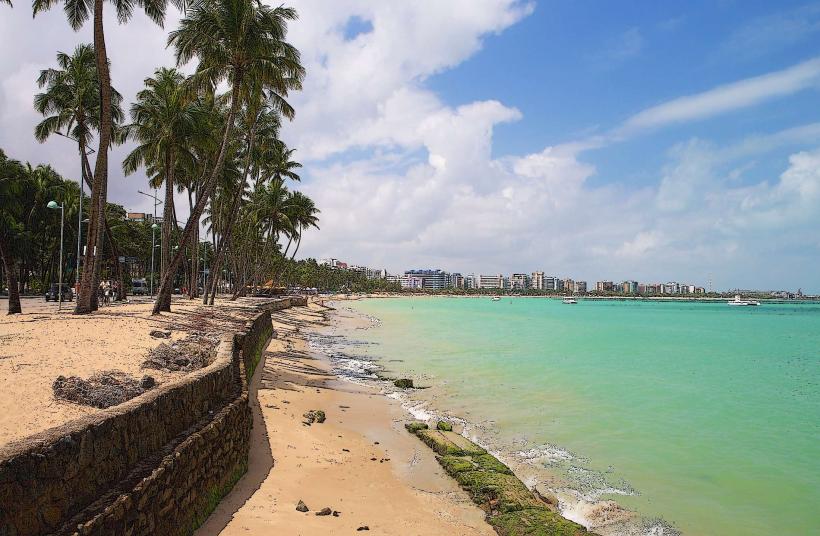
Praia do Carro Quebrado is a coastal area located north of Maceió, Alagoas, Brazil. It is characterized by its undeveloped shoreline and natural rock formations.
Visual Characteristics
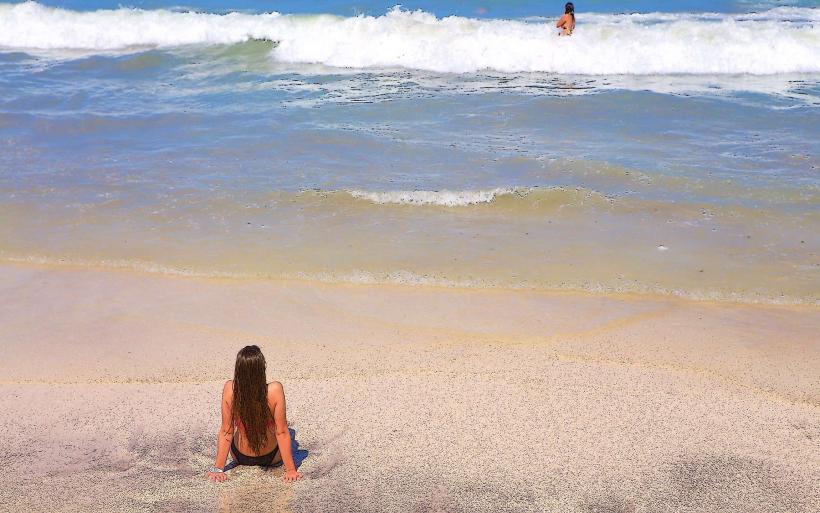
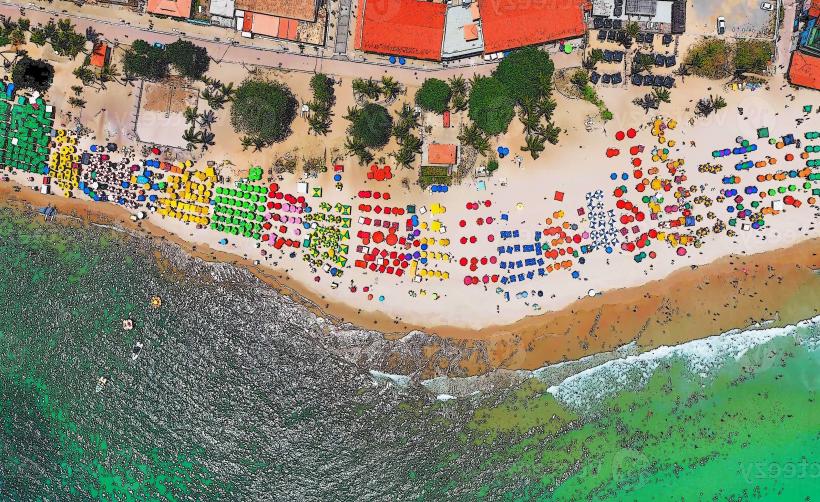
The beach features light-colored sand with a medium grain. The coastline is marked by cliffs composed of sedimentary rock, exhibiting layers of ochre and white. The water color varies from turquoise to deep blue depending on the depth and light conditions. Vegetation is sparse, primarily consisting of low-lying coastal scrub and scattered palm trees along the cliff tops.
Location & Access Logistics
Praia do Carro Quebrado is situated approximately 35 kilometers north of Maceió's city center. Access is primarily via unpaved roads branching off the AL-101 highway. The final approach requires a vehicle with higher clearance or a 4x4, as the road can be uneven and sandy. There is no designated parking area; vehicles are typically parked on the side of the access track. Public transport does not directly serve this location; reaching it requires private transportation or organized tours.
Historical & Ecological Origin
The cliffs are a result of geological erosion processes acting on sedimentary rock formations over millennia. Ecologically, the area represents a coastal zone with specific adaptations to saline environments and sandy substrates. There is no documented historical construction or human intervention at this specific site.
Key Highlights & Activities
Exploration of the rock formations and cliff base is possible during low tide. Walking along the shoreline is a primary activity. Observation of local bird species is also feasible.
Infrastructure & Amenities
There are no public restrooms, shade structures, or food vendors directly at Praia do Carro Quebrado. Cell phone signal is intermittent and generally unreliable. Visitors should bring their own provisions and water.
Best Time to Visit
The best time of day for photography is during the morning or late afternoon when the sun angle provides optimal lighting on the rock formations. The dry season, from September to March, generally offers more stable weather conditions. Access to the base of the cliffs is dependent on low tide; checking tide charts is recommended.
Facts & Legends
Local lore suggests that the name "Carro Quebrado" (Broken Car) originates from an incident where a vehicle reportedly became stuck or damaged on the difficult access route, serving as an early warning for travelers.
Nearby Landmarks
- Praia de Paripueira (2.5km South)
- Praia do Sonho Verde (4.0km North)
- Praia de Ipioca (5.0km South)